
Nina Manandhar is a photographer known for her documentary and portraiture projects that explore themes of identity and community. Her mixed heritage informs her ability to connect with diverse cultural narratives in her work.
Nina Manandhar
How crowd-sourced teenage photos reveal the social patterns behind British subculture
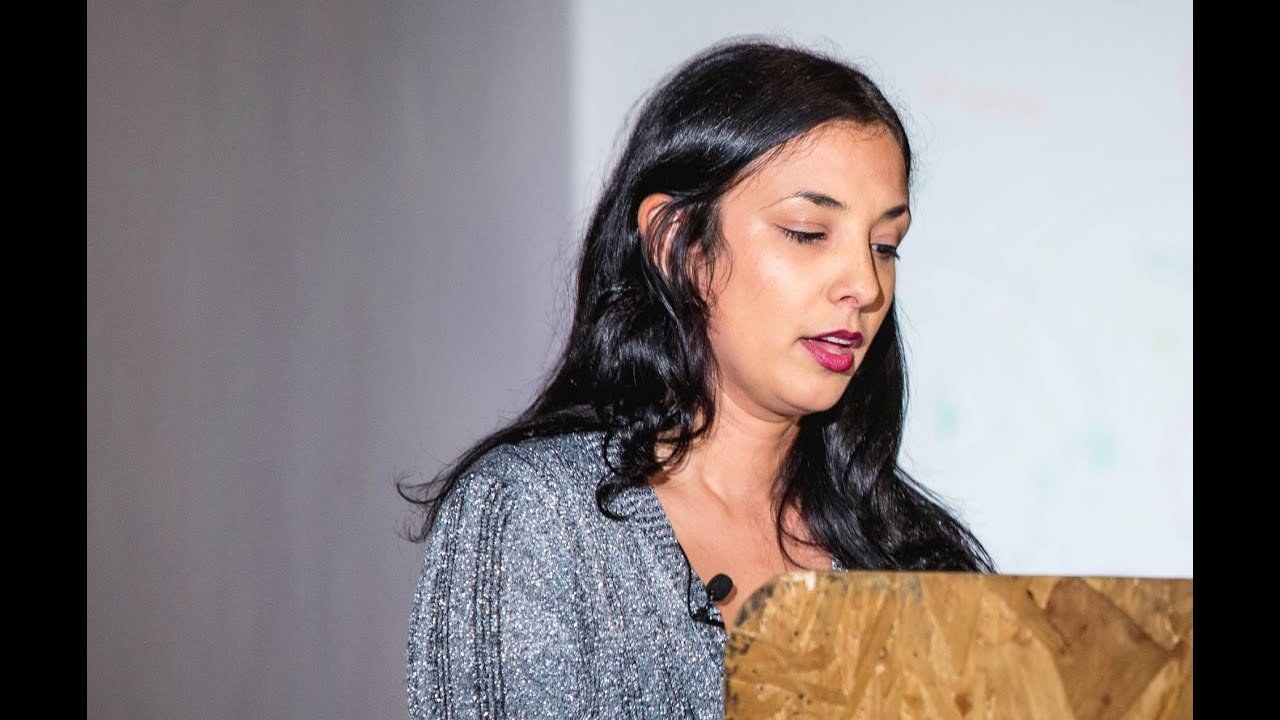
“Style was really a kind of real form of self-expression for me — very much in contrast to school, the uniformity of school and the kind of regime that we felt.”
Transcript: May contain minor errors or formatting inconsistencies.
I'm nina and I'm the founder of the what we will archive just going to pass this around sir so what we wore is a people's history of british you style it's photographic documentary of street culture and subculture for the lens of the people living it there's a book being passed round which is the book like published shot last year people often ask me the mate how did you come up with the idea for what we wore so I'm going to take you right back.
This is an image of liam gallagher and damon albarn from blur and this is I think this is but when I was a teenager we used to go to these celebrity football matches and I think it I always show like to show this image because I think it takes you back to a time when style felt very tribal in the UK for me as a teenager and style and music install went hand in hand this is them from first gig I went to when I was 13 I remember spending about two weeks getting ready and working out what I was going to wear it was a real way for me and my friends to bond and to form a kind of group and a sense of identity and it was the first way for us to express ourselves this was very much in contrast to school the uniformity of school and the kind of the regime that we felt so I think style was really a kind of real form of self-expression for me.
And this is me when I was 16 I remember my friend had cut my hair which is why it's got the big sort of thing in a side I dyed it with secret drug hair dye and I went to a photo booth which is kind of like the 20th century equivalent of the selfie so it was this kind of like it was a big deal for me. And I think this kind of think I've drive to collect particular things is sometimes that's something quite personal I can be marked by an early experience which is lodged inside our brains collecting really takes dedication it has to mean something.
So this is kind of just to give you a background of why I was driven to collect these images so fast forward to the end of last year and the what we wore book was published by presto so this is a kind of compilation of the best images submitted so far from the digital archive so I have the kind of the actual idea for what we wore about six years ago. And I began collecting images for the project just looking at images through flickr so as a photographer I'm really I take a lot of images of young people I've worked a lot of young people.
So I'm really really kind of this idea the subculture of photographers photography's document youth culture really really interests me I think at the time back in 2009 I was uploaded I was uploading my own images to Flickr and I was also looking really actively other people's pictures and I just noticed a lot of people are uploading pictures of their youth and offer their kind of best style and there was a real energy in these people's own pictures that you didn't necessarily see in photographers who were outsider photographers who might be documenting scenes from the outside so really it was just a hobby for me I started off just kind of like set asking people to add their images to the group and what was really really nice about these images there were captions with these images that went to tell the story behind the pictures so really this was just a kind of hobby that I was doing a side of all my other work later in 2011 I kind of found a home for the idea I used to co-run a website could I saw you standing which again was about some of the issues sort of youth identity and this is the first it was a blog site that we ran and this was the first post the first what we will post this is an image from Flickr and it's actually an American image from a girl it was called the death rock days so what I did was like I asked this guy a few questions I got permission to use her image and I published this on the site with an extract and it was really really popular and really really widely shared so it was through this that I kind of began this like a weekly format and I'd start this point I started telling friends and family and asking everyone I knew do you have any pictures of your teenage style can you send them to me can you scan them can you take a picture on your phone so really kind of like getting the public involved in the project and also for I mean my background is also in kind of self-publishing and making books and I thought the book format would be a really great for map to this and fast forward to 2012 and I pitched the idea to press del and they were keen for the book to come out and they gave me a timeline so suddenly the pressure was on to collect images so I built a standalone site for the project I wanted to make it as easy as possible for people to submit and believe it or not people you know finding images of their teenagers not on the top list of their priorities so I had to make it really really simple so I built a tumblr website and people could literally they can upload their images to the site and they can send them direct I also built Instagram so people could hashtag images and then we then have to contact them to get hi-res images so it's quite a laborious process of collecting I had a great research team and I was working with a small but very good team and we did a series of events this is from one we did a taste hotel we also did events that taped the VNA a boutique called struck so what people could do is they could actually bring in their images for archiving so I wasn't interested in getting images that want that they were flying around the internet I was interesting getting people's original source material and that was this was great because it really enabled people who might not have access to the Internet older people who might bring in their stuff to be digitized and scanned and it was really really exciting to just be constantly gathering this stuff in we also did partnerships with days for their music nation series where we created a series of images which is really great because it really helped publicize the project to get again get more contributions in and we also used lots of kind of I guess with internet revival sites lots of Facebook groups and community community groups which the internet a small thousands of to help us source images for this project.
This is one from a skate park in kettering which look kind of looks like Miami or something. So it's great to be able to have access to these groups there's there's no this in the book because this is American but I just wanted to show you this fantastic instagram vet arenas and ruckus.
So this was a kind of setup by God Alaric guadalupe Rosales she sort of morphed intagram into a massive crowd source archive of la chicana gang and partly seen in the 1990s so I guess the purpose of this is really really about her connecting with friends and her network so from collecting to editing unlike the sites I've just mentioned my primary aim was not about collecting to reconnect with old friends it was about observing and revealing social patterns how can I present what I've collected with meaning and how can I do this with the book format it's a little bit about how I kind of edited and selected for the book and the first important thing was I decided that I wanted the book to focus on British youth culture and the publishers had said to me that if I did British and American I could do much wider print run and probably make a bit more money than the huge money in book publishing so this is the first kind of limited I set I think it probably ties into this idea of sort of romantic notions of Britishness it appealed to me.
But also how things are changing in our kind of Internet age and whether this will still be relevant in 50 years time because global cultures are so different now I wanted the book to be I didn't all the bits be chronological is it wanted to be like a top-down history.
So I decided to split the book up into chapters kind of according to social spaces so the chapters were home on the street shopping for an identity away days and we dance the dance so this is an image from the home chapter that's one of my favorites and it's some cool Dyson. And it's him in his kitchen and I just really like I just really like the details the little bit little plaques and the fact that you've kind of got the social backdrop and a story that came with this it was also really great to be able to pair images together.
And this is like the most fun part of the creative process for me so here you've got 1984 in leicester and 1994 in london and that was kind of that stuff for me the fun of collecting is the sorting and just looking at the most kind of social parallels I was led quite visually by the book. There was lots of amazing and interesting texts it was really important for me that the text was accompanied the images and gave them context but I had to prioritize the images in the edit so obviously as you can see this is one of flares this is an interesting one from the on the street chapter it's a submission from riyaz khan he was a self-proclaimed Asian casual so I think they're casual movement is genuinely thought of as quite a racist movement so what I quite liked about this image is it tells a different story. And I kind of we actually did have a lot of texts with this image and you kind of gave a whole backdrop to his story.
But it kind of is there's a potential to put some put something into history to change the story that we usually hear and to potentially break down myths and stereotypes with a few more photo booth images everyone seemed to have taken their photo in Wolfe's which is quite interesting because it's now completely different and so is probably the photo booth image this is an image from the away days chapter from a kind of Club night called books and this is them on in a way day and I just chucked this one in last minute cuz I just bought this just image of the smokers might not be something we see so much in 50 years time.
This is a really great image I love this style this is from a club called JJ's in Clapham which was in the late 70s and a photographer called pizza Williams will also a photographer he was very much just an attendee of the club and what he'd do is every every week he'd go out and shoot everyone in the club and he'd take the photos he print them out and he put them up on the walls and people could buy the images after that.
So I think we've traced him through a facebook group a kind of revival facebook group and he had an amazing collection of so just to kind of it was like coming across a treasure trove of amazing stuff and they're just so much energy in these photos and a real sense of it almost takes you back in time and you get that that feeling of being there.
This is a series of ID cards from there we dance the dance chapter just an important point to make is I've kind of collected and collected all the stuff but these are just images of the ID ID cards it's not a physical collection I don't own any of the images I only had rights to release them for the book. So my role wasn't really like to collect and possess it was to bring these images unseen images together for everyone to see so what I'd now like to do aside from another book it's a work in partnership with an educational institution or museum to turn the archive into a public resource yeah.
So this.
This is actually one tangible thing I do have this is an envelope which contained a letter from someone that wrote to me when I was a teenager I think it kind of speaks volumes really about the books popularity I think it the reason why it sold really well is it kind of came a turning point for how we record our lives and how young people record their day to day today.
I think thousands of images are taken and shared daily just beyond compare to how it was 10 20 years ago but what the internet was to disappear I think the images that would remain in a preserve were the ones that would become history and tell the story of the past four years to come and for me.
This is why collecting can be a really powerful important tool so hopefully this archiving project put toward a broader and more authentic selection of people stories into visual history. That's it you
Latest Talks
-
Will Anderson and Ainslie Henderson
Bringing stop motion sorcery to BBC’s Small Prophets
Watch -
Amber Weaver
How does contemporary type design translate into the wider world?
Watch -
Murugiah
Why you should reject the formula and make art about things you love
Watch -
Marina Willer
Design thrives when you find poetry in the simple things
Watch -
Lizzy Stewart
The hundreds of drawings and writing-on-a-whim that goes into comic novels
Watch -
intra
The rewarding process of recognising the art in obscure everyday life
Watch