
Nicos Livesey is an animation director known for his unique approach to projects, often taking on ambitious tasks like creating an entirely embroidered animation for the BBC's 2018 World Cup promotional video.
Nicos Livesey
Stitching the World Cup into an animated tapestry, one embroidered frame at a time
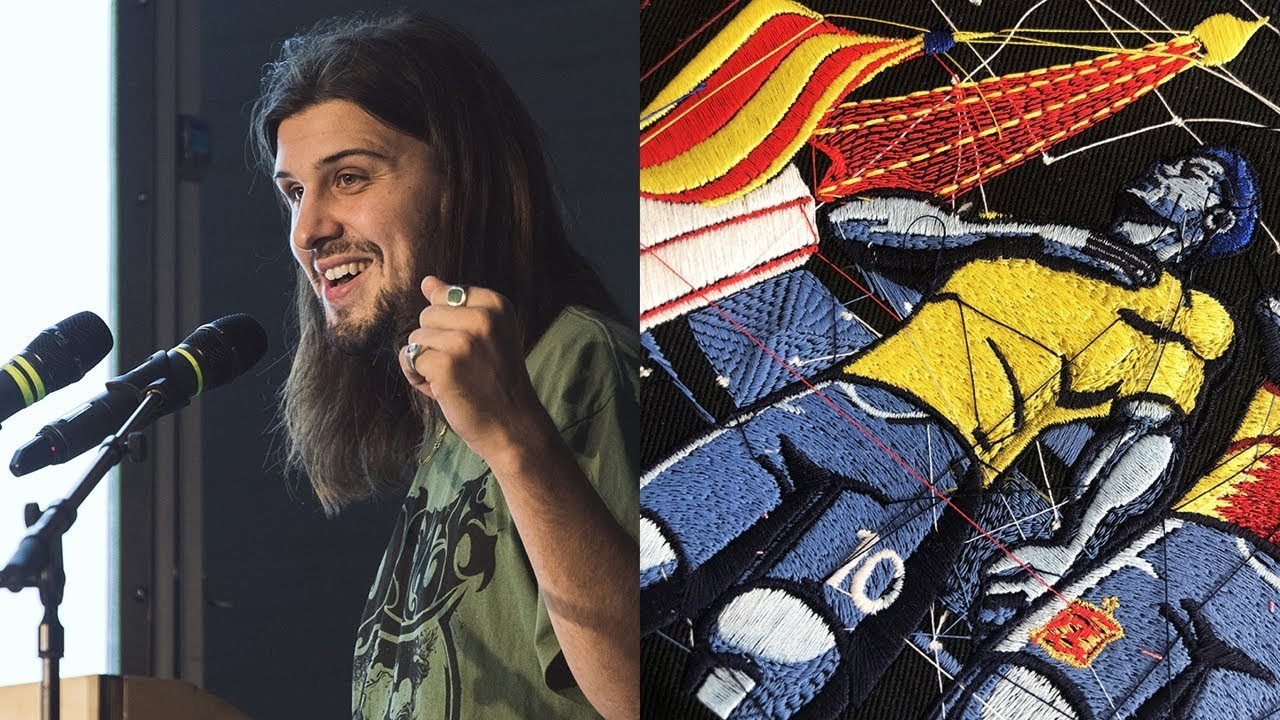
“Never take the easy route; the challenge is what makes the reward worthwhile.”
Transcript: May contain minor errors or formatting inconsistencies.
so yeah I'm across live see I'm an animation director and I work with blink Inc and I'm mainly working in music videos and commercials this is some of my work it's mainly sort of I like to experiment with different mediums and techniques within 2d animation and stop-motion made things that was mentioned at clay icing sugar jelly and embroidery which is what I'm gonna be talking about today.
So the project I'll be explaining about is the world cup promo for the BBC the tapestry that's one of the large tapestries done by the London embroidery studio just around the corner so it's a fully embroidered animation so every frame in this film is embroidered stitched out on embroidery machines bar the intro and outro which is live-action.
So I'm going to chat I'm going to show the film then I'm gonna chat through a bit about the process as well as sort of the scripts and how things would develops very front on. So yeah check out ♪
[Applause]
so embroided animation where did that start I guess that started for me about four years ago when I started experimenting with the technique it was originally for a heavy metal band I was in called throne and it was much more DIY and kind of working out the process than what the London embroidery studio managed to do for us. So that time I was kind of I worked out how to use the machines by myself and process the images so that the machines could read them.
But yeah the basically the reason for embroidery for the band was it was simple it was tied into the music and their culture of heavy metal and that is heavy metal embroidered band patches what if that was animated so that's what I did I'll show you a little clip of that ♪
so yeah that was in comparison to it you can see it's one stitch setting one stitch density so the tightness of the thread and that's all I learned how to use in the embroidery software so I just rattled that out for every single frame.
So the process within that is storyboards animatic design which is the easel and then animate which is the usual sort of animation process and then you go to digitize all those frames which is tracing every frame in an embroidery software so the embroidery machines can read it. And then you stitch out shoot every single frame.
And then edit it together the music video is 3,000 frames and this one was about 600 but in a much tighter time frame and with most of these processes blending together because we even though it was a long job which about six months it was still pretty tight so when the BBC approached me with their concept I read embroidering it was a bit like it's gonna be pretty brutal so I was immediately looking for a reason you know like why use this process why does it tie in to whatever they're thinking is it processed for process sake well it wasn't the opening line was throughout history societies have recorded important events in tapestry Russia is no exception we want to create an animated tapestry of the history of the world cup we'll start with a live-action shot an embroidery machine rattling away seamlessly go to an animated tapestry and then back out to reveal the main tapestry that's created sounds like what sounds pretty good a lot for that so originally it was gonna be a bit more of a sort of straight-up kind of football edit we would have access to the BBC archive and then we kind of wrote a scope each frame create a style so wrote scope as I trace every single frame of real old footage stylize it digitize it embroider it.
So that was a cool idea. And we were sort of thinking about how we're gonna tie the moments together make it a bit more exciting and it just seemed a little bit shame to basically be animating every frame but limited to just tracing it.
So then we sort of had a chat about well if we were in the world of animation why don't we just go for whack and take it a bit more otherworldly you know let's mess with the camera so we came up with a method of let's start on a really iconic broadcast sort of composition.
And then take the camera and twist it fling it around that way we can transition in between things and like I said you can then take it off into space and go out into the ocean and do all sorts of things rather than just goals goals goals so that's where we went sat down and wrote the script with the guys and you know we'd sit and have wonderful meetings and I'd be shown as a footballer I don't know anything about I think I lasted four hours before these guys realized this guy doesn't know anything about football.
So yeah we you know we were trying to get in there not just footballs about the emotion it was about the fans you know the World Cup is a huge world event obviously so it was the atmosphere and the ups and the downs of everyone so as we're scripting that we were also developing designs and researching design and and doing animatics and storyboards so this is what I do I just draw these really funny like silly drawings of football.
So this is the Sudan header in 1998 it sounds like I know what I'm saying but really. And then.
This is another take on that we're sort of trying to get more Russian influence design into it but maybe that was going to get a bit complex so then you know this just simply hashing out ideas while we're kind of in a room and then we'd cut things out and change ideas other footballers wouldn't get in this is the moment where we transition into the Vikings so the Icelandic team come in originally I was pull the octopus in it who predicted the 2010 gold games games girls all the girls in the games so originally he was spinning around into a whirlpool but eventually got replaced by Mario götze and then was the transition that you see in the final thing and again so this is a good sort of example of this is the opening shot so we take a you know the exact kind of composition that was in the in the broadcast footage and then try and mess with the camera so I do these funny little thumbnails and then we get someone knows what they do throw them all up.
And that's more cinematic kind of client friendly way and the same with all the rest of film.
So we're just like ripping apart ideas chucking things around like it's a really sort of free-flowing collaborative process it was great so yeah there's some of the boards and then you. Basically you end up with an animatic so I'll show a little clip if you don't know what animatic is basically just a moving storyboard ♪
especially democracy I am Norma just what she talking there.
So there you go you see it's like totally different styles of storyboards everyone's chuck things in we rip the parts out.
So then we're on to design while that is all happening we're briefing in designers and we're obviously looking clearly at like nice Soviet kind of style Russian kind of vibes with big sort of bold graphics and we especially like the way they sort of split screen by that top-left thing you know they can achieve a lot of narrative and emotion within one frame.
So we wanted to try and get some of that into it. And I was also looking at you know Russian sculpture and architecture and then I stumbled upon Russian mosaics which kind of blew my mind and were the key influence for the way the players were designed it was just the clever way in that like that top right one to see the arms they have like a really amazing way of using certain colors and just staggering them down and using like concentric shading that I thought would look really awesome in embroidery from my vague experience in it. So that was kind of where we started off for the players and then we went to design so we had the amazing Dan Lambert that's the first attempt on the left which is like a bit more kind of statuesque then we're starting to get this nice concentric shading in the mosaic kind of vibes and then he just started to nail it so you know he just started rattling through and just nailing it getting it really awesome.
There was even Bergkamp didn't make it into the thing it's a shame isn't it that was actually my favorite my favorite instructions and then we had rune Fisker come along who's like a contemporary designer I think he's had some stuff on it's nice that he's super awesome. And we wanted to infuse his style with the Russian kind of vibe so then he's like bang check this out super down on the background and then again that Gaza guy he was missed out that little short I like that design but so we got rune checking out stuff and then Dan and him are working together. And we're all and they were working wirelessly and it's all pretty mad so then while that's happening we're then starting to talk to the London embroidery studio and we're like right the main problem that's gonna arise is players recognizability you know we need to make sure these guys look like who they are and people recognize they're not just sort of threaded blobs running around so they start chucking us loads of tests which are amazing and we start stripping back designs and we start kind of realising that we can't have certain details and we're working with them you know saying no this looks better they suggesting things and using different threads and different densities and just insane so the basically the main problem when you're doing something like this is time you know you're just gonna run out of time and the best way to eliminate it in in time in terms of embroidery is drop the framerate of the film.
So we were like trying to use as little frames as we could be really clever all the animators were amazing and they were using like twos threes fours so every there would be some frames that held for like four frames which is you know it's mad and the the basically the the the best way you can also scale down the time on the embroidery is to scale down the frame size so we wanted to start at a three we wanted to embroider everything at a three get lots of detail but then obviously that's gonna take like so long to embroider everything at a three size so reliable go down to a5 which is what the music video I did was and then that starts to get to the point where you're kind of light but you know it means rather than taking like seven hours to embroid one frame you're like three hours and you're like oh that's kind of doable so that's how far we went down.
And then we're at this stage they're also sort of selecting color palettes and threads and all like that.
So then once we kind of felt we're a good stage with the design and everything we go to anime.
So we worked with the lion animation. And it was a mixture of 2d animations so literal frame-by-frame hand-drawn animation composited kind of After Effects motion graphics see stuff in the background with 3d at the end with the statues that's an order in 3d and then designs that's not pointing and then then you get an animation entirely done into DS or the whole thing's finished in 2d looks good as it is so this is what kind of looks like ♪
little short cap because I know how much time so you know that looks great as it is and then we take that over to the London embroidery studio who painstakingly trace every frame in embroidery software every single frame so like look at that I press the button when I did the music video press one button. And it was like auto oh god they did such an insane job.
And then at that stage we're sort of you know discussed a little bit about stitches and patterns and kind of the way we wanted things.
And then we also the main thing was tying each scene together it was how because we were sort of changing our color palettes and the background material was the kind of basis the major colour so that we could save time as well. And we they started coming up with techniques of using applique and the things like this which saved a hell of a lot of time and actually looked even better so then you're on to embroidering it.
So they I think they pulled in another machine of it.
So they had four machines and there you get six frames on one big bed four machines and they just rattling away for like I think twenty four hours a day they had three weeks to do all of it. So it's super tight and then every single frame has to then be snipped by hand these little jump stitches so where the Machine kind of skips over when it's like swapping between shapes and colors it will create a little stitch so there has to pick every single one of these stitches out by hand and then iron it all.
So that's going on.
And then I'm then on to the Machine designs like this embroidery machine that we're going to shoot live-action like what the hell's that originally it was gonna be real we'd go and find like a cool loom place and we'd shoot live and we in post seamlessly go into it.
But then it kind of didn't really work out like that it wasn't wasn't gonna make it didn't really kind of work out with the shoot and the way we'd want to go into it.
So then we discussed sort of making our own machine so it sort of started off like as like a weird kind of proper machine thing with maybe it's like a Mandal type thing with with big rollers and stuff and then then. There was like a stage where. I was looking at like crazy red installations and I thought what if the tapestry was like weaving midair like it was just an everything yeah that's kind of cool and then two weeks layers like that's stupid so we didn't and then.
I started stumbled across like Soviet bus stops really and yeah when I was looking at monuments and this was basically it I mean this next one Oh check that.
That's basically here I saw that was like wow that's amazing totally changed my thinking and then we were looking at you know how we're gonna finish this things it sort of made out of stainless steel was it really high polished like what do we kind of want this thing to look like and the idea was like what this machine is kind of like in some mad basement somewhere and every four years it wakes up and start stitching out like stuff from the World Cup.
And then it goes to sleep again so we were looking at sort of nuclear power stations and things like that.
And then you can see it starts to get influenced into my drawings we still got these brawlers and stuff and then that like little squiggle thing.
That's where it starts to come together that little squiggle with the circle above it. And then. I started developing that more then.
I started to talk to Gordon Allen our amazing art director he sort of stopped sketching ideas I modeled on a hopping really beautiful CG and then he kind of tightens that up. And we like yeah let's go for this. So that starts to get going and we take that to these guys freeform who build the entire thing out of basically MDF laser-cut this machine like control panel we spent hours like trying to make and design and they make this whole thing out of MDF and just completely texturize the whole thing with like fake concrete kind of paintwork raw iron paint work.
But it's just MDF it looks mad and then we put on set this took about I think it was like 10 hours or something just just to put the threads on. So that was ridiculous and they little no strong sign so yeah then we got it on set and we shot that little close-up of the of the control panel we had low loads of Cyrillic text that said kind of like density and power and all to do with embroidery and that's looked like so sort of kind of weird James Bond kind of Star Wars e-type thing.
And then we made one of these as well good and racked up this thing which we learnt was eventually it's called it's called a creole and it's called a crew when you put loads of bobbins on something like that many hours of reading that up. And then we shot everything ♪
so had a few goes of that until the bobbins ran out.
And then the animation frames start coming in from the London embroidery studio so we set up our rostrum camera overhead camera automated lighting rig so we can as the animators taking a frame the lighting is slowly changing and he doesn't have to concentrate on changing the lights so this is wizard Andy Biddle working his rock magic ♪
and then finally you go to Abbey Road Studios with an opera singer John Tomlinson and you record this ♪
[Applause]
[Applause]
that's it thank you [Applause]
Latest Talks
-
Will Anderson and Ainslie Henderson
Bringing stop motion sorcery to BBC’s Small Prophets
Watch -
Amber Weaver
How does contemporary type design translate into the wider world?
Watch -
Murugiah
Why you should reject the formula and make art about things you love
Watch -
Marina Willer
Design thrives when you find poetry in the simple things
Watch -
Lizzy Stewart
The hundreds of drawings and writing-on-a-whim that goes into comic novels
Watch -
intra
The rewarding process of recognising the art in obscure everyday life
Watch