
Nicolas Bonner is a landscape architect turned graphic collector, known for his extensive compilation of North Korean graphics. He shares unique insights into the design elements and cultural influences found in North Korean ephemera through his published work.
Nicholas Bonner
Inside North Korea’s graphic design, from matchboxes and cigarette packs to mass games
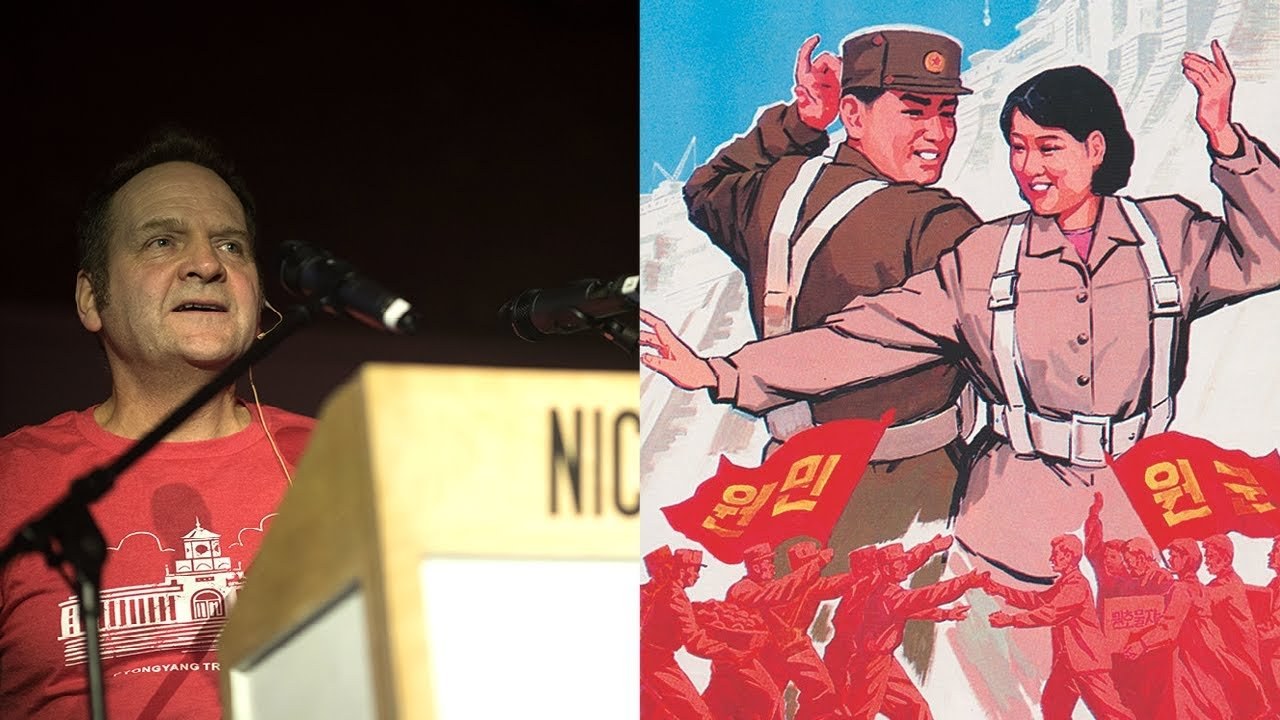
“Nobody has ever turned the accumulated rubbish under their bed into a better book.”
Transcript: May contain minor errors or formatting inconsistencies.
[Applause]
it's it's quite read the nicer Tuesday's allow to our talk on politics and North Korea diagrammatic situations I it might landscape architect by training and in 93 went to visit China it was a big thing everyone was going off to Asia to study design and I ended up in China and a trip to North Korea liked so much I found it's so interesting that I stayed and set up a company called Koryo tours and since then we've been doing travel to North Korea because that was any way we could get visas in and out.
And then that.
Actually became a job and at the same time we started doing cultural exchanges film sports and humanitarian aid and I'm in and out of the country most months and as I was going in and out I'd see this sort of stuff that I like to call a very carefully well curated exhibition but as my friend Paul French said nobody's ever turn the accumulated rubbish under their bed into a better book yes so so basically going in and out of the country what I'm going to do in the next 10 minutes is to take you to North Korean graphics and give you an idea of what it's like to be there. And some of the stories behind it I'm in and out most months I live in Beijing so the first sort of thing that really gets you about the country's purely the beauty of there the aesthetics behind there the graphic this is a face powder it's made of ginseng it's basically Koreans like Mike many Asians like a pallid skin that's what beauty is so this is a very sort of white looking skin quite frightening if you see people in the fields working the countryside they will have sort of a total white it's not acai it's basically a total sun block but it's the graphic that was beautiful there's also as well as the aesthetic disease less knowledge interests and here you see the the the ever so happy army and the ever so happy civilian let's make the people an army unity as hard as steel it says and their flags they're from the soldiers running towards the people saying let's help the people and the people running towards the army going let's help the army this is part of this Songun army policy so behind the graphics there's also this sort of hidden and this was a study if you like of North Korea not always so obvious.
This is a beautifully made fan that used to be handed out in July simply because it gets quite steamy it's not fire this is a choreo flight but what it tells you is is he's sort of behind the graphic is if you ask this girl this air hostess you say to her what's your favorite country what is your favorite country in the world and she will say my country is best and this slogan is on buses in North Korea and it's it's from this girl who travels the world well I reckon she only travels from Pyongyang to Beijing or Shen yang and what Shanghai and the fact that she's never been off the plane still doesn't stop her saying that my country is best so that sort of gives you the isolation of this place still no internet I can communicate in some way by email but there's no internet there's an intranet but certainly the ninth is absolutely very little getting in and then there's this personal side to the graphics this is a the smallest team in the world.
But in fact these the North Korean football heroes of 1966 who beat Italy won nil in the greatest shock in World Cup history and they these are sports medals are not like they played football.
And then gone on to kill 50,000 people there and they're amazing bunch lads in when we first started filming this is the the sort of bus ticket I got it's not a particularly beautiful graphic but for me it's also a diary this was we went filming these lads and we were on the Cham and we were told you know why are you filming all these old people are you trying to make our country look poor to expand the direction myself sort of stopped us or not haven't got an answer for that one but the sound man said are you not proud of your old people who fought for you in the Korean War and from then on all people being shoved everything away left right and center the second film we made in 2004 is this is a state of mind it's following two girls in the biggest choreographed performance in the world this was actually leading up to a mass games it was the last mass games was two thousand thirteen hundred thousand people.
So there's also sometimes just a personal sort of a very simple graphic but a very personal meaning behind it.
This is what a mass games looks like Eiger skis just enough out of it slightly more expensive than my one but this is the largest graphic for those of you interested in graphics this these see seen that the back is 20,000 school kids each in ranks each school can beat him with each other to make sure they don't miss a pixel and this is gives you an idea of how it works so yeah we're doing well so far the North Korean graphic right you've got a basic of it it influences the the basic makeup of a North Korean graphic this is traditional white tiger that the whole of the Korean Peninsula has that would know that immediately but there's also in a lot of the graphics that's influenced from China which traditionally is the sort of Big Brother and as Mao said China fought with North Korea in the Korean War it used to be lips and teeth it's a little bit the relationship now is more like lips and false teeth it's not as good as it used to be and Japan has a big is sort of design influenced much as though the Koreans would hate to admit that they were occupied by Japan from 1910 to 45 the whole of Korea potential isn't too happy in that on that.
So the history Korean colors pretty clear they're pretty bold and this is again both across the whole Korean Peninsula but what you don't get in the south is something like this.
This is a thank chole steelworks to you it's quite clear it's a matchbox so obviously it's a reliable match but actually imbued in that graphic is much more it's this allegorical it's sort of symbolic behind that is is the steelwork that helped rebuild the country after the total destruction of Pyongyang in 53 after the bombing so it's even more I mean it's so every Korean understands this sort of symbolism again you can influence those Korean colors you can see coming out but here we see the first start of bourgeoisie coming in in the 50s and 60s everything was sort of very standard brand but then you start seeing luxuries like chocolates and things coming in the packaging actually is far more beautiful and the contents but many oh that's another story.
This is this is now the influence of the West coming in here you've got a pack of cigarettes called pepto it's the sacred mountain and at the very top you see this outline of the mountain it's that it's basically the Mount Fuji for the North Koreans this is PEC Doosan it's the birthplace of the Korean people. That's both north and south and it's also the birthplace of the revolution.
And then you've got a pine tree lung longevity nothing like pack of and a bit of longevity and this this whole thing was made to emulate Rothman so these in fact were the North Korean Rothman's version.
So this is the end of an era basically the the the graphics were all drawn by the industrial art studio this is how a landscape architect by training and this is the sort of stuff that I understand and it's why I love these graphics and this is painted by a local art studio this is right up in the north by that mountain and there you see the pepto again and this statue of victory this is 50 years after the korean war 92 is in fact due to 92 they they totally bumped the whole year from birth of Kim il-sung in 1912 so this is in fact shot in 2003 so this was the an era of beautiful hand graphics which was destroyed around 2002 with economic changes and here you see a la Ford with a propaganda poster but instead of advertising soap suds or fairy liquid or what have you it's got it lights up at night with your good old revolutionary slogans and the final death sort of knell to sort of a handmade graphic was Korean color very much like a well-known beverage that some of you might know so sadly now this sort of collection sort of start started waning in around 2004 when sort of digitalized Gump started getting in the influences this is when I was first there so 95 you can nightly sort of get the feel of a sort of posts of the cold but during the Cold War but once that economic change had come in kids started coming out in fashion.
So there's a sort of dramatic influence I love that picture with the way.
So that people were expressing themselves outside influences were coming people were sort of seeing more than just their own North Korean fashion they started basically instead of building their own clothes things started coming in from abroad and influences this is when we took mr. Bean we did a lot of film exchanges and things and Koreans when they laughs in North Korea they will cover their mouth or try to as certainly the women will and this is watching a terrible film but enjoying it rather tremendously and again after these economic changes what happened was Chinese goods started coming in and they started influencing the whole scene so this is at the subway buying cheap stuff so how did it all change I mean basically everything in in North Korea is state-owned there's no sanctioned private enterprise so this is the sort of typical poster you have before you know buy Korea and Korean is good for you and you would tend to think that.
This is all you get you get a sort of you know a mano type of product but I love about this picture it's just the way that the beer bottles sort of up and down and the way they stuck on just the labeling but in fact it's not true it's not just one product here you see three versions of cigarettes Hana which is the unified career which we're all been sort of quite aware of recently this was in 2002 it.
Basically under Kim dae-jung there was this sort of sunshine policy and the cigarette sort of blossomed as the north and south came together and there's north and south pulled apart sort of four or five years later so the cigarette disappeared if you're into construction then may I suggest the middle of cigarette is just for you. And if you're into paradise take that one advertising as well.
This is the first not North Korea this is the only advert you'll see in North Korean they don't call it an advert and there's no such thing as advertising it's called promotion and they don't do for the promotion such as if I wore this perfume I'm instantly more attractive to male or female it's tends to be sort of the Taekwondo kick the out of someone sort of style if you drive that rather nice red car but that's about the only app that you'll see and this is what the sad state of today.
But this is nuclear North Korea and yet what everybody wants is glossy sweet packaging so the actual propaganda element is sort of disappearing slowly that's in a supermarket store lovely no sugar in there and Pyongyang's changing as well this sort of what what all this allowed was this burgeoning for the middle class to come about. And this is downtown Pyongyang it's not a propaganda shot and people live here.
There are two and a half million people here they are privileged to be in Pyongyang as compared to anyone else in the countryside but this is Pyongyang they you know live and work here I love this sort of sort of idea of merchandise and sort of how people are utilizing it the first thing you must buy is a inflatable donkey and on the back the guy with his bike and he's carrying this with dried fish which is very good with beer but it's that lovely human sort of part finally in North Korea I also sort of another sort of sad collection is the real propaganda stuff not just the posters but these are big ink pieces and they've often this sort of size that you're seeing it. Now in North Korea in the eighties they said arts and culture were a tool for facilitating communist revolution. And it's pretty clear there you don't need to be very bright to understand that you know we're all happy we're all working towards building a better and stronger country even in the linocut it's exactly the same repeated but if you go to a North Koreans home.
That's the joy that's this is the sort of bit that we don't ask ourselves and I think this is the bit that you don't see on Fox News I feel a bit sorry for Santa Claus.
And this was in July I mean very hot for him as well as being in Pyongyang video a mistake but anyhow it's nice to see and my sort of final slide is I think it's this frivolousness in a country that isn't known for being vague sort of great for volley and I took this bought the book I made I've shown it to North Korean friends and when they open it they have the same reaction as if I would show you photographs of products that were when you were a kid and it's this humanity and I think the whole thing that that we've been doing at Korea and what this sort of book I suppose is part of is I believe very strongly that is sort of an engagement North Korea has a policy of isolation and yet we tend to isolate it we fail to understand it. And I think that's the sort of those are the sort of places that we need as individuals to start filling in so a book and graphics is I hope slightly more the whole thing than its individual elements thank you [Applause]
Latest Talks
-
Will Anderson and Ainslie Henderson
Bringing stop motion sorcery to BBC’s Small Prophets
Watch -

Amber Weaver
How does contemporary type design translate into the wider world?
Watch -
Murugiah
Why you should reject the formula and make art about things you love
Watch -
Marina Willer
Design thrives when you find poetry in the simple things
Watch -
Lizzy Stewart
The hundreds of drawings and writing-on-a-whim that goes into comic novels
Watch -
intra
The rewarding process of recognising the art in obscure everyday life
Watch