
Dia Studio
How jazz, biomechanics and choreography shape a kinetic approach to type design
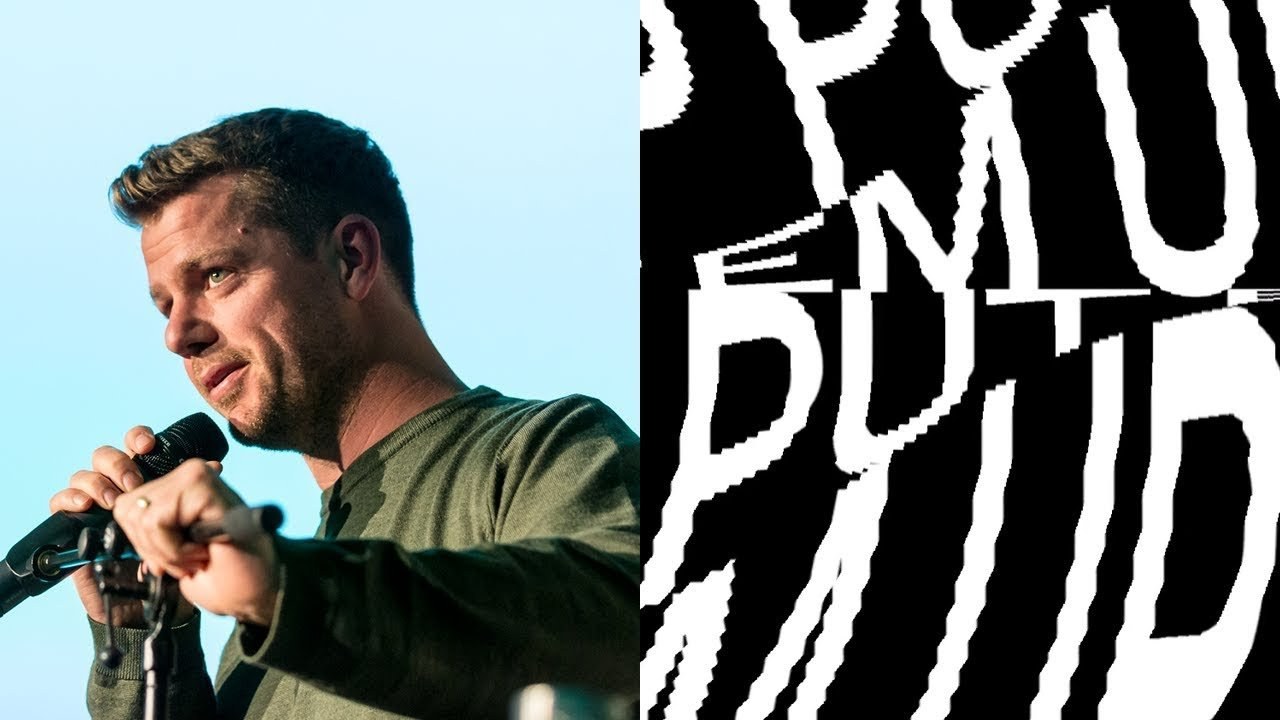
“Resistance is what an airplane needs to take off. If you feel you're using stuff that is personal to you and the things that you love and care about and you transfer that into the work, you will probably be misunderstood — but you should let that not be an issue.”
[Applause]
as the last speaker I probably the most to drink so I had to use the restroom before I got up here.
So I rested pardon me I'm Mitch Paone 1/2 of DIA studio the other half is somewhere in the audience who is also my wife McDonough so all right.
So when I got here I realized that I have 10 minutes so I'm not starting the clock quite yet because I haven't gotten my slide but I have a lot to say I have a lot of process to kind of uncover about what we do in the studio and on how sort of my background as a musician and kind of my life experiences kind of put me on this stage today to talk to you before I get into it all the speakers tonight have been extremely inspiring and it's kind of humbling to even come after this because I'm just gonna talk about fonts and design and stuff so shallowest discussion of the night for sure anyway I'll get into it.
So yeah that's me and Meg shooting type out of our faces you know keeping it shallow and so the kind of covering title of sort of the processes idea of time is form form is time so thinking about how movement all these different influences actually can come together to create visual form concepts for graphic design branding whatever sort of comes together. And I think that really has driven a sort of foundation for the studio and shameless self-promotion yep okay.
So I'm gonna break into this.
So we've kind of devised there's two sides of how we work there's the input and the output input is learning technique everything that sort of has happened in your lifetime up into that point improvisation is that point of creation that point of just doing making and creating things without being critical just iterating and just playing with things.
And then once you produce things you have and output so the results and therefore you can take a step back and take a look at that work.
And then sort of see what needs to be reflected on improved on. And sort of pushed further. And I think it's very important that there's a separation between the two because that allows you just to make stuff and not worry about stuff as you do it. And I can get into that.
So I'm going to talk about the input for the next eight and a half minutes and then kind of hit the output at the end I think the inputs more interesting to Leda this.
So I started to be interested in arts really had nothing to do with graphic design when I discovered the music. Actually got into jazz and then.
Actually discovered the music of Herbie Hancock first I think is about fifteen or sixteen years old released a record called thrust that's a live record in Japan like the 70s nerdy jazz guys here might know what that is you know heard chameleon and all this stuff but I remember telling my parents like hey I know I've been taking piano lessons but like I really want to learn this. And I was like this point in time I like new profoundly that I wanted to understand and how to play jazz music improvisational music something like really grabbed grab me and touched me at that point in time.
And then through Herbie I discovered Wayne Shorter and he's kind of served as like a life guru for me because he's I think almost 85-86 he just won the Grammy for Best jazz album of the year this year. So if you put that in perspective this is a man who's and clearly at the end of his lifetime creating some of the greatest work of his lifetime so to think about that as a designer you know we have this kind of oh we're gonna get 30 you were coming creative director we're gonna kind of stop and tell other people what to do kind of thing.
But that guy's not doing that he's continuing a lifetime of learning trying stuff new put himself in a position that he doesn't understand to evolve his artwork and to me. That's super inspiring and that just kind of keeps me going and proved I played piano so yeah I can play a little bit of jazz ♪
anyway I'll get into that and briefly a little cover up.
So this is the chorus studio so it's Meghan Meghan me Deana there on the right side daniel Wenzel and then June who's this is South Korea that somewhere in middle Europe in New York this is our loosely geographically defined studio and then.
I think it's important also although we have a small studio that I have people that I talk to that I have tremendous respect for in it that serve as advisors to even look at work that have their own commercial practices or friends or collaborators or freelancers that really kind of push the work to another level that we can work with to demand much I think larger projects and things like that so here's a larger selection. And in Central Europe they're all type designers I don't know why that's the case but you know Switzerland they like type there yeah you know what I'm talking about.
So anyway identity why are you guys looking at a zebra yeah for real though zebras are a part of the horse genius and they come out of a history of evolution and therefore at this very specific part of Africa forms the very specific genius of zebra why do I bring this up because everything is connected no but like to think about this as a designer we like okay font color what do you think about these fonts client or you like this cool we're done no no it's not just color it's not just typefaces it's everything that surrounds that the context yard history the sound the movement the dance the culture all of that comes together to form a very specific identity in that to be to look at something so holistically hadn't can profoundly influence an idea or a concept and these are the things that I like to really think about it specifically for tonight yeah the kinetic word yeah I kind of want to kill the word kinetic typography now I just want to say this moving text so to drive down specifically in animation in motion there's these are all based on natural fundamental things do you think in physics is a very basic understanding these things move and they have a very character or a very specific feel to them that we can be influenced by and think about from a design concept in a way that can generate visual form and animation and move back and forth and also all this stuff can be really set up in a way. That's let's see generalized or programmable so if you're talking about a graphic design context that it.
Actually can be literally defined in guidelines in essence so to expand on that back to the zebra I get really interested in biomechanics this Eadweard Muybridge it's like late 18-hundreds photographer filmmaker created these sequences of images so if you think about a horse running the identifying characteristic Erik turistic here not isn't necessarily the hair or the body of the horse it's the mechanics and motion of it to give it its identity or form and I've max it laughs I tell this like story a thousand times like one of our best friends he's like Mitch I can tell you're from my legs looks like it was shooted in green in your face you know like wobbling back and forth and and he's like but like I'm like how do you know it's me like from that far it was like cuz you whap waddle like this like you have this walk that you look like really happy all-time. And it made me think I was like so you've identified me by not what I look like but how I move so that kind of got me thinking about this that everything really has a generalized motion or something that we can think about that can influence some system in a way some sort of looping animation some sort of identity that's all related into how the kinetic energy of that happens and I think there's something quite dynamic in that that we can capture any frame. And it has its own sort of I don't know dynamic energy but it also is recognized as part of the same object and goes on and on like I I get so excited about stuff that's just like googling science imagery on internet and stuff like that and just seeing these really cool sequences of images and seeing how that all works and this serves it's kind of endless inspiration for just tests and animation and trying new things.
And then you see even just looking at this stuff that there's like wow there's a lot of this visual context that we can take and think about then how that sort of survives in a world of graphic design even the way it like a caterpillar moves for example so you know.
That's a ridiculous thing but going back to my point about identity the fact that a caterpillar can be an exciting point of reference to think something animates is maybe radically different but it gets really exciting when you match the two so I think this kind of process is something that we would get really excited about so kind of like the motion of a snake but using film techniques to capture that cool thing about humans cha cha real smooth we can dance we can make music. And so if you were a part of the 1990s club scene in the UK and dropped a bunch of ecstasy you would be very familiar with the liquid dancing techno scene if you're part of the New Orleans second line dancing and in a funeral you would be experiencing this kind of dance this kind of style this kind of rhythm if you were part of the classical you know French 1800s class you would be interested in ballet but what's interesting about.
This is there cultural references that drive the music that drive the sound to drive the rhythm that create a very specific art form from that and those things that we can think about in animation or design we can start to compose and create things move that reference just like a composer and sound does or a choreographer can do in class too that leaves the masters of it the Jabbawockeez are breaking down very specific components of music to create their dance movement and I find this quite fascinating to think about well how can we translate this into something moving so I'm gonna fly through this I don't know where I'm at I'm but you break down sort of the fundamental rhythms you have the sound there so you see I'm connecting sound I'm connecting choreography I'm connecting cultural context of music and rhythm and ultimately can create these compositions in this case it's no different than an identity system for a score of music are no different from that just the way it's executed is a different way of saying that and artists have kind of looked into this.
This is a piece by John Tesar a looking at a Bach piece to see how visually we can create something. And I find this fascinating because it feels dynamic and musical but it feels very graphic at the same time labin notations very beautiful stuff this is kind of informal notation from choreographers trying to show match the music to the dancers of how they're supposed to move and you see how these visual systems come out of that.
And it's not even really anything related to graphic design but this fundamental strictness of how our bodies can move but how expressive it can be at the same time I like this interplay between the two I'm just gonna keep moving forward that. So in this some more examples and then. Now it's 2019 this is the current state of our lives we have a technology that sort of enables us to operate communication and design systems through screens interactivity and all that stuff and going back to Minority Report that's a reality in probably five years this might even be like an old reference for people than my age me because I thought this is a cool movie people are like I've never heard of this movie because I'm in my younger twenties but given that the guys in the street cart we're like already hip to this like wow we got these like animated screens that we can like shred type with and like oh yeah oh wait a minute I skip that slide yeah quite important yeah the hotdog sales were way beyond trend here in the US obviously we have the tech thing going on we are spending a lot of money and effort putting ears and noses on people's faces and Instagram so but why can't we think about this in graphic design so in that case to reel it back a little bit we have to evolve the tools we use no different than in music so an organ to harpsichord to a piano to a synthesizer to an MPC to software so we can evolve the tools you use to deal with the current state of communications of the work.
So therefore we have to be creative with the tools to be operating in a specific period of time.
So this is just some examples of some things when we're thinking about specialized coded design software to create things so all right there's a process of dia studio and seven and a half minutes so you take Wayne Shorter horses pianos 2001 Space Odyssey code maniac and then you mix it up. And this is an average day at to your studio six hours of pure improvisation and jazz and then what happens is this ♪
now tell me young makers oh now tell me I can live longer like a little frog and I can live right. And I can sing song can I be treated ♪
so design once upon a time or first maybe still happening it's like idea we make us still okay maybe we should make it move oh we need to make a website so they're forced to animate I don't I think this is like completely obsolete like we need to think about everything in equality interaction animation still all this visual form comes together because we have to deal with experiences that live beyond a lot of different formats whether it's interactive VR 360 camera all this stuff that we have to deal with because of capitalism and sailing selling stuff you know the important things.
But I think as some to echo some previous things we have to take advantage of that we know the trains moving but how do we utilize that as artists or designers to evolve what we do in a way. That's responsibly so I think in a more direct thing that becomes the process becomes about less labor but me more curatorial about the work so you have tools and then ultimately generate things for you.
And then we can take a step back and kind of decide from an intuitive standpoint of what's working what's not working this comes back from kind of a jazzy point of view or a musical point of view of like does this feel good or does this not feel good and I think from a editing process I get excited about that because that removes me as the designer and removes the team as a designer and we move in a way that comes it if that doesn't hit us or make us feel a certain way then therefore it's not going to connect possibly to certain audiences so to conclude a little this is why Wayne Shorter is like my guru it's been like food for thought resistance is what an airplane needs to take off.
So it's kind of like no really know where he's going with that so but you know it's time to misunderstood and I think for anybody who's doing design fine arts who doesn't really really matter if if you feel you're using stuff that is personal to you and the things that you love and care about and you transfer that into the work you will probably be misunderstood but you should let that be an issue is I think is sticking to your guns eventually the plane does take off in a way. And I'm gonna let these fantastic musicians sort of finish this off for me.
This is Jon batiste and Wayne Shorter just talking about process are you trying to relate to them that feeling what are you what's your intent well.
Actually the intent now is to throw away it kind of put away everything that was learned too studied stuff again I always refer because miles is the only one that would talk like this he said do you ever feel like you want to play it you want to play like you don't know how to play and then he said do you feel like you'd like to play music that doesn't sound like music that doesn't sound I know is that right Amelia and I have a tape of Charlie Parker giving a lesson in the student says mr. Parker I have to learn all these scales have to I won't memorize all these skills and Byrd said yes and after you finish learning them forget them write play as if you don't know all that stuff are you not playing a scale but you plan straight from the heart yeah that's beautiful thank you [Applause]
Latest Talks
-
Will Anderson and Ainslie Henderson
Bringing stop motion sorcery to BBC’s Small Prophets
Watch -
Amber Weaver
How does contemporary type design translate into the wider world?
Watch -
Murugiah
Why you should reject the formula and make art about things you love
Watch -
Marina Willer
Design thrives when you find poetry in the simple things
Watch -
Lizzy Stewart
The hundreds of drawings and writing-on-a-whim that goes into comic novels
Watch -
intra
The rewarding process of recognising the art in obscure everyday life
Watch