
Meji Alabi
How filmmaking led this director all the way back home
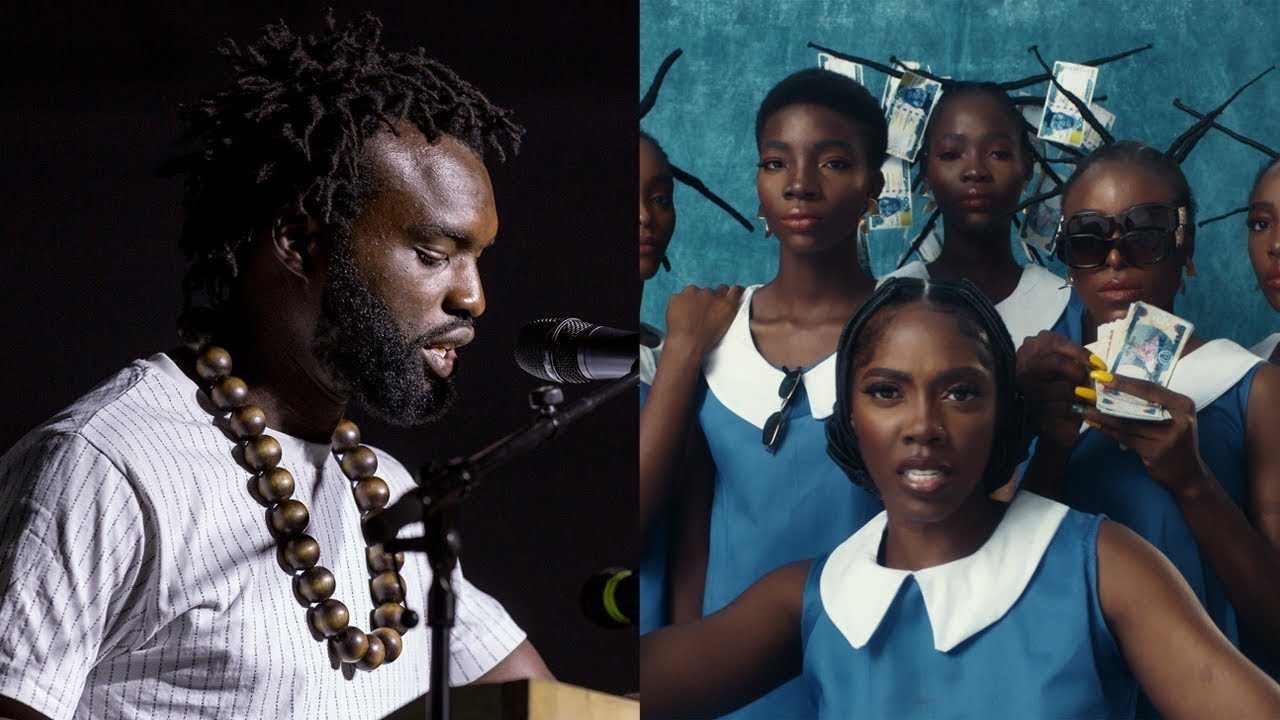
“I was never really an insider anywhere, but I wasn't really an outsider either. I was just kind of both, because I never really lived anywhere long enough to say, like, yeah, I'm from here, but I always kind of had a little bit of a sense of belonging.”
Hello everybody. I hope everybody is having a good night. My name is Meji Alabi. I am a director at Black Dog Films and JM Films. I'm here to talk to you tonight about 49.99 and some other stuff. Just to hide it. There we go. Okay, and how filmmaking let me back home.
So I'm going to start with a picture of a wild young Meji, which is, you know, he looks a lot better than me now, but it's a kind of expresses, I guess, where I am, like mentally at all times, you know, I'm curious and, you know, just full of, I guess, youth and, in a sense, just trying to always, I guess, stay in the zone, in the zone and just in a youthful mindset. And I think that kind of, you know, it comes from an interest in culture and people that I've always had. And, you know, it's just always an interest in culture and people that I've always had that. And that comes from my diverse upbringing. I was raised between Lagos, well, I was raised between London, the USA, and a little bit in the Caribbean, but I have Nigerian parents. So that kind of, you know, gave me a fine wall perspective in the sense of I was never really an insider anywhere, but I wasn't really an outsider either. I was just kind of both, because I never really lived anywhere long enough to say, like, yeah, I'm from here, but I always kind of, I guess, had a little bit of a sense of belonging. And throughout uni, I'm just actually flicking through slides. So each of these slides are like videos I did, you know, over, I guess, some of my career, but I'm just going to talk a little bit about my background because I feel like that's quite important to really understand my work and where I come from. So throughout uni, I was doing some photography and stuff, and eventually you get the question, you know, if you shoot videos.
And I said, yeah. And I had to quickly learn how to edit and stuff, and it worked out quite well. And I ended up moving into shooting what's called hood videos, which is you go to your, you know, respective hood wherever you are around the world, and, you know, you show up with your camera, and you shoot a quick video, you know, you just kind of make it work. You kind of make it work, you know, and it teaches you, you know, to be quick on your feet, you know, for many reasons, but it also teaches you to be, you know, to just make, to, you know, use what's in front of you and just really, really, I guess, make something out of nothing. And what that did for me was it trained me as, you know, as a filmmaker for what I was about to do next. So why I said filmmaking led me back home was because I didn't really grow up, you know, in Nigeria or in Africa. I was in London. I was in Houston, Texas. I was, you know, I was kind of disconnected from, you know, my roots, you know, even though I had two Nigerian parents. So, you know, through film, I kind of, you know, returned back to Nigeria.
I started doing videos, you know, for, you know, WizKid, for Tiwa Savage, for David O, for Burnaboy, for Malik Berry, you know, for all of these artists that are, you know, really, you know, transcending borders and representing the culture and because then in Nigeria, it doesn't really, or in Africa in general, it doesn't really work out. It doesn't really work in a way that labels are the ones who are connecting artists and people. You know, the artists contact you directly and they're like, you know, hey man, you know, I want to do this video. So it could be like WizKid or David O calling you direct and then you feel like, you know, since I was doing it for a long time with them and I've kind of grown with these artists, you know, I felt like I have like a duty of care to the culture, you know, to make sure that I'm representing it in the right way with them. You know, so luckily enough, you know, I was able to, to collaborate with these artists and, you know, make, you know, reconnect back with my culture in a sense, as well as, you know, represent it to the world in a certain way.
And if I could just skip through these slides really quickly. So, you know, this is actually, this slide here is from a shoot I did in December, which is, you know, it was a bit crazy, but I guess that's kind of the beauty of, you know, shooting in places like, you know, like Nigeria, South Africa, Ghana, Kenya, Tanzania, you know, like there's always color and texture and, you know, wherever you point the camera. And this, for example, is in Shita in Surilere, Lagos, Nigeria, where, you know, we had Casanova, he's a rapper actually, and it was a song with Casanova Tori Lanes and David Oh, and, you know, we were shooting in a really rough neighborhood and as you could tell, we had more extras than needed. Like everybody really came out and, you know, it was exciting. You know, it was different. I guess these are the type of things that happen, you know, with, when you're shooting in these type of situations.
But it's also beautiful because, you know, normally what could be dangerous is now intriguing and everybody just comes out to have a look and, you know, get involved. Like a lot of those guys, I mean, none of those guys were, I don't think were like paid extras, but they definitely got paid in the end because of how things work. But, you know, they just say, I said, you know, everybody just top list and let's go. And, you know, they were super excited and like ready to be a part of it. And, you know, we even had like, I don't know, the hyena guys out there, which was, you know, we got them styled up and, you know, they brought the hyenas and everybody in the neighborhood and it was like super, super excited and also kind of scared because supposedly they have like some mystical powers that, you know, that you don't want to be involved with. So, yeah, and that's that. But again, you know, as I was saying, you know, shooting in Africa, it's really difficult, but, you know, it's, you know, it's equally as rewarding just because, you know, what you, what, what the, what they lack in, or what we, I guess, lack in technical ability sometimes, you know, you gain back in, you know, in texture and color and vibrancy and in like the greatness and the nature of it. So, you know, with that being said, here's a picture of me on set and you can see my face, I'm stressed out. But, you know, this is on set of 49.99. Don't know what I'm thinking at that moment, but here's the actual video that we are, you know, we're here for today. It's a T.S. Savage 49.99 and I'll play that for you and I'll kind of run you through some of the scenes. T.S.
Savage 49.99 T.S. Savage 49.99 T.S. Savage 49.99 T.S. Savage 49.99 T.S. Savage 49.99 Okay, so that's 49.99. Thank you. So, you know, that video, we shot that in a, well it's not disused but it's kind of run down like old railway station, you know, in mainland, in Lagos, Nigeria. And 49.99, it stands for, you know, it's a term coined by Felakuti which, you know, it stands for 49 people standing, 99 people sitting, wrong way around, 49 people sitting, 99 people standing in a transit bus which kind of, you know, it's only meant for 49 people but there's, you know, 99 plus 49 in there. So it kind of stands for suffering and smiling. You know, it's a saying, you know, in Nigeria I guess where, you know, even though, you know, things aren't going that well, you know, people, life still kind of goes on and, you know, you keep it moving. And, you know, it's a statement kind of for the, I guess, the economic circumstances of, you know, many African countries nowadays. And I guess this was Tiwa's take on it. So our first scene, you know, what I was trying to do for the video overall was, you know, kind of really make Tiwa, like, you know, it's a statement in the sense of every scene has African elements in it and with Tiwa as a centerpiece, as, you know, a real, you know, iconic, you know, woman in power and, you know, who doesn't like that.
So we, you know, we started with what's called, you know, I call it the underground Dambi, like, fighting ring, which is, you know, we got like a whole bunch of guys and this is like in one of the corners of our location and, you know, we have Tiwa obviously styled in like this cool jacket and she, you know, she's the queenpin of like this underground fighting arena. But, you know, it's a special type of fighting because it's, I don't know where this picture's gone, it's gone.
But it's a Nigerian boxing or martial arts called Dambi, which is from, you know, the northern parts of Nigeria where guys like wrap their hands in this type of rope and, you know, they're beating each other. But, you know, and she's the, you know, the, I guess, the person running the show and that's kind of the vibe I tried to, you know, give her there and that's why I guess she has a monkey on her shoulder, which a small detail is the monkey has the same coat as she does. You know, I think that's cool. And here's a behind the scenes shot of, you know, all the madness going on.
I had the megaphone but I was opting to scream instead because it was working. And this scene here is, you know, one of the more iconic scenes, you know, in the video, it's based on, you know, a photograph by an American documentary photographer called Elliot's Elisaphone. You know, he went to a school in 1972 in Congo, a Protestant school and he shot these schoolgirls and, you know, I thought that, you know, that looks amazing and, you know, I want to kind of channel that and, you know, kind of bring it to life but, you know, with a modern edge, you know, with Tewa, you know, at the forefront of it. You know, I really liked, you know, how the girls came across in these photos.
So that's what we were aiming for and, you know, that's kind of how we came about, you know, how we came to this and I wanted to be quite direct with it because, you know, I just kind of wanted to modernize it and in the video, you know, we have the girls in the sewing machine in the factory, you know, just working away, you know, kind of as a way of saying, you know, they're independent, they're kind of doing their own thing and we, I guess, modernize it and put a little bit of contrast to the original photos, you know, where all the girls are kind of more simple in terms of their makeup and stuff like that but in here, you know, they're more glammed up. She has a double Versace shades on. Tewa references Versace quite a lot in this song and, you know, she's counting money, has the yellow nails so it's just kind of a bit more glam and in your face. So, you know, on this setup here, I was, you know, trying to create something for each, for my team to be able to, you know, set things up quickly so I drew and, you know, I'm not the best of a drawer of artists but that was kind of, I guess, a setup I was going for and on the next one as well and this one, you know, we have the girl with the money tree and I guess Tewa at the forefront of it so I tried to keep her at the forefront of everything and here's the picture I have for that. So, not the best artist but it kind of helped, you know, with the organization of the team and I was using it as a ghetto shot list on the day as you can tell, just exiting things out as we go because, you know, it ended up being like a 23 hour shoot. We were out all day and nights and some of the next morning and, you know, I was just trying to make sure that I was knocking off my shots as I kind of went along and this is a kind of an idea of, you know, what the location actually looked like and this is actually a small part of it, you know, it was huge and kind of really dangerous as well because it was like kind of really old but you can see that we're setting up the sewing machines just there on the left side as we shoot the, you know, the blue scene. And the next scene, you know, it's very simple, Tila in front of the train. The train is actually Nigeria's Flag's Colors, the green, white and green and the 49.99 in the background. So, you know, it was just another nice little touch and an ode to Nigeria for her and again, my picture for the team to see.
So, I should get better at storyboarding I think. So, this is actually an ode to Fela's Calakuta dancers. So, Fela Kutiazzi's dancers that he always had with him at one point and, you know, and during the Highlight Fera, you know, obviously, vinyls were in during that period. So, I was like, yeah, you know, it'd be awesome, you know, if we could have, you know, two dancers or three dancers and holding, you know, Tila's face over the vinyl and Tila performing. So, you know, we shot her on green screen really quickly and we had the dancers come in and do their thing. And this is kind of from my treatment. So, I couldn't find a picture that really worked and explained what I wanted it to do. So, I ended up using that and luckily they believed in what I was saying and again on the day I had to tell the team this is how we were going to do it, you know what I mean. And it worked out.
I think we got it right. The next scene was, you know, this is Sheaon Kutiazzi, so Fela's son. He, this is one of his, you know, he's also very influential in, you know, to the culture, to Afro-Biz. And, you know, African music's history in general. So, you know, this is one of his pictures that was, I found, you know, doing my research while I was looking for this video. Well, the researcher for this video, I found this picture and, you know, I thought like, sick. It's amazing. And I want to kind of channel that same energy but with Tila. But, and why so is because in Nigeria we have Okadas, which are motorcycle taxis. And I'm not sure most people have seen them before. And there's never really women in control of, like, women don't, don't, they don't drive them. So, you know, I thought why wouldn't it be so cool if Tila was like, you know, the boss of like an Okada gang. And that's where, that's where this scene came from. Again, in the train station, as you can see the trains on the left and the right, a nice like vanishing point down the center with, you know, models on all the bikes around her. So it's just kind of channeling that, you know, the inspiration from the shot and, you know, bringing Tila really into the, into the center of that and like, making her like, bring that scene to life. And, you know, she absolutely killed the performance there.
So, you know, it was really simple. And, you know, I kept it quite straightforward in the treatment. And, yeah, here's another behind the scene shot and my drawing again. So, I mean, it makes sense if you look at it and, you know, read it and you'd be like, oh, yeah, I get it, you know. This scene is kind of like, was an effusion to patriarchy, I guess, in everywhere around the world, it's all the same. And, you know, I wanted Tila to, you know, get on the table with these chiefs, these bosses and all of them to be fawning over her, you know. And normally, you know, they'd be like offended, like, oh, this lady, what's she doing on our table? But, you know, Tila is that important. So, I really wanted her to be like, you know, bossy in this scene. And it's actually inspired by like, something I'd seen in another video. And it was, it's a skeptic actually around like this table with Rothschild's eating all around him. And I was like, you know, let's flip that on its head with Tila again and have her, have her on this table with all these chiefs just, you know, acting like babies around her. You know, it's very powerful. And obviously, in Africa where patriarchy is more of a thing, even so, you know, it's more of a statement. And, you know, and she smashed it again. And this is a diagram for that. And here's Tila on the table eating the apple as she, you know, killed them all.
And then finally, I start with a diagram on this one is the Danfos scene with all the buses. You know, one of the Danfos is obviously Nigeria's premier mode of transport. You always see the yellow buses around everywhere. And, you know, I had an artist, you know, draw this type of tribal intricate art on the bus that Tila is on, which, you know, it's just another ode to African art.
And then there's a wider scene of how the setup was. And this is me trying to talk to Tila to get her to stand rather than sit because it looks better. And she wanted to sit and it just didn't make sense, you know, at the time. And finally, you know, for the last scene where, you know, we're, you know, top down on her and, you know, her hair is snaking out. The DP is actually, you can't really see him, but he's like up there at the top of the screen. And he was up there for quite a while because when we finally, like, found the frame, Tila wanted something adjusted. And, you know, we couldn't really bring him down and change it. So, you know, shout out to him for being a trooper.
His name's Olan Kalardi if you don't know him. He's really good. So he came out with me, but the idea for this scene was, you know, she mentioned the Versace a lot in the song. So Medusa. And I kind of wanted to, you know, make the Medusa head like the hair snaking out all the way to the edges of the frame. And this is where this shot came from. And, you know, it came out really nice. I like it. And this was, I guess, the shots in the treatment or the ideas where it came from.
I didn't really have the right idea or the right shot for it.
So I kind of, you know, looked like that in the treatment, but it ended up like this in real life. And that's the final one. And thank you everybody so much. So, blessings. Thank you.
Latest Talks
-
Will Anderson and Ainslie Henderson
Bringing stop motion sorcery to BBC’s Small Prophets
Watch -
Amber Weaver
How does contemporary type design translate into the wider world?
Watch -
Murugiah
Why you should reject the formula and make art about things you love
Watch -
Marina Willer
Design thrives when you find poetry in the simple things
Watch -
Lizzy Stewart
The hundreds of drawings and writing-on-a-whim that goes into comic novels
Watch -
intra
The rewarding process of recognising the art in obscure everyday life
Watch