
Mayan Toledano is a photographer and filmmaker known for her documentary-cum-art films that authentically represent her subjects through collaborative work. She focuses on fashion and personal style, capturing the essence of her subjects in a respectful manner.
Mayan Toledano
Telling intimate stories through portraiture, queer community, and a small-town heroine
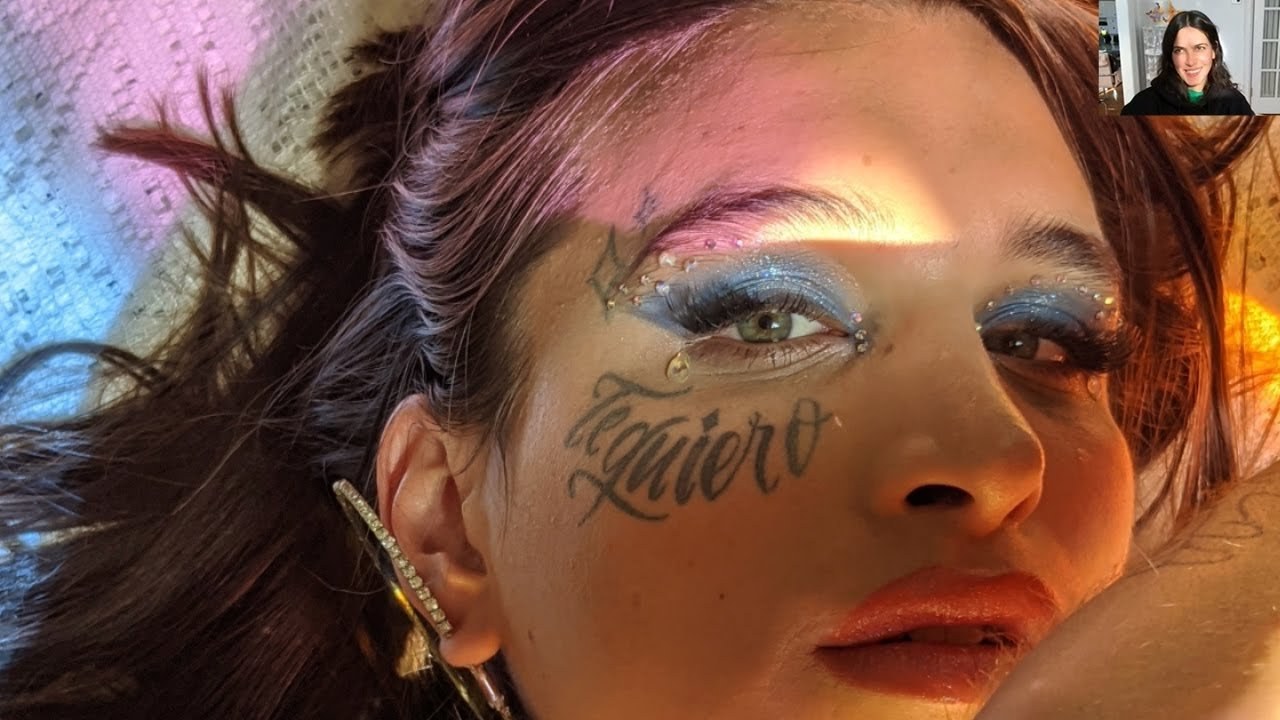
“I try to create the photographs I want to see.”
Transcript: May contain minor errors or formatting inconsistencies.
Our second speaker so based in new york mayan toledano has been building a reputation in recent years for her blended photography and film practice her work focuses on gender gay culture the female body intimacy and relationships and has been featured in the likes of the new york times vogue and id to name just a few we're really excited to have mayan joining us today to give us an insight into her creative process mine you can turn your audio and video on now please say hello hi there how are you in my funny space yeah it's very very sunny there you've literally just come back from l.a right like a flying trip to l.a yeah I flew in this morning on a red eye okay well listen thanks very much for joining us despite the despite the travel I'm gonna let you kind of share your screen now and take it away with your talk just a reminder to everyone else that yeah while mayan's talking if you do have any questions then please do put them in the chat and I'll try and get around to them afterwards that looks great over to you ryan hi so I'm mayan I'm a photographer and a filmmaker I went into both fields actually after being a very frustrated fashion design student I went to fashion school for four years which there.
I think I really realized how harming the portrayal of women is and I kept asking questions about it and like trying to do something different it wasn't super accepted then.
But I took that into picking up a camera and kind of decided that I'm going to create the photos that I was hoping to see and rather than being inspired by beauty only which is what I used to see a lot I wanted to be inspired by stories so most of my work I really try to follow a story and highlight someone and connect with them.
So the images that I create I try to do something that is longer lasting so even if it's a product that I have to sell or like this mix of images is kind of like documentary some of it is personal project some of this is advertisement and fashion but no matter what the purpose of the project is I try to find something more honest to do with the subject and give them enough space so that collaboratively we can tell a story and for this evening I chose to focus on two projects that kind of take up most of my time and brain space this year the first one is called nomames it's a project I started in mexico city last year mexico has been a creative home for me for the past three four years.
And I kept going back there and going back there.
And then I realized I really have a community there to work with and I wanted to highlight the queer community creatives and artists and what they do and the images that we ended up creating were a mix of something very personal as they let me into their personal spaces and bedrooms and homes but also alongside we would always create a fantasy version of themselves so would be a hybrid of how they see themselves how I see them and how their work comes into the visual portrayal of themselves so all these images are from last year.
And then. Actually just before la I was in mexico city shooting another portion of this project which is here.
This is like a pre-pre preview I haven't even edited these yet this is the last portion of the project that will also go into a book and the reason I want this to have a physical existence also in a book is because I think the book can help create funds that will go back to the community which is something.
That's really important to me. And it will actually be my first book ever that I made so yeah this is the first project.
And then my second one that I want to talk about is a film that I'm working on which will also be my first film this year is with all the confusion it's also somehow been a year for beginnings and this started in mind as a short film.
But the more I worked on it I realized it's a feature and this is about a woman called smodar who's from my hometown it's a little town in the north of israel and growing up in a small town obviously a woman with her style and significance everyone knows her but not everyone knows her story. And I wanted to highlight her and she has this very complicated relationship to men and to her family but she's also this fab woman and how she carries herself and she's kind of a hero of her own world so she's the character and I have a little teaser here that I can share the film is already ♪
so ha ha ha ha foreign ♪
foreign foreign foreign ♪
foreign not thanks very much man that was great I guess not the best way of viewing video content like that so maybe could you tell us where where people can see that oh it's not ready yet this is just a teaser but I think I have it on my website maybe but I can also share a link if to the nicer tuesday's website fantastic yeah that would be absolutely great I'm sorry were you finished I jumped in I thought you were yeah okay if you could stop sharing your screen now we've got a load of questions coming from the audience which is fantastic first question comes from gnome who says how do you edit your work when you finish a project do you work with an editor I guess this could be either your photography work or your film work but for photos I normally edit myself and for video I work with editors yeah I actually have a really hard time focusing on video editing like it's very easy for me to imagine and and put things together in my mind but the the technicality of premiere I just it's I'm I get I just get lost I mean it's one of my questions actually was going to be you know how have you found that transition from you know being a photographer to being a filmmaker I guess you've kind of been both you know now for a long time I've kind of mentioned that blended practice at the beginning but how have you found that I mean I guess editing is one part of it.
But there's obviously lots more I think it always came together for me. And it was really the thing about telling stories so in photos or in video since it's always trying to find a story then I do it almost in the same way it's so natural like the the picture will be more than just a two-dimensional thing for me or it will be a series that tells a story.
So it always came together. There wasn't I can't really say that one thing started it yeah sure marley asks it seems there's a continuous color scheme you work in is that led by the mediums you work with or is that kind of yeah an aesthetic that you choose and kind of tweak everything to fit around that aesthetic I think it's a combination of colors that I'm attracted to but also I shoot everything on film so even the the film that I'm working on it's shot on 16 millimeter so it really resembles the pictures that I take on 35 millimeter and 120 so everything it's it has the same texture but yeah definitely the colors is something even being attracted to a person like smodar is like she wears all this vibrant color and I'm just like she is a film even without me having the camera next to her linda asked a really interesting question which was yeah definitely visible in in all of your work particularly your portraiture work potentially you seem to get intimately close to the people you portray why do you think they let you come close and how does that leave you feeling very interesting question you know sometimes it's very hard for me at the end of shoots because sometimes I get so connected and it it's so emotional that it's hard to say goodbye and I always want things to be longer lasting which is why I tend to go back and shoot the same people I never want things to be a transaction or just like a quick image I want it to be a long story like I can go back and shoot someone for years. And it will never end I I I work on making space for the people that I shoot I never wanted to be like I have an idea let's execute it I come in with the openness of whatever they want to bring how they like to see themselves and I also work with smaller cameras even like phone cameras and see how they portray themselves in selfies and ask them to do it while we're shooting so that I can see best how they see themselves and we can connect over that and find the best version to then put out there it never comes from I think that an image is created with two people or a whole group of people depending on the team that I work with but it's never my image so when I have that in mind I already create the space for the people.
So I think that's why people open up. And that's why I'm not afraid to come so close because I'm also being vulnerable at the same time. That's a great insight into your process yeah thanks so much man we're gonna have to leave it there I'm sure you also probably need a sleep by now but thank you so much for for joining us after the red eye and yeah. I really appreciate that that talk and I guess as well obviously not the best way of seeing video content like that but everyone look out for that it's going to be fantastic you
Latest Talks
-
Will Anderson and Ainslie Henderson
Bringing stop motion sorcery to BBC’s Small Prophets
Watch -
Amber Weaver
How does contemporary type design translate into the wider world?
Watch -
Murugiah
Why you should reject the formula and make art about things you love
Watch -
Marina Willer
Design thrives when you find poetry in the simple things
Watch -
Lizzy Stewart
The hundreds of drawings and writing-on-a-whim that goes into comic novels
Watch -
intra
The rewarding process of recognising the art in obscure everyday life
Watch