
Marina Willer
From abandoned Czech factories to Brazilian colour: building a film of hope
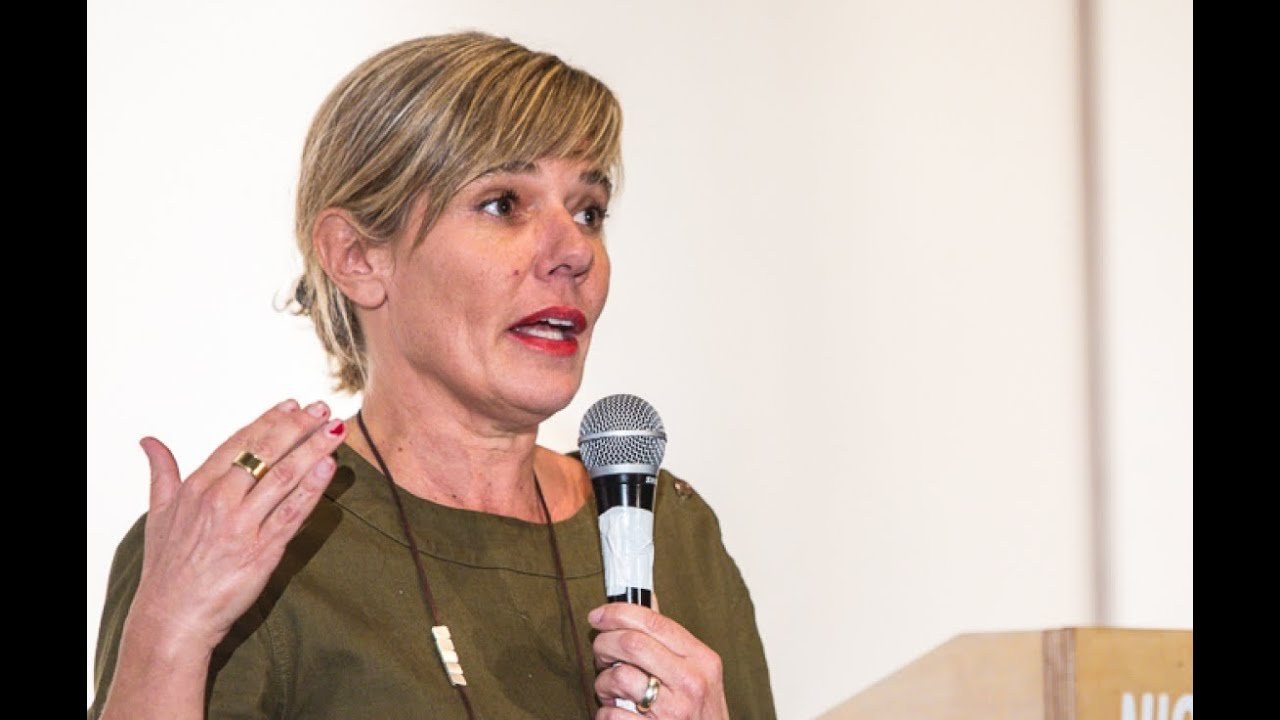
“I always made my own personal films, but this one, because it involves so many things, personal and also social, political, I never had the courage until now. I just realized it was time to do it.”
Thank you for inviting.
This has been so amazing. I shouldn't spend too much time on this, but I found it so refreshing up to now, so I hope I don't ruin it now. Normally, I'm a graphic designer and I do identities and things like that, but I also make films and I was invited tonight to speak about a film project I'm making, which is called Red Trees. Red Trees, these projects have been wanting to do for a long time.
I think you all identified this. We all have personal projects that we want to do and we keep them on the shelf for years sometimes. I always made my own personal films, but this one, because it involves so many things, personal and also social, political, etc., I never had the courage until now. I just realized it was time to do it.
It starts with the fact that I am Brazilian and my family is a complete fruit salad. My dad is Czech and his origins are Jewish and they were one of the only 12 Jewish families that survived in Prague during the occupation, the Nazi occupation of Prague. I always found it really fascinating how they ended up in Brazil and the luck they had and my grandfather was a pioneer, he was an engineer and he was one of the inventors of formula, industrial formula for citric acid, which is basically the thing they used to make lemon taste or lemon for Fanta or whatever it is. So not very important, but at that time it helped him because he was doing something useful and that made money for the industry and so on. So for a while he was, despite being Jewish, I think he was an interesting person even to the Nazis, so they spared him for a bit and he was married, he was a mixed family as well, so that was lost on the list.
So they survived through the war for a while and the story is very much about that and how things went.
Then Red Trees is a reference to the fact that my father is color-blind and he discovered that when he was drawing as a child trees with red leaves and I found that that would be an important title for me because this is a reference to if we were all color-blind, maybe we wouldn't have prejudice and start to judge people by the way they look, by the color of the skin, by the origins and the film is very much about their journey then of survival and then going to Brazil and how well received they were in Brazil, a country that is such a mixture and one of the great things that encouraged me to man up as they say and do this project now is with what's happening with the refugees, I just felt that the subject is so relevant and I always think that we should look to the past to think about the present and the future and I was hoping that our little stories can also contribute in a modest way.
So I have been working with my whole team at Pentagram because and two of them are here, three or four because Lam used to be with us who have been amazing because Pentagram is a place that really encourages people doing creative work that isn't commercial and we all do that so everyone got involved.
We did a Kickstarter campaign to get the funding for at least part of what we could do.
I invited the cinematographer of City of God which is someone who I worked with before because I wanted to do something that was broader than the films that I normally make which is very arty and for very few people because of the message and so we talk about you know citric acid or you know the science, we talk about acceptance, it's really actually a film very much also about the future and we went to Czech Republic and we filmed a lot of abandoned factories because that you know represents a period of a country that used to be an example for Europe. There was the utopia of democracy and all of that and it was let down and was invaded and we all know what happened like to many parts of Europe and the tragedies but in a way that the imagery that we collected there represents to us this interruption of a future not just for the Jewish people but for a whole economy and as a part of the world and so many other countries and then changing to the journey towards Brazil and color and you know diversity.
So that's the subject of the film. I would show you the trailer we made for Kickstarter using already images, there's some images of making off and some images which are already the images that we shot. Now do I know how to, I knew I would do this. I have never understood and attached me to one nation, one culture, one origin. Our origins are many. Our journey is utterly unpredictable. We are a mixture and in this there is beauty. For so many years I wanted to tell the story of my father and his father and how they ended up in Brazil. Red Trees is the story of my father's family and how his father one of the inventors of the citric acid formula managed to survive the Nazi occupation of Prague during the war. In a time when so many people were having to be dislocated and refugees having to go to so many different countries I hope this film can bring some hope and light.
The story is based on my father's memories beautifully told through the voice of the actor Tim Pigott Smith. We tell the story of the journey from the hard years in Czechoslovakia through moving towards Brazil, living in Brazil, discovering color, diversity and light. My father is a child. Other children in the neighborhood throw stones at him and call him Jew. In the face of stones he walks to school. He studies. He grows. My father discovered architecture in Prague and became an architect in Brazil. We tell the story through architecture as if looking through his eyes. The title Red Trees makes reference to the moment when my father discovered that he was colorblind. When drawing trees as a child he filled them with red leaves.
This is also a reference to a world where people would be much more accepting of each other's diversity and that would be a much more beautiful world in my view. I invited Cesar Chalon, the cinematographer of City of God and Constan Gardner to be part of this project. It's not just an arts film but a very fundamental message that I would love to reach as many hearts as possible.
He has the experience to tell narratives in that way. It was incredibly tough to go to concentration camp where my great-grandmother died. It was very tough to go to the synagogue where all those names are written on the wall of all the victims of the Nazi concentration camp. It was devastating.
But I want to make this film a really positive uplifting film. I see the world with a lot of color and I hope that this film can also bring a lot of color to the world. It's a film of hope for sure.
So this shows a little bit of what we're trying to do. We've shot already for two and a half weeks, I think.
We're working really hard to get everything together and all the components. Because the film is based on the memories of my father and then we're mixing with a lot of conversations about the situation with refugees, how you compare, how Brazil, for example, really benefited from the amazing mixture and all the cultures that came and even the scientific knowledge and all of that. The wish that Europe, for example, could look to that as an example of how it can be such a positive experience.
So we've been collecting all these stories. We're working and expanding the script a bit. We recorded all the voice with Tim, which has been amazing. We're again recording pieces with my father. He does the most personal moments. The drawings are for my father, which we animate as well.
So we spend the whole day today recording with my father and he's a bit older now and he's got Parkinson's. So it takes time. But for me, it's been an incredible experience, personal experience also to understand him because I think when you live through the war and see all these things in front of your face, people dying and all of that, you become a little bit disconnected from certain things as a person and I think I only can see that properly now.
The experience for us as a team has been amazing and Lucy Claire, Hamlet, here and now, everyone helped so much to get the Kickstarter going. Kickstarter is an incredible platform to get feedback really and we got so much warmth and support and obviously we got a great part of the finances from there as well. And discovering these places in Czech Republic was incredible. It's a really difficult shoot because it was so cold and everything was really rough.
But it's been a very amazing experience for me and I'm so happy not to just be doing normal work and to be able to be in a place like Vantagron where we are allowed and encouraged to create time to talk about stories that we think are meaningful and to me, I just hope that we can do justice because I feel that even though there's so much sadness in the past, it's a story that is happy to share and I feel very privileged that it landed on my feet that I can tell. I just hope that I can do a job that can make you proud, people who are working with me and all of that.
So I think that's it. Thank you.
Latest Talks
-
Will Anderson and Ainslie Henderson
Bringing stop motion sorcery to BBC’s Small Prophets
Watch -
Amber Weaver
How does contemporary type design translate into the wider world?
Watch -
Murugiah
Why you should reject the formula and make art about things you love
Watch -
Marina Willer
Design thrives when you find poetry in the simple things
Watch -
Lizzy Stewart
The hundreds of drawings and writing-on-a-whim that goes into comic novels
Watch -
intra
The rewarding process of recognising the art in obscure everyday life
Watch