
Margot Bowman is a creative director and filmmaker known for her short film, Common Misconceptions, which addresses men's attitudes towards women in club culture. She aims to promote dialogue and respect between genders within nightlife environments.
Margot Bowman
Animating a frank guide to consent, club culture and post-MeToo behaviour
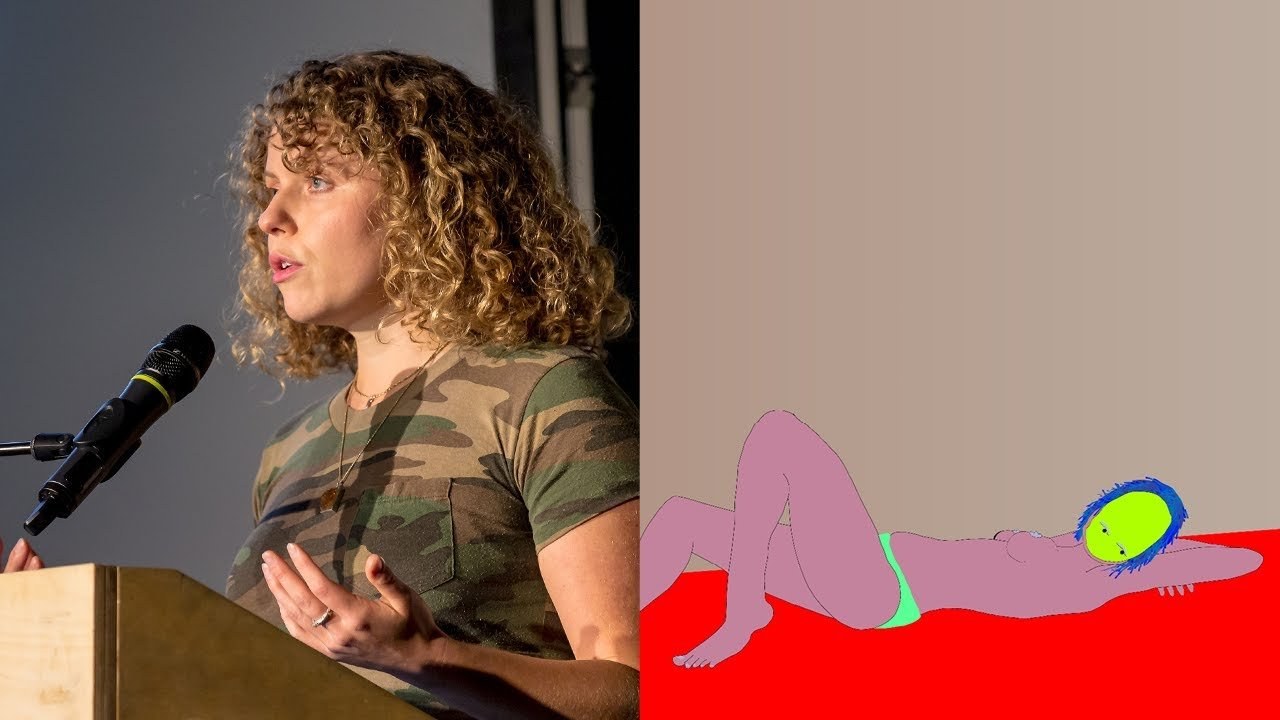
“No one talked about how we can get men and women to respect each other better so that these things don’t happen, and behavior actually changes.”
Transcript: May contain minor errors or formatting inconsistencies.
Hi everyone and thank you for the introduction.
So yeah my name is Margaux Bowman I'm a creative director and filmmaker and today I'm going to talk about common misconceptions which is an animated short I made earlier this year with my dear friend and collaborator Lynette Nylander so I made the film while I was working really closely with boiler-room which was kind of like from March 2017 s March 2018 and while I was there. I was doing the creative direction for all of the global brands and during that period me too also happened and it was a strange kind of time to be and I think everyone would agree that media's been odd in the last year or so and this has definitely been one of the themes that keeps coming back in a whole new way.
And I think for me one of the things that really stood out is that so often media talked about. There were headlines I was frenzy there was like a lot of accusation.
But there wasn't ever really any kind of like solutions like no one ever seemed to talk about like how we can get men and women to respect each other better so these kind of things don't happen and like behavior actually changes and part of that was particularly pertinent because one of the things about working in music is that. There aren't very many women this is a statistic that's looking at more like artists and music makers but if you imagine that the starts for people that are visible in the industry like the numbers around managers talent Booker's creative directors set designers are even lower so there was this kind of strange thing where like you'd be I and other women that I worked with we would be working with men and these stories were coming up in the news and like it was something that you talked about. And I think one thing that became kind of like a running theme throughout the period was that. There was so much time spent like explaining things to the great men that we all worked with about not only just like the prevalence of sexual abuse and sexual assault and rape but also the complexity around it.
And I think one of the really important things to think about is like it's not just about the incident it's also about the way your behavior is impacted on a day-to-day level there are all these like tiny micro coping mechanisms that lots of women have built into their lives to feel safer and that might be budgeting extra money so that you can get cabs home at night or always dancing with your back to the wall at a party or like the fake boyfriend that you pull out in a conversation when someone wants your number and I think like me too definitely wasn't perfect but as a movement it's done something really amazing in the sense that like it's provided this pop culture shortcut into an acknowledgement that men use sex to abuse their power and that sexual assault rape and like that whole spectrum of behavior are totally endemic in all parts of society so you know back to boiler room I think clubs are amazing and they're also really important spaces because they're kind of spaces where you know sex and music have always met so for a platform like that I think that kind of had to be a response to the conversation and and we were really interested in like what we could do that went beyond the kind of expected behavior of like just like booking more female talent and and all of those kind of things that are definitely important but maybe don't go into the fact like club culture is really about people coming together in hub spaces and I was talking about this in New York with Nicky and Frankie who were two really amazing people that work in boiler room and one of the things that Frankie brought up was this zine rave ethics that came out in 2016 and it was something that she'd written about for another editorial publication and rave ethics was created by Zulus and ooh and it featured contributions from her friends and community members own like a whole range of topics some of the spreads look at like you know there's like don't use your phone flash in the club and other things about how to take drugs in a way where you'll actually have a good time and you won't be a total disaster but one of the pieces that really stood out was this piece called how to hit on a girl and it was interesting because there's two spreads the first spread which you can see here kind of documents the protagonists own experience hi I'm your average party girl an extrovert that loves meeting new people and experiencing music in a group even so after spending a while on the electronic music scene my experience at parties has made me distant anxious. And sometimes aggressive I quit parties way before I want to often after spending three hours dancing in a circle politely refusing ignoring hiding myself I just get tired of it. And I can't enjoy myself anymore so I leave and this kind of like personal experience is followed by this set of sort of like guidelines that involve men women club owners and promoters to prevent the kind of experience that the character has in the first spread and there's this like really refreshing honesty to the piece if anybody wants to have a proper look you can just google rave effects and there's a PDF online and it kind of like resonated in a really significant way. And I thought immediately about translating it into animation and creating something for boiler-room that would be a really great asset because it showed how like both groups are involved in this conversation and maybe could lead to the kind of healing I felt like was really missing in a lot of media so one thing was that you know there's just a clarity in the kind of status quo there proposes and and it also like I think shows like men what kind of behavior might be a good phase two I think like a lot of the way things have been it's like they're just bad status quos that needs to be shaken up. And it really felt like maybe there's some like new wisdom in this piece that we can amplify so we got put in touch with the scenes original founder and then Elaine Lita laverre who who wrote the original piece and from this point it was interesting like I knew what we needed to make had to be like small I had to be entertaining it could be funny it just needed to like not be dogmatic not be boring and definitely not sitting fall into any of the kind of like naggy cliches that were just going to turn people off straight away.
So I reached out to my very good friend Lynette and Islander she's a writer and editor who lives in New York and this is us hanging out in my studio in Soho and what I was excited about working with her was just like an ability to basically bring something that was kind of conceptual political complicated into a really grounded approachable language and it was like it was it was it was definitely a process so who we started off kind of adapting the original piece and removing all the gender pronouns so that the like proposed behavior changes that are in the piece could apply it's like a full spectrum of relationship and gender dynamics and it was kind of an unexpected twist because like in the interest of inclusivity the piece kind of lost some of its honesty I think like this sort of like truth is that these problems come out of dynamics between men and women in heteronormative culture the name of the original piece says it all how to hit on a girl we're talking about a space clubs where consent is actually relatively hard to gather like it's loud and it's dark and still like a lot of people are operating under kind of like behavior norms where men are expected to hit on women and yes and no are sometimes conflated in a way that might be provocative come-hither eyes might also be don't stare at me like these social expectations already muddy and and really out of date so we kind of like with a renewed focus went back into the original script where it specifically takes place between a woman and the men that she's surrounded by and decided to make what we were doing as honest as possible and I think that like this is something that I really respect for Lynette she's a very honest person if you ever need a difficult email written she's really the person to go to for air and what we wanted to do was just focus on the kind of like plain speaking truths that often don't come out in those conversations but are really the level of communication that we need to be at and we also started this new kind of scenario based structure where each incident was built out into a scenario and I'll just show you one of those here are some common Saturday night scenarios and ways you can avoid being that creep at the club so I'm on the dance floor minding my own business and then there it goes the all-too-familiar feeling of a stranger's had creeping up the side of my jeans it's unmistakable he's fingertips rough from roly's nestling on my hips and the great thing about the scenarios was it's like not personal so no one's accusing anybody there's no finger-pointing it's just a theoretical situation. And I think that's one of the really important things about fiction is that what we're able to do is create like a third space where we can talk about a complicated problem but no one's kind of personally responsible and I think that was a really important way of keeping like men who made up a significant portion of boiler rooms audience at the time engaged in the story.
And I took the same approach to their artwork itself so I created all the original artwork. And I really wanted to have a very kind of like tightly controlled fantasy world that was still like true to the reality it came out of so all the visuals are inspired by like neon strip lighting in clubs and the world that the animation takes place in is like it's this kind of black dark nightclub environment and even that had this kind of analogy in it for me that like actually the people are where the light is and like the solution for all of this stuff really comes from like their change of behavior and their change in attitudes and this was like a really I think the most important part of the piece is finding a balance between reality and abstraction. And this is one of the kind of like main ways that we did it.
So the bulk of the story happens in this dark nightclub world.
But then.
There are these kind of cliffs Clarissa explains at all moments and I'll show you one of those and then talk about a little bit I tell it my fake name and that my boyfriend's in the bathroom and make a swift exit think about it if I can't see you how can I consent to what's going on and these moments are we're like we break the fourth wall we speak directly to the audience and now that the audience is like connected to our protagonist I think there's like a frankness here which is so refreshing and it was really the thing that drew me originally to the how to hit on a girl piece and again like going back to the script it's like let's just put this as plain speaking Lea as possible in a way that isn't intimidating it's not aggressive it's just like these are the facts and here you really see that like reality fiction balance in kind of like full effect the visual is very very abstract but I think the kind of like London language and like the tone of voice that the vo is in it just makes it feel really real and I guess most importantly was from my side as a filmmaker I really wanted to have as many women involved in the project as possible not only because I think it's important that right.
Now we're in a time where people get to tell their own stories but also because of the ubiquity of this culture that we're living in where sexual assault and rape are so commonplace everybody involved in the project would have had their own experience and I feel like by bringing all of these different voices together we were really able to tap into that sensitivity what was your coping mechanism how did you feel about that and maybe not in an explicit way.
But the desire to create something that. Actually like is a solution to some of this stuff brought out some really really amazing work.
So I just wanna like formally thank all the women who aren't here right now. And that's it [Applause]
Latest Talks
-
Will Anderson and Ainslie Henderson
Bringing stop motion sorcery to BBC’s Small Prophets
Watch -
Amber Weaver
How does contemporary type design translate into the wider world?
Watch -
Murugiah
Why you should reject the formula and make art about things you love
Watch -
Marina Willer
Design thrives when you find poetry in the simple things
Watch -
Lizzy Stewart
The hundreds of drawings and writing-on-a-whim that goes into comic novels
Watch -
intra
The rewarding process of recognising the art in obscure everyday life
Watch