
Linda Brownlee
Photographing a Sicilian family across two summers in the hilltop town of Gangi
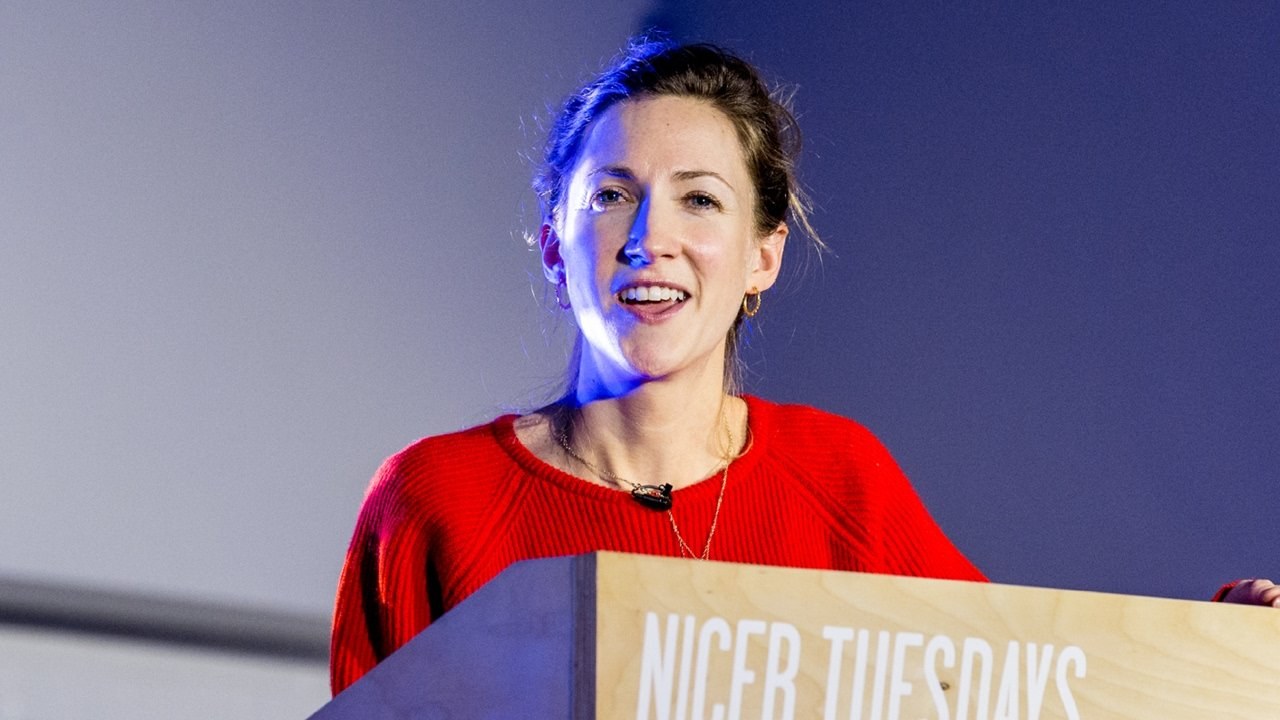
“Creativity is not a straight line; sometimes you have to get lost to find your way.”
Hi everybody thanks for having me I'm here today to talk to you guys about a recent project I did about a family and actually it's a self-published book. So first of all I'm going to introduce you to my own family this is me back in 1986 7 years of age we this is a professional photo taken in my living room and I promise I won't go through every year of my life but six girls and no boys and we grew up in the countryside we all look pretty angelic there.
But it was a fairly chaotic house all to grow up and with a little stint in Lagos Nigeria for three years in between the Irish countryside I left these guys 13 years ago to come over and do some assisting work in London at that point I knew I absolutely loved documentary photography and making portraits of people and places you know already and nothing really has changed actually except I've just kind of got a few years of experience in and so yeah I do a real mix of things I do portraits fashion and editor and documentary stories from magazines also shoot a lot of kind of ad campaigns for Stills and more recently I've been doing Moving Image and directing some TV ads as well.
So I love kind of mixing it off the keeps are really interesting yeah I suppose you know what I try to kind of keep in my work is a sort of a sense of storytelling and kind of this feeling of spontaneity and which I kind of see in you know all documentaries documentary and street photography and although kind of a go into everything with a bit of a kind of an aesthetic intention I kind of like to leave everything else very flexible and kind of respond to the to people and photographing and kind of to that relationship thus you know and the rapport that you establish and for me you know I depend very heavily on that kind of relationship that I establish just flicking through a few of my portraits the first book that I self-published was in 2011 and it's all about my favorite place in the world Akal island which is on the west coast of Ireland it was all about the teenagers and the kind of sense of isolation living in this very raw and unpredictable landscape and I think I shot 40 teenagers all together and that was all of the teenagers on the island so it's not that big I then went back two years later and I decided to do a book on the hydrangea plant following the hydrangea around the island which gave me a completely different perspective on the island it's quite random but it was an interesting journey all the same. And it just you know I kind of focused entirely on the landscape with this one I hope this is to introduce my first family project which was all about the Parkers who lives next door to me here in London.
That's Charlie Parker and he used to come and throw stones on my door and eventually I kind of went over and knocked on his door and after his mum could I take his photograph I'm kind of three years later after many visits just dipping into their household kind of unannounced I kind of had this series of images of the gang and really it was all about just kind of their relationships watching them through the years and kind of how they were all changing and I suppose how they were you know the level of kind of how they were responding to the camera and you know they were performing sorry this is these things are Whitely this all just happened in the last three years and while I've been doing the project and has probably given me the the biggest insight into family so this is this is the name of my new book it's the e which I can't really pronounce yet so I'm sorry if there's any Sicilians here first she's a title you can actually pronounce but it means collectively or is used collectively to refer to uncle's auntie's and cousins and how it began was I was basically having a chat with a friend of mine Ashley in Ferren Ella one evening who I thought was just Irish but actually she's half Sicilian and that night she was just banging on about her family and she was you know talking so passionately about you know all her relatives there. And this beautiful very kind of again remote Tang called Gangi where they where they all live and this very special manscape that she kind of just was completely in love with and then she started to talk about you know how close they were and you know the amazing respective they have for the the older generations and these beautiful traditions and then she started talking about this kind of really chilled a slow pace of life and couple months later I'd sort of invited myself I just photograph her family for two weeks and we went over together at Easter 2013 and I simply kind of had an agenda I just wanted to photograph the family kind of investigate all the things that she'd sort of been talking to me about and the relationships between them. But also the relationship between them and the landscape so yeah just you know it's kind of similar to the Apple thing except of that family in place and from the beginning I kind of had in my gia in my head that it would make a nice book because I'd forgotten the pain of making the first book Bush yeah.
So this image here is the image I begin the book with and it's the first photograph I took which is when I was approaching Gangi and I kind of thought oh god this looks more slum than fairytale to be honest and the light was crap we I was in a moving car and I thought oh god you know well I'm gonna take it. Anyway.
So I took the photo and to be honest this was kind of quite important because it was the premise of how I wanted to approach the the way I was shooting everything and just keeping everything really fluid and looking for I suppose these kind of imperfect moments and and to stop kind of waiting till the conditions were perfect and to start kind of looking for the charm and these things that I would have dismissed before so getting stuck in this is kind of one of the I think this is 89th birthday of Salvatori here we tended to to go to the all her relatives houses around meal times because they lasted about four hours and we tended to have about six or seven courses of pasta and meat and desserts but it was a time when everybody came together and everybody was really black so it was really you know it was much easier to kind of get these more casual moments that I was after mmm I don't speak any Italian as I've already Illustrated and you know I thought this was going to be negative but in the end it. Actually turned out to be quite a good thing because I started to focus on people's body language to try and understand what the hell they were saying and obviously you know Italians when Sicilians are quite well known for being very expressive so it became you know one of the themes in the book. But also you know I'm so used to kind of kind of waffling away to everybody while I'm taking their photographs it was nice that I couldn't because I don't have to stand back because they sort of would start to ignore me after a while and it just meant I could kind of yeah get those really relaxed moments without intervening even with animals in between meals I did a lot of driving around the app of the landscape trying to imagine what it would be like to live there kind of looking back up with Gangi and looking back eyes looking at kind of looking at the time from every different angle but I got quite distracted by the roads up there because they're quite shocking every two or three miles you kind of came across a little mini landslide and this road here just fell off entirely and picked up a couple of hundred meters you know further on. And I think basically they were left without a road for about two years not to take a dirt track around so there was a real sense of kind of abandonment of the mountains and a feeling that the place was kind of been left to crumble and that kind of I suppose that nature was was taking over a little bit unlike unlike this sense of abandonment this is kind of a picture of Zia Lisa's bedroom and I absolutely loved looking at the interiors of the older generation because they're just so beautifully maintained and incredibly orderly minimal so well cared for and you know every everything feels like it's really well cherished and almost on display and there was kind of felt like nothing was disposable in their houses and I could see a lot of kind of similarities between the Irish high schools and the Italians there's always like a saint on every wall in every room to kind of keep keep care of things well whilst I was there at Easter I suddenly realized that they all have second homes and the countryside because it gets really hot at the total Gangi they're all very modest Heiser's but they all put down there for a couple of months in the summer so I kinda needed to go back again just sort of check it out how it was and how kind of they led their life and how things changed and how the landscape changed so it kind of came back with this load of film that was just so orange and burnt looking which you know I could see it was there but after a couple of weeks I kind of got used to the colors and hadn't realized you know how different it all looked when I came back.
So it meant when I kind of got around to the Edit it you know. There was no way I was gonna be mixing the two seasons the Edit itself took me about two years I spent four weeks using it two years out of English so it was quite a painful edit. And I think one of the reasons it was very difficult was because I was photographing a friend's found and it sort of brought to the fore that you know there's an extra layer of responsibility and you're sort of aware of the sensitivities I think Ashe means that it's it was like peeling back the layers of a chip a little sausage so I think it's just quite revealing and and you know when you're making the edits you kind of need to obviously stay objective and kind of stay true to kind of what you would how you would do it but you know it was very much about striking a balance with this one and kind of you know just being very careful with it moving on to the the designer of the book I worked with designed you O Connor and David of workgroup and they did a really beautiful job designing the book really sensitive and elegant and kind of sympathetic to the work we initially had loads of text throughout the book kind of all these little insights and anecdotes that. Actually had written really beautiful pieces of writing but when I brought it all together it suddenly kind of felt a little bit just too much like there was there was all kind of the sense of intrigue that was actually very important and is very important to the work was kind of disappearing and so quite a tough decision.
But we ended up scrapping everything except for this one page in the middle of the book and a beautiful introduction that she wrote this is sort of the kind of the way we ended up working with the images I I was really interested in using all sorts of different image sizes to kind of I suppose reflect the undulating landscape from the higgledy-piggledy nature of the town and they slightly sort of natural dysfunctional family but you know.
This is the was the reined back version because if I've been left to my own devices it would have been a kind of dreadful mess any designers hit there. So yeah.
So I like finished off the book is out there. Now it was obviously a very enjoyable experience going out and going to getting this insight and real kind of privilege to be involved and to get this sort of permission to go in a photograph somebody's family but you know one of the things I noticed when when a project is about really small things and kind of about everyday life and where nothing really happens it's it's very easy to lose sight of the importance of kind of documenting that kind of thing.
And this sort of outsider's perspective I definitely had a few wobbles along the way kind of wandering a relative is this but when I brought all together kind of put it out there you know it felt really worthwhile and I'm sure I'll forget the pain of the Edit again and do another book. And that's everything thanks very much thanks [Applause]
Latest Talks
-
Will Anderson and Ainslie Henderson
Bringing stop motion sorcery to BBC’s Small Prophets
Watch -
Amber Weaver
How does contemporary type design translate into the wider world?
Watch -
Murugiah
Why you should reject the formula and make art about things you love
Watch -
Marina Willer
Design thrives when you find poetry in the simple things
Watch -
Lizzy Stewart
The hundreds of drawings and writing-on-a-whim that goes into comic novels
Watch -
intra
The rewarding process of recognising the art in obscure everyday life
Watch