
Lilian Martinez is a visual artist known for her colourful illustrative practice that draws from her personal family histories and culture. She explores themes of representation, comfort, beauty, and humour in her work.
Lilian Martinez
Painting bodies, joy and the architecture of everyday living
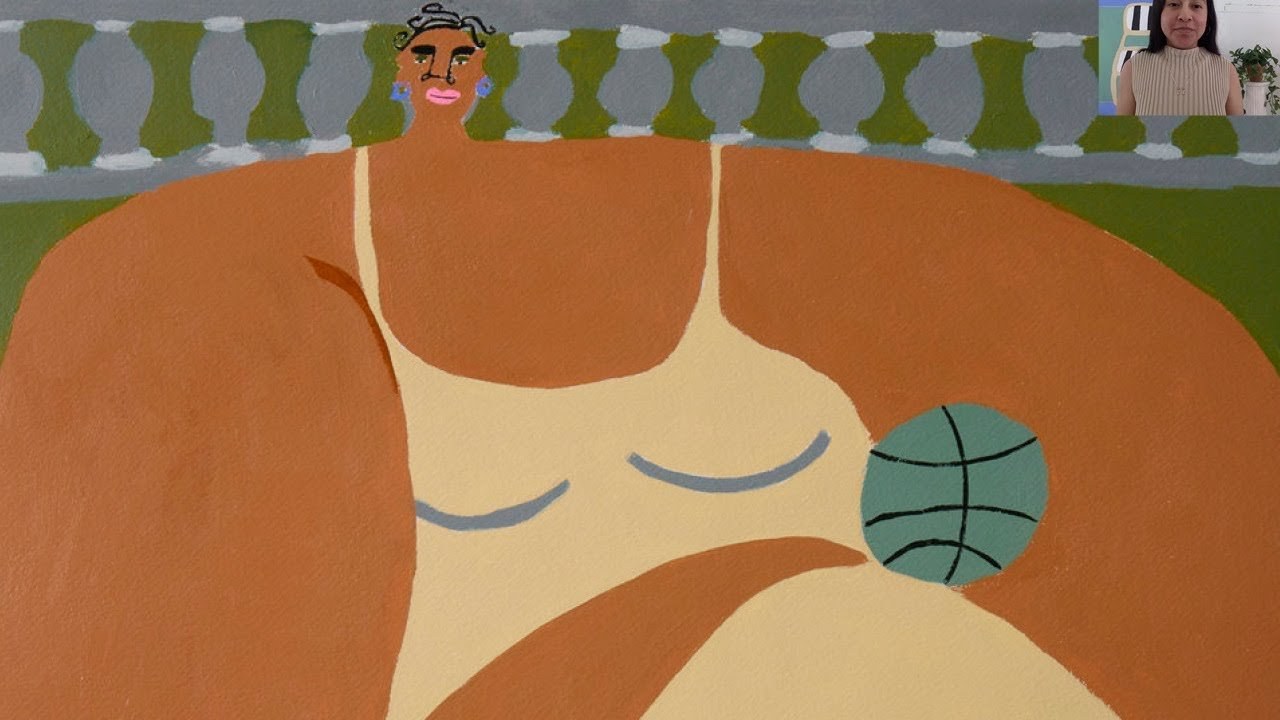
“I realized I could create images and have total control over how they reflect my world.”
Transcript: May contain minor errors or formatting inconsistencies.
The fgf is an artist and illustrator based in california making accessible and functional art objects for the home and body references to the simpsons nike and other pop culture tropes appear across her throws paintings and sculptures which always add an edge of humor to the beauty and the craft well today lilian will be telling us about a recent body of work that she exhibited as well as a recent collaboration with with nike so lilian I'd ask you to please turn on your audio and video so we can actually say hi how's it going good how are you I'm okay thank you yeah.
So you you're dialing in from from the desert of california is that right yes amazing well listen we're super excited to have you on we are such big fans of your work in fact it's nice to see it in the background there as well. But I'm gonna basically let you you take it away.
And then share your screen and for anyone who's watching and you have a question for lillian while this is while she's speaking please put it in the chat and we'll get around to asking it afterwards okay over to you lillian thanks very much how's that going that's right perfect all right okay we're in all right I'll leave you to it so again hi everyone thanks for listening my name is lillian martinez but people call me lil I'm talking to you from my studio in yuca valley california so I'm a visual artist and I describe myself as that because my practice is sort of driven by making and creating images I feel like this title is broad enough and at the same time specific enough to describe my practice so that includes drawing painting designing archiving sharing my work through photography so I wanted to start off my sorry one second I wanted to start off my my talk was a quote that I read recently in a book called a month in siena by hisham matar perhaps the entire history of art is the unfolding of this ambition that every book painting or symphony is an attempt to give a faithful account of all that concerns us so when I think about what concerns me in relation to my artwork I think about representation comfort beauty humor and the art of living or as the gucci called it the architecture of living these are things that I think about a lot a little background about myself I started photography in college at saic in chicago and photography was my first introduction into making work it felt like the most accessible media medium for me at the time it felt like something that I could learn how to do but I was never quite satisfied with the work that I was making I felt really restricted by reality light and perspective so I started painting and drawing seriously about five years ago and when I say seriously I don't mean that I had jobs or commissions I mean that I was beginning to consider this a big part of my practice and I was actively trying to find ways to share and present my work this was a gradual revelation for me I began to realize that I could create images and have total control growing up I thought that artists were ordained with a gift at birth to be an artist to be able to paint draw etc I didn't realize I didn't realize at the time that that was also something that you could learn how to do in hindsight I had a desire to make images but I didn't know how to fully realize them.
So I would say that I'm a late bloomer beginning to make this type of work was very healing for me I felt really happy with the work I was making and I really felt like it allowed me to create a space for myself I think art allows me to communicate without using words so I've created this visual language using color form and cultural signifiers I like to explore variations on various themes that interest me I don't conceptualize or rationalize the work that I make once the work is made and I share it I feel like I have to take accountability for the images that I'm choosing to create so why do I choose to draw brown bodies tracing back my first my personal history I realized that it was about representation I'm a brown woman making work about brown women and I really want anyone that identifies as a bipac woman to see their beauty and strength mirrored back at them.
And I want it to be a joyous experience for anyone that connects with the work I want my work to be for anyone and everyone that can connect to it so earlier this year I was preparing for a show that was supposed to open in los angeles at the beginning of april I made some of my largest works today two canvases measuring 7.5 feet tall the show was titled bart beethoven wifi this body of work relates to the inheritance of culture and information as opposed to a monetary inheritance and how do I experience and organize that wealth of information that I feel like I inherited as a second generation mexican-american woman so I feel like my work is sort of like a remix of experiences from my perspective eventually the show was installed but it never opened to the public because it was a pandemic a project that was released for me this year was a collaboration that I did with nike it was part of the nike artist in residency series so I designed three t-shirts they were released at the end of march in the uk and in the beginning of may in the u.s I was excited to be able to put a brown body on one of the designs so this design was based on a digital drawing I made in 2015. It's titled slam dunk when I made this drawing I never imagined that it would culminate in this project I think this further reiterates my desire to make work for myself I think that if it rings true to me it will ring true to somebody else as well.
So I also have a small online shop called bfgf and I focus on designing functional art objects for the home and for everyday use I really hope that.
This is a more accessible way for people to introduce art into their everyday life the woven blankets can be used as functional textiles at home or they can be taken to the beach on a picnic they can also be framed or hung and used as large scale art pieces I really enjoy seeing these pieces in interiors and commercial spaces like cafes bars and restaurants I really like the marriage of function and beauty especially when it's related to the idea of creating a personal space or a home currently I'm trying to learn more about furniture design and production I think that this further expands on the idea of bringing art into everyday life.
And it bridges the gap for me between art and design a little bit more so in my practice it's really important for me to allow myself to find inspiration everywhere and for me that means integrating my work and my life and tying them closely together so thank you for listening I hope that you found some information that was interesting and useful for your practice give me a second to get back on thanks lillian that's amazing yeah you can stop stop sharing whenever whenever you're ready we've got a couple of a couple of questions here which I mean it just struck me as you as you were talking if you hello you're back yeah what is something that struck me as you talked about being a kind of a late bloomer creatively and I think that's such an interesting thing because I'm sure a lot of people feel like they're you know maybe not kind of they haven't quite found their style or even their discipline maybe at a certain point in their careers and I guess I was just kind of curious what advice would you give to someone who feels like they might be a bit of a late bloomer perhaps and haven't quite found their found their feet just yet I would say to try and find work that you're happy with that makes you feel good and to figure out ways to share it with people don't be afraid to experiment I think just continuing to make work allows you to figure out your style and what works for you like what works for you might not work for other people so don't compare yourself to anyone else because you don't know their experiences or what advantages or disadvantages they have had yeah that's great I mean I think you talk about kind of like finding your style there I mean one thing that strikes me about your work is that the color palette is so kind of unique and recognizably yours I think how did you kind of develop that color palette I mean did you do a lot of experimentation before you found a palette that felt like it was the right yeah I guess the right one for you I mean I did make a lot of work. And I'm not a trained painter so I was initially working just paints out colors and that were available readily available and as I started to make more work I realized that I could alter these colors to colors that felt perfect for me.
So I usually will add like white or a light gray to whatever color I'm using because I feel like it gives it a really nice sort of sun-kissed look but it's still very vibrant and bold but there's something peaceful about it to me okay and just finally I mean I think you know one of the amazing things about your career is how you've gone from you know flat paintings canvases to objects and you know I guess yeah we talked about it a bit before you know pieces for body but also for for homes as well I guess how have you managed that transition from doing stuff that kind of sits flat against the wall to yeah I guess sitting on a on a chair as we saw on that final image in your in your presentation it's really amazing well.
Actually the way that I started drawing was on a computer digitally because it was sort of like an easier transition from doing photography and working digitally on the computer it was more seamless more approachable and I actually started my shop before I started painting canvases so that came first so the transition was from drying digitally and trying to figure out ways to present it.
And then I would feel more comfortable painting and drawing by hand fantastic sorry I've been asking my own questions and I realize there's a there's a question in here from the chat so I'm just going to ask you one more which is do you find your figures or the people in your in your paintings have they evolved at all through your process yeah I feel like they've gotten bigger and they've taken up more space I think about occupying space a lot and how do you occupy space that wasn't necessarily created for you how do you do that comfortably so I feel like that's part of sort of my process and my journey a projection of that exploration on to my work fantastic lillian thank you so much for an amazing presentation and also for your time with the questions as well you can now yeah turn your audio and video off and enjoy the rest of the event you
Latest Talks
-
Will Anderson and Ainslie Henderson
Bringing stop motion sorcery to BBC’s Small Prophets
Watch -
Amber Weaver
How does contemporary type design translate into the wider world?
Watch -
Murugiah
Why you should reject the formula and make art about things you love
Watch -
Marina Willer
Design thrives when you find poetry in the simple things
Watch -
Lizzy Stewart
The hundreds of drawings and writing-on-a-whim that goes into comic novels
Watch -
intra
The rewarding process of recognising the art in obscure everyday life
Watch