
Macguffin
Why a design magazine refuses to write about chairs and innovation
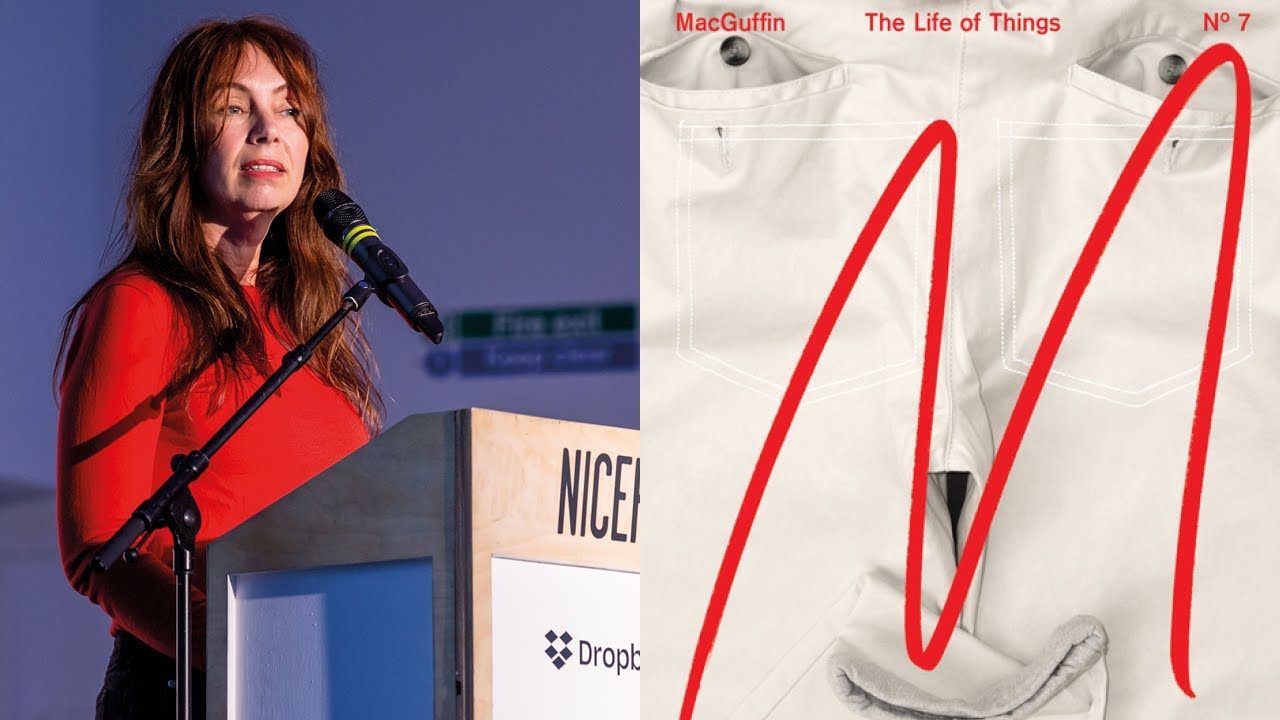
“We were mainly inspired — or rather uninspired, you could say — by the congested design world that we were working in. It was so obsessed with commercial success and with star designers and with new chairs. In the meantime we were more interested in home crafted chairs like that one, a MacGuffin you could say, and we didn't want to discuss innovation.”
[Applause]
hello hello everybody so yeah here it is I hope it's in stores from from today it's supposed to be it's our seventh issue and yeah I'm really happy to be here because this morning I was in a euro store in Amsterdam and it didn't leave so I thought mmm how do I get to London better and I got a flight and I'm really excited to let you know something about this magazine I make together with Ernst Leuven and also about the new issue we made about the trousers so McGuffin is a design magazine that is not about design so maybe I can explain you a little bit about that and like you show a little fragment of a film you my know Marnie from Hitchcock because as you might know MacGuffin is an object that is used in Hitchcock movies to to set the story in motion like this one in Marnie yellow handbag that is a sort of light motif and something that really gets you into the story.
So we used the name because we wanted to create a platform for things that was not so much about the design of objects but rather about the stories they generate so thank you I started the magazine together with Aaron stir four years ago 2015 and we were mainly inspired or rather uninspired you could say by and by the congested design world that we were working in it was so obsessed with commercial success and with star designers and with new chairs like this one and in the meantime we were more interested in home crafted chairs like that one a MacGuffin you could say and we didn't want to discuss innovation.
But the like we call it the afterlife of everyday objects so we started talking to experts and investors to pitch our idea for a magazine and it was always something that went like this we would love to make a magazine because it combines research and personal stories and then they would say okay make a website or we would say we would love to make a printed magazine because we want to have layers of text and images and I would say make an exhibition.
So there wasn't a lot of investors that were interested but of course we had to make a magazine so we did and we adopted tina brown's famous mantra if you don't have a budget have a point of view and we kept telling that ourselves and what we also did was we asked or applied for a grant at the dutch fund for creative industries and it was honored and so that was the reason that we could start.
And it wasn't a lot of money and it was only for the research but we had something. And so we made the first issue dedicated to the bed because the bed is the beginning in the end for most of us in our lives and the first issue sold out in pretty much a couple of weeks which we didn't expect at all.
So we had to make a second issue and we thought oh god what are we going to do but it was difficult to find another theme after the bed a piece of furniture we wanted to do something that is a building component so we thought the window and after that we explored a material slash object so the rope then we wanted to do something that was more in between so we delved into the life of the sink and then we thought let's go back to a piece of furniture and go to cabinets but then in an expected way so like these super box by it all results us which is not so much a piece of furniture but more like a character called the suicide of the architect and then the last that she was devoted to the to the ball like these from our local football club which we dissected to see what's on the inside of the football which is really interesting lots of history there and and the little text as well yes so we're pretty much involved with the two of us in every aspect of the making of the magazine from research to art direction to writing distribution production like this here.
So this is us at the Amstel River in Amsterdam working on a photo shoot that was in the window issue entitled green curtains and this is us on our way to horn Bock the Home Depot store with Enochs things that were photographed and then returned because we can afford to buy them.
And it turned out to be a wonderful production by skeletons ominous photographers and then after the fourth issue we were asked to present it in Milan at the Salone del Mobile a and they designed fair and so it was an exhibition after all that we made and in the lines then and these were all sink related objects which connected podcasts about the life of things and after Milan so the ball was rolling in a way and other exhibitions followed like this one on collecting in Rotterdam called Finders Keepers and we amassed more than 5,000 objects from 550 different collections and it was something that we did in three weeks so it was like this crazy production but really interesting but if I close my eyes I can still see the hundreds of razor blades I had to arrange in a grid there on the floor took me two days nothing.
So this was a little bit of an introduction maybe too long I will hurry up.
But I think it throws some light on the issue that I'd love to show you.
Now the trousers and tell you a little bit more about the way we approach our subjects and combine textual research and visual stories so we always start by dividing the magazine into chapters and with the trousers it was clear from the beginning that we wanted to discuss three sub teams in a way pants as a vehicle for culture but also materiality and overproduction.
And then a third one obviously it would say gender and power and of course we didn't call these chapters culture or production or gender but pants up pens down and pants off that just sounds better we thought so this the medic division then leads to text briefs and most of the times a messy sketch by me like this one a flat plan but we have to make it to see the rhythm of the texts and images before we really go into the editing and the combination of text and image is so vital in shaping our stories it's a little bit like making a cake or a mattress like this one from from the bed issue so for the first chapter of the trousers issue we asked photographer from a little wenyan photographer fetus comes ax to make a series that would focus literally on the life of things or in this case the life of trousers so that's the cover on the left it's a whole series and they've all got names as well.
But we were also fascinated by the popularity of the zip off and the survival pants and the crazy thing that a survival pants is part of a hobby so we asked design studio Sol Sol Sol from Brazil and Germany to dive into the world of prepping and they made us this ABC of neo survivalism with all kinds of horrifying pens and trousers like leggings in camouflage style so that was the first chapter and the second one started actually with an essay that we wrote a wrote of course.
But we read by Umberto Eco and it's called lumber thought and it's very clear and an interesting description of how the tight waistband of his jeans makes a co aware of how the physical aspects of trousers guide you in your behavior during the day so we thought it was very interesting how material is so influential in your life.
And we thought it had to be followed up with a chapter devoted to fast fashion and overproduction which we try to clarify with these illustrations by boutique which French illustrator but we also looked into the more personal physical aspects of the trousers so we asked a fantastic man editor at Yonkers a friend of ours to write about his favorite pants and he came with a fantastic collection like this G star trousers on the left that he once bought because it had such a well proportioned as an cross I had no idea before it had men actually thought of these things in a dressing room but apparently they are and yeah we had a long thought about how to portray and Spence especially since not all of them are around anymore like his favorite court trousers that was that were ripped apart by his puppy dog so we thought it it would be nice to bring back literally his trousers back to life. And we were in contact with a student from the read felt art school in Amsterdam who worked with rendering software to make installations and so we worked together we scanned Hertz trousers the one the ones that he had still left and we made pattern drawings of them.
And then Karl rebuilt them in a 3d program to make them dance which was really nice because we could do anything with the pants that we wanted to it's actually used a lot for modeling clothes in in games and also in the in the fashion industry so we could even rebuild Kurt's trousers that he called his wrong trousers here on the left sort of mood board pants that he once had and threw away because he he wore them when he was doing an interview with Fleur the pop group and he came in cared for the interview and one of the blur people asked him did you see the Wallace and Gromit film he said no it's called the wrong trousers and he was so sad about it that he gave it away which is actually a shame because it's a really nice trousers but yeah our last chapter is about radical trousers which is a feature we have in every issue reticle something.
And it was a good opening because it was a chapter devoted to trousers and gender so in this chapter there's a lot of women pockets and men skirts and smoking for women etc but also a collection of female artists from the 60s and 70s that use their bodies to highlight gender issues and actually it's this radical ish article is always hard to make because we really have to dive into the estate of a lot of artists some of them aren't here anymore and it's always hard to get those images until you be able to use them as well.
But we thought it's so important to show these artists it's sort of me to eat your heart out something else then wearing a black dress at the Oscar festival so yeah this is just to give you a little insight in how we make the magazine and also in our way of working which is quite labor-intensive and that's why we're always late with our issues so actually for one month late right now. But yeah hey well.
That's the fun of being an independent magazine you're independent so but we had to go to our graphic designers on the cosna on our camping break to look at the proofs so we drove to the octa who quit our page proofs yeah I hope my people Italy can choose our magazine and the desire to combine in-depth research and visual appeal and in our working process which is a lot of pens up pens down pens off this case and yeah please check it out in your local bookstore I hope it's there.
I think so and there's our insta as well thank you so much for your attention [Applause]
you [Applause]
Latest Talks
-
Will Anderson and Ainslie Henderson
Bringing stop motion sorcery to BBC’s Small Prophets
Watch -
Amber Weaver
How does contemporary type design translate into the wider world?
Watch -
Murugiah
Why you should reject the formula and make art about things you love
Watch -
Marina Willer
Design thrives when you find poetry in the simple things
Watch -
Lizzy Stewart
The hundreds of drawings and writing-on-a-whim that goes into comic novels
Watch -
intra
The rewarding process of recognising the art in obscure everyday life
Watch