
Katie Scott
Where botany, anatomy and 15th-century religious hierarchies meet in hand-drawn illustration
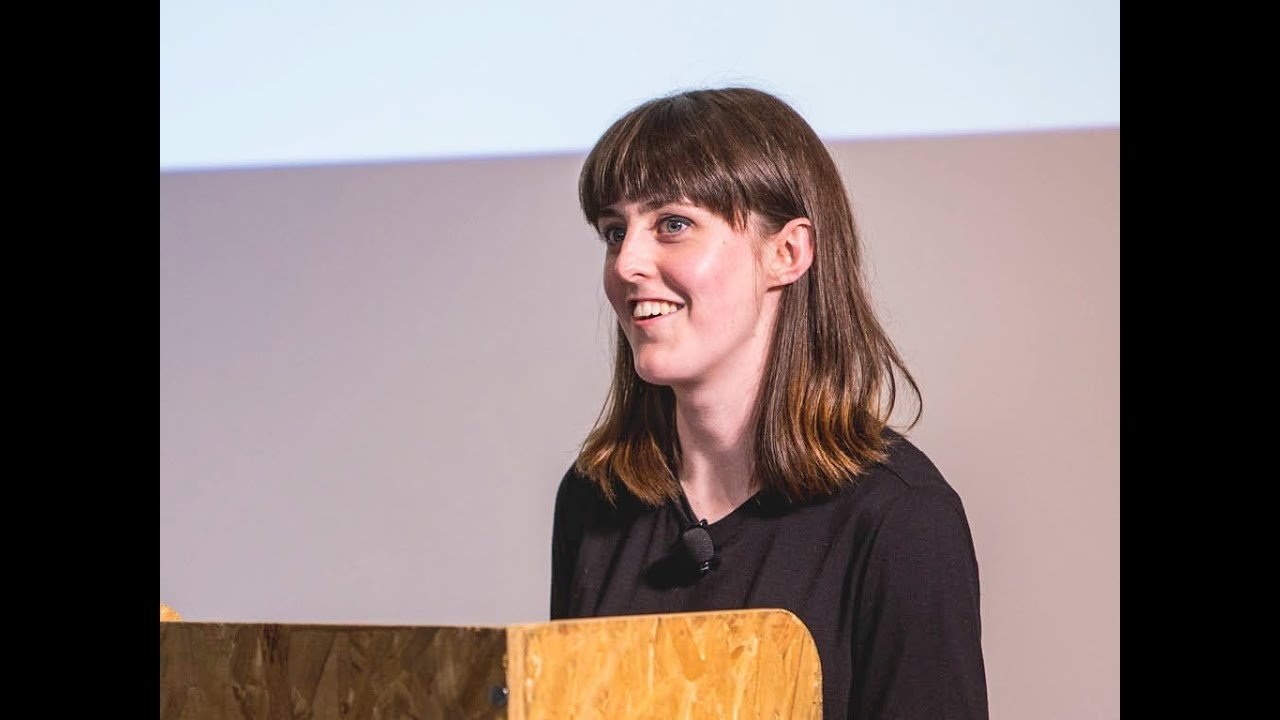
“There still are these weird organisms that kind of transcend different categories in nature — you've got slime molds that sometimes act as a single-cell organism but then will come together to form one slug if they want to move around as one being.”
Yeah I my works definitely very much inspired by nature I would maybe say not just nature but also like the human desire to understand nature and decode it and how that's developed over time even looking as far back as say the ancient Greeks and how they first started to understand human anatomy Hippocrates had this idea called the wandering womb where a woman's womb would like move about her body through all the other organs depending on what smell it was attracted to or repelled from which I just like instantly felt entirely inspired by and then obviously like that kind of that kind of thinking lasted for hundreds of years so even in the Middle Ages you have ideas where vision works through the eye emitting light or like putting out admissions that then allows vision to take place so I just love this idea of there being a time of really early science where civilizations trying to understand the natural world but kind of through their own imagination and using like some observation.
But then mixed in with complete fantasy and present and it's that kind of weird discovery and understanding and that's kind of what inspired this work I can't I wanted to create almost like my own visions of the natural world and that wasn't isolated just to human anatomy but I also wanted to play around with botany and geology and nowadays we think of nature is very we have everything divided up very neatly but in reality there still are these weird organisms that kind of transcend different categories in nature so you've got like slime molds that sometimes act as a single-cell organism but then will come together to form like one heat one slug if they want to move around as one being so I just love that idea of this hybridization between different categories in nature and this isn't something I only do in my personal work.
But I also like to have it you know develop into commercial work as well this project up here was for pono record they put out a book called scalpel which is kind of an internal trend forecasting book magazine I did nine chapter dividers that were based on 15th century religious concept of nature called the great chain of being which is a hierarchy that tries to explain nature kind of from the bottom up so starting with my new particles then going up through minerals and plants and animals humanity divine beings and then God so and then even within within those categories or subcategories so the animals are divided up too in the way that we know them now.
So there's fish and birds and mammals but not just that.
But then mammals will then be divided up in terms of how useful they are so at the lower end you have tame animals like the house cat and then above that you'll have a useful animal like a cow and then above that you'll have wild majestic animals like a lion. And I just love that idea that they're getting closer to understanding nature and it's divided up in this kind of logical sense but then it's completely distorted through again this I can imagine and this religious kind of religious concepts and yes that was kind of the inspiration for this project.
And in a way it kind of relates back to the you know the ancient Greeks they are under stressed like to understand nature but through this like human self important way like we're at the center and it's actually completely fantasized and kind of could like rival any science fiction writers now the way they the way they like fantasize it and distort it here's some close-ups from that project. And I don't only work in that kind of fantastical way I think they will also think about nature in a kind of a more direct way I've got a book called anime Liam that came out last year. And it's a kind of kids encyclopedia and I remember the when I was first commissioned it I kind of thought it might be similar to scalp when I was like how great we can kind of chop up all the animals and have it in this really fantastic away.
And then they made me realize like no we can't have people complaining about me teaching the kids all this kind of wrong wrong science so that was very different project for me to kind of have to like rein in that fantastical side and it was really interesting I learned loads about animals along the way but at the same time I still wanted it to be different like it's an animal cyclopædia but it has to be different from you know like why not use photography if you want it to be entirely accurate I think there's something that illustrations can bring to a project like this the photography couldn't so it had to have a kind of curiosity to it and for me I definitely wanted to have a kind of an odd like like pre-victorian Natural History paintings I was really lucky with this project I got to go to use the Natural History Museum's library and look at that big archive of of paintings and books and there was one there's one collection I really love I think it's the John Reeves voyage and he went out to China but they weren't allowed to like properly enter China they had to just stay in the port so a lot of the animals that they collected which were new to kind of Western biologists were just with corpses they were like dead animals that were being brought to port so many of the the paintings were done from these dead animals but I guess they wanted them to look real so they're kind of like propped up really weirdly as if they're like climbing a tree and the only weight like when you look at the paintings you do notice that something's really weird about them.
But it was only when you read that you're like oh yeah I understand why they have this kind of slightly uncanny like the crane will have its neck bent back like way further than it should do or even just subtle things like the weight you know like within the painting you can see that the weight of the animal isn't standing up.
And I really love them and they're like some of my favorite animal drawings so I really wanted to kind of capture that in a way in mine or you know even if it's kind of an unnatural bend in the spine and it was funny when it came around to amendments because I'd kind of done this and like decided that.
That's what the book was gonna be like without really consulting and you want at the publishers and yeah when I started to get the amendments back they would be really like picky like oh the one animal didn't have the right number of toes or the feathers weren't quite the right color and I was like yeah and anything else and like nothing was ever said about like the angle of the bird's head or the kind of double length possum tail so that was quite nice either they kind of got my vision or they just thought we can't change these things they would leave it.
But the other thing of drawing in that way is that a chance to really like play with space I guess and yeah.
I think about how the composition works and if you're kind of bending the animals around you can make a much nicer composition yeah and so now I'm working on the sequel to anime Liam which is on plants and for me I think plants have in that way that I was talking about nature and how I'm inspired by nature through this kind of fantastical sense of it I think with plants they are they've like they're already completely fantastical and if I am ever doing something botanical I'm just so fascinated by them in themselves and they it's not I don't necessarily think of them as something that I need to elaborate on because they are just so weird and beautiful and fascinating and yeah I'm at the moment at that like perfect stage in a project where my job is just to like write down all my favorite plants that I want to include in the book and like go to hkey Gardens and walk around like it's my job to look at things and make things that. So that.
That's very exciting I think I've gone too quickly so kind of run out of slides yeah I mean to talk a little bit about my practice I draw everything out by hand and then color it in on the computer and I think that that kind of separates my work from if you're inspired by something. And I think it's important not to make it look exactly the same.
So I like that my work is quite clearly inspired by these kind of old paint old botanical or anatomical works that because it's digital it has a different feel to it yeah I've kind of I don't know I think I've gotten I think I've left too much time at the end is that okay
Latest Talks
-
Will Anderson and Ainslie Henderson
Bringing stop motion sorcery to BBC’s Small Prophets
Watch -
Amber Weaver
How does contemporary type design translate into the wider world?
Watch -
Murugiah
Why you should reject the formula and make art about things you love
Watch -
Marina Willer
Design thrives when you find poetry in the simple things
Watch -
Lizzy Stewart
The hundreds of drawings and writing-on-a-whim that goes into comic novels
Watch -
intra
The rewarding process of recognising the art in obscure everyday life
Watch