
James Greenfield
Learning to be better by being rubbish first: a designer’s lesson in failure
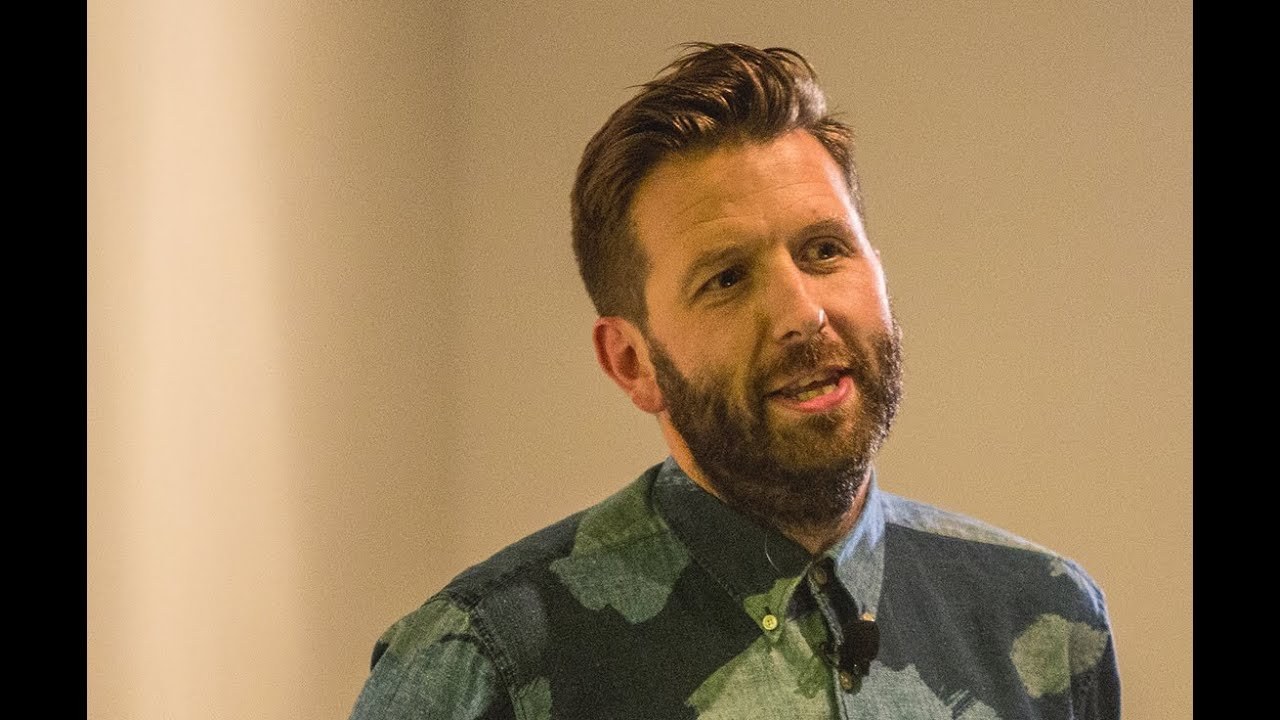
“I was absolutely petrified by failure when I was young because I had an ego but the ego wasn't justified. I wanted to be really good at what I did because I really really cared about it. And I believed it was my calling in life. And so therefore it totally crippled me.”
[Applause]
I've just started by breaking my microphone so that's good failure to start off with yeah thanks the intro so yeah I run an agency called Cotto I'm not going to talk about that I'm not going to talk about making a logo that looks like a vagina and the internet hating you.
And it being the top trending topic on Twitter for 12 hours even though that would be a really good subject to talk about and me almost having a breakdown as a result but what I am going to talk about is a lesson in failure or how I learned to be better by being rubbish at first first and I think this is really simply based around the fact that I think you go and see lots of designers speak or people who are creatives or artists and you think that they've come up with a good idea and they've done well. And it's kind of turned out for them.
But actually some people really struggle at first which is where I I came into it.
So these days I do things that look a little bit like this but back in 2001 I graduated from University with a 21 and I thought I was going to design CD covers cuz that was quite big at the time even though the they were obviously dying it didn't really turn out like that unfortunately and it took me three years to find a a job that I liked and I didn't really know how to deal with it at the time so start at the beginning I worked at company called Harman still who are still around these days and Incredibly well respected and I worked there for 6 months as an inter and they paid me £100 a week which was fine apart from my rent was £105 a week so I was already losing at life. And I hadn't quite worked out how that worked so basically built up a really big credit card bill but you know don't worry about that at that time CU you're 21 and you just kind of soldier through it and every Friday they would tell me whether I was coming in on Monday and then one Friday in November when it was a really horrible day they told me I wasn't coming in on Monday so suddenly I was unemployed and I was 05 down week rather than being1 down a week and then someone took pity on me and gave me a job.
And it was quite a weird job if I'm honest this is mq magazine which is Masonic quarterly and I hadn't really expected life to turn out like this at this point but you know you kind of take what you're going and basically what happened was I graduated from University and a company that Matt mentioned called deepend had offered me a job. And I was like I'm in here I've got a job.
And then deep end went bust and I remember I sent an email to a guy called Simon who'd offered me the job at deep end and I got an out of office saying we've gone busted off. Basically. And I was like cool that's a bit of and then. I went and did the internship and basically the dot which I imagine some of you won't know about.
But anyway it was like a big crash everything went wrong people didn't really want to spend money on Creative so I went to work with the Masons and got asked to join the Masons by a guy called lord Northampton who I know.
This is being videoed but hopefully he doesn't look at it as nice that scariest man I've ever met in my life he basically has hell in his eyes uh and I was 21 and I was talking about repositioning the Masons and I went to and I went I went to the Grand Lodge and I was in the Grand Lodge and the best way to deal with things when you're 21 and you don't really know what you're doing is you get drunk and you think it I'm in the Grand Lodge I'm never going to come here again so I went for a wonder and tried load doors and found some weird rooms found some weird stuff it was generally weird anyway I I was the art director of masonic cly and the thing.
That's really annoying about this magazine was the mq was a meant to move around Each corner uh which was kind of like as creative as I got that time. And I did it once and they went we can't have it moving and it's like oh so anyway that was that. And then. I went to work at a Ad Agency that doesn't exist anymore that's called Cuba that's Cuban flag I lasted 3 months in advertising it was a total disaster they don't care about typography they don't give a about color values they didn't care about anything I hated everyone that worked there the culture was Zero and I got I got basically got my keys taken off me when I'd once worked for 72 hours and I'd forgotten to ask permission whether I was allowed to leave or not so anyway that.
Basically taught me everything that I never wanted to be in life. And I don't know if anyone's watched an incredible program on Netflix called Chef's Table anyway Dan Barb is one of the people on Chef's Table this is one of the things he says in the program and it's really really important in my career that I went somewhere where I realized that I never wanted to be ever again and basically. That's a real turning point for me but at the point I walked out the Ad Agency cuz basically I walked in one morning and they gave me said can I have my keys back. And I was like right this I've done with this I gave him the keys told him to off. And I found myself unemployed again which is not really where you want to be age 22 or 23 anyway all really necessary cuz out the back of that I then went back to where.
I worked before did Masonic quartly again which was better than working at the Ad Agency and then was like you know what you need to get your head around this and you need to go and find a job.
So I went to work at office shoes and that was amazing because as much as it was in house and I've been told that in-house was rubbish I got to do this which was The Offspring Rebrand which was the first job I was ever proud of which still stands to this day it's a been a little bit diluted but it's still there it was trainers I love trainers I credit card Bild that was full of trainers at the time I was doing a lot of internal stuff and the CEO at the time of off of office said to me you can pitch but you got to do it out of hours and you're pitching against lots of really well respected agencies that was like an incredible motivation to me.
So anyway in the end I pitched against conran and me on my own beat conran which I was pretty happy about. And I can still remember he said to me before I went in my into the pitch I'll show you their deck before you go in so you can see it just pretty nice and they' done a logo with antlers on top of it. And I was like I'm gonna beat that. That's terrible that's absolute so but I was still really rough around the edges and a bit of an idiot and these are 10 reasons why so number one self-awareness is a really important part of your life you need to realize in when you walk into a room and you're trying to sell something that if you're being a you need to work out you're being a and you need to stop being a I was quite bad at that when I was 21 number two one of my nicknames is the mouth it's for a reason I've got a great big Gob when you're 21 and you're asking constant questions you're an annoying dick when you're 36 and you're a cre creative director it's really important number three Network I thought all the best jobs were in the back of Crea review in 2001 it turns out they're not it's about who you knows in life I didn't really understand that at the time. And I look back on that now. And I feel pretty thick number four fashion is a really important part of what we deal with every day when I came out of University everyone hated a book called smart SM in the mind because it was all about ideas and being witty and being clever. And so therefore I hated smile in the mind actually turns out the way that my mind works in the way that I think is actually more like smiling the Mind than designers of public who are big at the time.
And it's about knowing yourself and understanding who you are number five I was always waiting for the perfect brief because it's a really good excuse because you look at that brief you go it's not quite right it's not what I want it to do it doesn't do this doesn't do that bollocks every brief is perfect number six I was absolutely petrified by failure when I was young because I had an ego but the ego wasn't Justified I wanted to be really good at what I did because I really really cared about it. And I believed it was my calling in life. And so therefore it totally crippled me. And I ended up in a situation where. I just did nothing and pretended to be a bit Loof and a bit cool because I' spent 120 quid on my credit card on some trainers that's Napoleon for anyone doesn't know I didn't really have a strategy and you've got to have a strategy in life it's really important to have a strategy now he had a strategy and he conquered the whole of Europe my strategy was I'm just going to be a bit aloof and a bit cool and think that everything's below me doesn't really work. And I was just making for making sake rather than really understanding why I was making what I was making and how it made difference to businesses a weird part of my personality is it's kind of combined with this which as I'm incredibly practical so as my career went on I worked with some really good designers and I knew they were better than me because they were older than me and they had more experience so I just kind of let them do it. And then.
I did the bits in between doesn't really work like that but at the time it felt like the right thing to do for no one doesn't know.
That's the Ikea man I'm a big fan of the Ikea man he appears in the corner and he kind of tells you how to build things. Basically my happy place in life is building Ikea furniture number nine ethic versus application I'm rushing a bit because I've just realized I've talked for eight and a half minutes good work is hard hard work is good I totally agree with that and but it's one thing having an ethic and understanding what something means it's another thing applying it and actually acting out on it. And I think we're all guilty in our life every day saying something.
But then doing the complete opposite whether. That's in our personal or our professional life.
And so in a way I had a disconnect that time and the final thing is I think a lot of people see Life as a race and so therefore I worked in design agencies and I think what's quite good about design is it's generally changed quite a lot but back in 2001 there's a lot more ego you'd hear bad stories from other Studios where people were kind of racing each other and kind of like creating work to try and beat each other. And I think I was kind of hoping that I didn't have to get involved in that life so what changed I bought this book that cost me $6.99 and is the best book I've ever read in my life. And if you haven't read it and you're in this room you should read it because it's brilliant it's by a guy called Paul Arden and he was creative director of SAR and Sari and I think what's interesting about this book is as it's become more popular people think ah it's not for me because it doesn't really things.
But it's absolutely literally the only book that most people in creatively creative industry should start with best Paul Arden quote he ever said we are all advertising all of the time even the priest with all of his or her fever is advertising God now that for me sums up the fact that when people are rude about advertising they haven't got a clue what they're talking about how did I change I learned to edit I found new methods that suited me as a person.
And I started with why it's most important thing why do we do the things that we do every day this is called the Peter Principle it's a management principle I think most people that work in design think that if you're really good at design or you're really good at branding or whatever you're working in that's enough it's not loab bolics this is what it's about most people do something. That's called promoting to failure so you're successful at being a junior designer you become a middleweight designer you're successful at that you become a senior designer you fail because all of those things to that moment design it's about understanding that when you interview someone or you add someone or you work with someone it's not about what they were it's about what you want them to be that to me was a success of becoming successful because I'm better at being the top right hand corner than I am being the bottom left hand corner so what is success at design I think it's the following it's actually 30% design 30% organization 30% hustle and 10% God knows what hustle is the most important part you have to walk into rooms and sell things to people that they don't know they want yet which is why you hire character and you train skill I always thought that I had to be skillful but what actually I had to do is I had to have a character that made me who I was release myself from the pressure realize that team is better than individuals fail fail again fail better as Samuel Becket said because I essentially you need to make things work for you not fit into someone else's idea of who you are thank you very much
Latest Talks
-
Will Anderson and Ainslie Henderson
Bringing stop motion sorcery to BBC’s Small Prophets
Watch -

Amber Weaver
How does contemporary type design translate into the wider world?
Watch -
Murugiah
Why you should reject the formula and make art about things you love
Watch -

Marina Willer
Design thrives when you find poetry in the simple things
Watch -
Lizzy Stewart
The hundreds of drawings and writing-on-a-whim that goes into comic novels
Watch -

intra
The rewarding process of recognising the art in obscure everyday life
Watch