
I Saw John First is an animator known for his colorful and fantastical music videos that blend joy with genuine aesthetic exploration. His work often features obscure references and bizarre scenarios, creating a hypnotic visual experience.
I Saw John First
Channelling Japanese ghost stories and Miyazaki into a music video for Mr Jukes
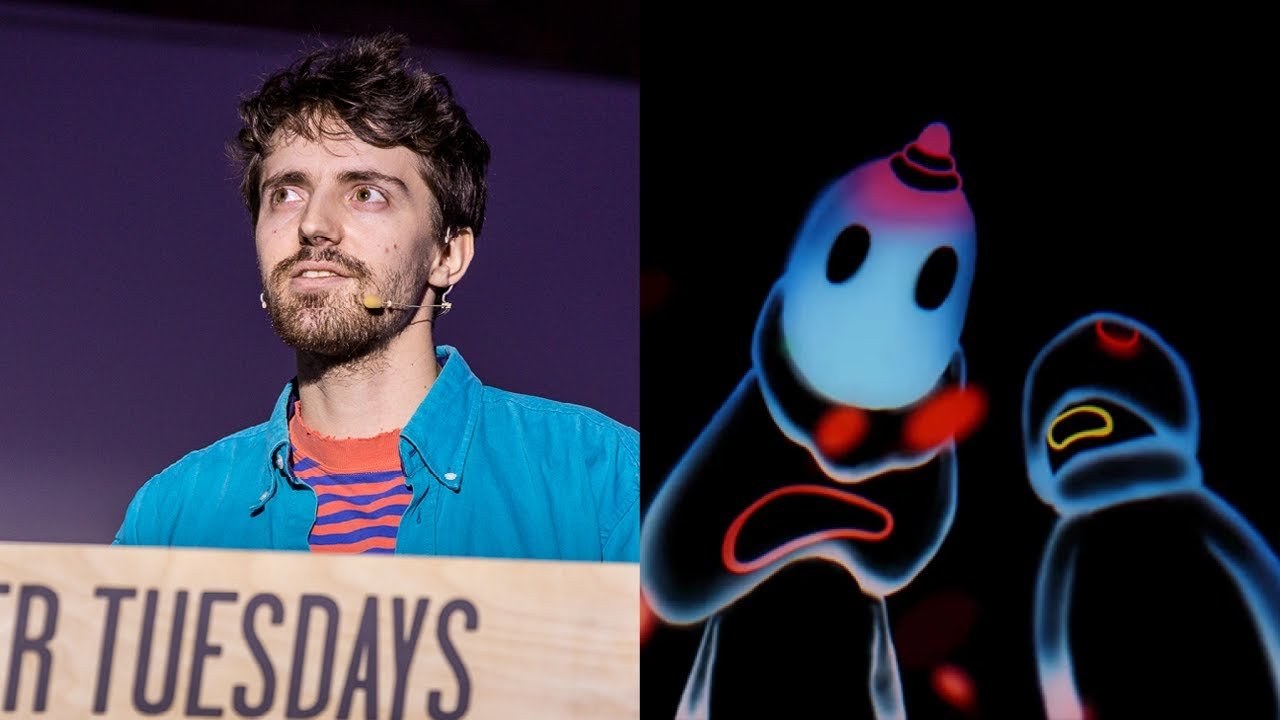
“I wanted it to be joyous but genuine.”
Transcript: May contain minor errors or formatting inconsistencies.
It's very nice to be here. It's very nice to see so many faces. Oh, yeah, we're not doing the Norwegian sailboat forum chat today, apparently. We're doing... Oh, yeah, yeah, we're doing me, actually. Hello, I'm John from I Saw John First. But I don't think I did.
I think it was a nurse at a hospital in Badum in Norway that actually did that. Crawling out, like angry and very premature, I think. I'm a Norwegian animator. Again, I said I'm not going to stress on the Norwegian parts too much. I'm an animator and a director, and I work across platforms and countries and places and dimensions. Most of what I do is, I'd say, like most animators working today, is kind of banded around through ads, music videos and this and that, and trying to find out what works best for their practice or their head.
And I find that I think in my skit-so-head, I think that world fits pretty good, like jumping through ads. And since I'm not that, I guess, known yet, I thought I'd probably play a little scissor reel so you can kind of get familiar with some of the stuff that I do. The last one. Thanks. That last bit was kind of a proposal for a loading bar for the White House when you go to their site and it doesn't really work. And it's since got a pretty good context now, actually.
But I'm here to talk about Angels, a music video I did for Mr. Jukes, and a lot of the show reel shows a bit of that. And I did it last year, if I can remember correctly. I mean, I said I'm traveling dimensions in different worlds, so it's all a bit of a blur. And I kind of want to start talking about briefs that a music video director often gets. And again, I'm not saying that I've done anything for this guy. Is he Irish or where is he from? He is Irish. I'm not going to badmouth him either. I'm just saying that a lot of the briefs that you get is quite like a lot of music that you don't necessarily connect with, but you can sort of like, alright, I mean, I can get a crack or give it a crack, but then again, it's way better when you get something that you really, music that you actually enjoy. And instead of, he was with another man, kind of.
And another thing is also actually, it's kind of a weird one, but a lot of the reason why I choose songs is also what, the choice that I make is also often based on what my flatmates can enjoy listening to, because I do like blast it out loud to just kind of get a sense of it. And this song by Mr. Jukes got like, pretty good response in the house. Like, it became the splattered loud and bleep-bleep song, because like, it has kind of a theme that I basically listened to it on repeat because I really got into it. And this one was actually quite interesting, because it was a project led by and basically is Jack Steadman from Bombay, bicycle club. And him being like an indie darling, it's kind of like, he is, I mean, let's face it, I did Google him, because I didn't really know enough about him. And I found like fan drawings, fan oil paintings, really nice ones actually. Like this guy is, like people have, like hold him in high regard. And he was now entering into more of a soulful kind of experimental terrain where he wanted to be, I'm just guessing, but like to be taken more serious as a musician. And I wanted to make a departure from the indie darling thing, new style and a new visual, sort of a new whole world. And it kind of got me to thinking like, this is his first music video and his first launch, so maybe like this could be like a Björk Michel Gondry kind of complex relationship.
But I just started thinking about like, okay, how, and we're still in pitch process, like, I was still pitching, I didn't like get it straight away.
So I had to find a way of getting him invested into my brain and the dimensions that I'm obviously traveling around in a lot. And the only kind of, the only kind of brief that I got was like, yeah, make it about kind of a ritualistic psychedelic thing.
And then I kind of started Googling him a bit more like the way he is in the present. And I found him like great digging around in Japan and being into all kinds of obscure records.
And then I think like very much, I mean, this is probably told, like this is probably spoken about a lot, but I think the most important asset I feel that you can have as a director is not the skills that you have as a, like your practical side is actually more how you get to know the people that you're actually working with. And thinking like, okay, how can I spiritually link to this guy without really knowing it and without him knowing that I'm trying to kind of connect with this person.
So I thinking like having done with music for a long time myself, I think like, I mean, like if you've ever jammed with someone, you know that kind of moment like, oh, Jesus. It's clicking.
This is actually working. We're actually like sinking somehow. And they're like, oh, shit, that sounded horrible. But like in the moment when you are like sinking, it's amazing. And especially when the person doesn't know you're sinking with him.
So I imagine like, okay, this guy is into obscurity into kind of sort of the past a bit judging by the soulfulness of his music. And I kind of imagined being on a trip to Japan with him and great digging and looking at the covers while he's listening to the music.
And then I found that like, this is the kind of stuff that I really, really like. And I wanted to kind of delve further into the stuff that I'm interested in as well like personally. And thinking like, okay, this guy's into Japan is into great digging is into the past in some way and is into obscurity. And I'm into Japan, I'm into obscurity in some way and I'm really into like ghosts and heads with feet and all that kind of stuff.
So what is it connected to my permanent fascination with like Yukai imagery, like the ghost stories from Japan and imaginary worlds and the kind of, I mean, it's all based on superstition. Let's say like the whole Yukai culture, as I understand it, it's based on superstition connected to a feeling that you would have, but you would reanimate it through a spirit. So like, let's say if you had indigestion, let's say it would be some kind of ancient, like ancient old ghost living in your tummy pulling your, like basically pulling on your stomach and scaring you in the middle of the night and doing all these things and thinking like, this is a great world to be in in order to make sense of anything. Like if you've made, like if you're an animator, I think you tend to bring life into everything and it really annoys everyone around you all the time, like, oh, this tea cup has personality and all that kind of stuff. And essentially this is Japanese, so like, all right, he might like this.
And then I started thinking like, oh, the other stuff that I really like in the visual worlds that I really like. So like, obviously being a huge Miyazaki fan and Ghibli fan and like, okay, I got the sense that it has to be like, it's a ritual and then I started thinking about like Princess Manonake and the whole kind of like little blocky guys. And I'm like, okay, this is a good starting point.
And then I have to connect it with a bit of that kind of Polish poster art style, translucent quality. So it's like bright colors mixed with sort of subtle colors and all the things that make, or all the things that I really get like an erectile joyous love parade in my head. So it became like kind of an art, like the project became like almost like a stylistic quest.
And then I didn't really have any time to make a proper treatment as you do with music videos because basically like make something cool fast. And so I gave in, this is like one of the spreads from the treatment and basically like, I can promise you this, simple characters, painterly blocky shape, creatures and bizarre scenarios and over saturated colors and all the kind of things that is a bit of the trope, but like it's cool and you know, that's stuff that's fun to make.
And based on that, I had to kind of tie things into a narrative. But again, like music videos, I mean, let's face it, it doesn't need a narrative, but it's cool to have kind of a story structure to it.
So I started imagining different things. And like among the list of things, I had like a death of a legendary cosmic singer in an alternative universe done in a futuristic silent movie style made up with a language that doesn't make any sense on a language card that doesn't have type. It's like, alright. Or a narrative about a small group of creatures connected through a bizarre instrument made out of flesh, like an organic fleshy tuba bass or bass sax, ish instrument, the character is sort of blowing it to keep it alive, you know, the ritual thing.
And then countless other things.
And then also the last one, which was nonlinear visual feast, stream of imagery connected through the movement and rhythm. And that sounds a bit like something a dad or a mom would say like, what is a rhythm and movement? But like common, like I had like tiny amounts of time to do it.
And then my first, one of the first things I did was basically this, like, which is basically like a quite kind of praxisoscope kind of thing. And obviously it's actually quite interesting because that's going back to the whole brief, essentially, was get away from Bombay, get away from the Bombay bicycle club thing.
And then they had been heavy users of praxiscopes in their visuals thanks to the glorious director Anna Ginsburg. And so like, oh, that's a big mistake. And I actually got to make like, come on man, like get away from that universe. And that was the hard, like the heart of the project was to get away from everything that he was recently connected to.
So I started doubling a bit of like, OK, rituals, OK, people with hoods. Like it's kind of like hooded characters.
That's kind of, that's quite ritualistic, like having watched the Ice White Shut a lot of times and like for a lot of different reasons. Like the last, the last reason was because it was a brilliant film and I didn't watch a single tit at all. And then then I started going a bit further.
But then this is also one of my problems is that I love detail really do. And I'm not saying this is overtly intricate, but like I was thinking like everything would have like a sub layer of organs moving and every vein moving and everything else.
And then I had a month to do it by myself, which I work a lot by myself. It's also also like I really want to do a maximalistic huge jumble thing.
But then again, like I'm only one man and like you don't really have that many hours during a day.
So I sort of skipped that and went a bit more into this one. Like now it's a 3D and strange and not really, nope.
And then I did another test that ended actually ended up in a thing like this is kind of, this is going somewhere. Then I'm like going heavily into frame by frame animation in Photoshop.
And then all of a sudden these guys arrived like, okay, now we're sort of back into the cosmic ghost singer and also a bit of the Princess Mononica universe that I'm really into. And it kind of tied everything together. So like, okay, this is the right combo of simple shapes that I can easily do within a month.
And then it was actually the song that was quite important and then the rhythm and the movement as a parent would say.
And then I would tie everything down into like the small cake would have a thing and the snare would have a thing. Music Yeah, and then from there, basically also something that was cool about it was that like having done music, I'm really like into the mechanics of how the music is made. And every frame was offset by two.
So then I'm like, oh, he's played this on a sampler. Like he's not actually done it in logic. He's actually there's a sort of offset like offset. So it's not, you can't really use the frame difference between the kick and the snare similarly every time. And that stuff makes me super happy for some reason. And I would kind of stream of consciousness start drawing what I would, what I felt would be cool to have on each part. And like half of this is completely discarded, but it was tying into all the different loose narratives that I made in the beginning and kind of just fleshing them out somehow. And basically this is not like a mantra, like a mantra necessarily, but it's a thing that I guess I'd adhere to a bit like the time that you have and the time, like the duration of the video that you're making plus the substance within the music. Video and the fact that it has to be cool to watch because being in product of our own time like people get restless. Like if it's not cool or fun in the first 20 seconds, you just all right next thing. So that kind of results in a DIY maximania, which it's not a thing I necessarily call it back call it for this presentation.
And I wanted also really cool animation to happen at this stage, but there was a flood in my Airbnb and yeah, a lot of things happen. And also something I think probably a lot of people would like to hear is that it's okay not to be a purist. It's like it's okay to, it's okay to cheat. It's okay to make shortcuts. You don't have to do everything the same way that you've been doing it to keep it consistent. Like as long as you know how to sort of tweak and fix the things that you are cheating, then I think it's okay. I mean, it's then result. So a lot of it ended up being not all of it, but maybe maybe 20% ended up being like rotoscoped from a cheating a cheaty source. So let's say this was a frame in the animatic that I did. And like obviously it's so handy to have those like 360 degree cams sort of indicators because it doesn't mean means that you don't have to draw them in 360 degrees in the automatic. Then you have to make them when you're animating. And it's not necessarily the most advanced thing you can do, but it's time consuming because you have to break down every kind of perspective change.
And then like the neck of the ear.
And then I started actually learning how to do a bit of silly 3D modeling just to kind of get away with it. Started like, oh, all right. Okay. He's bobbing his head. This as horrendous as it looks ended up being quite handy. Like, for these guys like moving around like, all right. It looks horrendous, but again, like it kind of worked in the end.
And then like for like, if you haven't seen it, this is something that ends up being in the music video like this element. And it's basically kind of going with the drawing style that I have, but trying to turn it into a 3D thing and then mixing it with the rotoscope thing that I'm going to show you now, which is essentially the 3D characters rotating, but then drawn. And because rotoscoping is extremely boring, you have to add something to it.
So then you like, I'd add like that little sort of beacon at the top, like going in and coming up just to kind of entertain myself while I'm actually rotoscoping. And the next part, which was completely unclear from the beginning, it was never like properly decided, but was the singer going to be in the video.
And that's a big kind of if because that means, okay, it's an animation and it's going to feature a vocalist in there and how is that going to tie in and how is the singer going to tie in. And this was the first image I saw of BJ, the Chicago kid, like, all right, like he's got an attitude, he's got, you know, cool beads and sunglasses and he's a cool tough dude. And if you're watching BJ, like, no offense, like it's all good.
But I wanted less attitude from him based on the images that I saw on Google because I wanted it to be a bit more of a both joys but also genuine. And obviously, I needed to give it a sense of direction. I couldn't really just like just sing, just do something.
And then I Google a bit more and then I found this image and like this seems quite genuine. This seems like a guy that actually loves to sing. And this is more of the thing that I want to have in my music video. And again, this was all happening in LA and I was here and I was basically asked to kind of give some direction to them, which is my job, which I'm happy about. I really love my job. It's great.
So I wasn't really sure what I would get back when they had recorded.
So I asked them for two conditions, like try one green screen and try one with cowboy lighting or cowboy lighting. And that's basically like the backlit smoke room kind of thing. Because I know that like that's visually pleasing. There's a lot of ways that can animate over that and keep it consistent.
And when I got the green screen stuff back, that was, whew, I can't whistle. There's a, whew, there we go. And yeah, like it was all silly because I think there's something that happens to your performance when you're in front of a green screen because you're used to it kind of like if you're growing up on silly, I don't know, timid Eric stuff, a green screen is a place to sort of drop your things out and be completely silly. And the difference between the backlit smokey room footage, which is a real room with real lights and everything, and the green screen one was totally different.
So I'm really happy I actually had two of them or else this music would probably be completely silly. And he did a good performance. And then, okay, I made a style frame based on the footage that I got. And this is kind of a starting point how to tie it in with the rest of the animation. And I wanted, because everything in the music video is quite seamless in a way, like everything is transforming and morphing into another thing. So how can I do the same with the footage?
And then thankfully, Adobe over there, thanks so much for Photoshop blur tools. This is a fantastic tool.
I started actually trying to find a way to morph the footage without doing any kind of after effect stuff. Like keep it painterly, keep it loose.
So I started doing like a proof of concept test where basically just kind of morph things together. And I mean, it sort of feels like everything is almost not one footage, but it's just flowing together somehow. And I got to keep the seamless thing that I was after. And I think it makes sense to play the video and stop talking. I'm a monkey. I'm a monkey. It makes no sense. Traveling our distance. To get so far. Something's been missing. I thought I was good, but I really wasn't even. Cause I ain't had the feeling you're giving. Thinking bout your love.
Thinking bout your love. Thinking bout your love. Baby I need your love. Your love. Yeah my love. Would you be my love? My baby baby my love. Yeah would you be my love? My baby baby my love. Would you be my love? My love. Would you be my love? My love.
Latest Talks
-
Will Anderson and Ainslie Henderson
Bringing stop motion sorcery to BBC’s Small Prophets
Watch -
Amber Weaver
How does contemporary type design translate into the wider world?
Watch -
Murugiah
Why you should reject the formula and make art about things you love
Watch -
Marina Willer
Design thrives when you find poetry in the simple things
Watch -
Lizzy Stewart
The hundreds of drawings and writing-on-a-whim that goes into comic novels
Watch -
intra
The rewarding process of recognising the art in obscure everyday life
Watch