
Geoff McFetridge is an esteemed artist known for his silky smooth aesthetic that appears on various canvases and even in collaborations with brands like Apple. His recent work delves into identity and divergent thinking, showcasing his ability to articulate complex artistic abstractions.
Geoff Mcfetridge
Drawing as self-understanding: unpacking the quiet magic inside a single painting
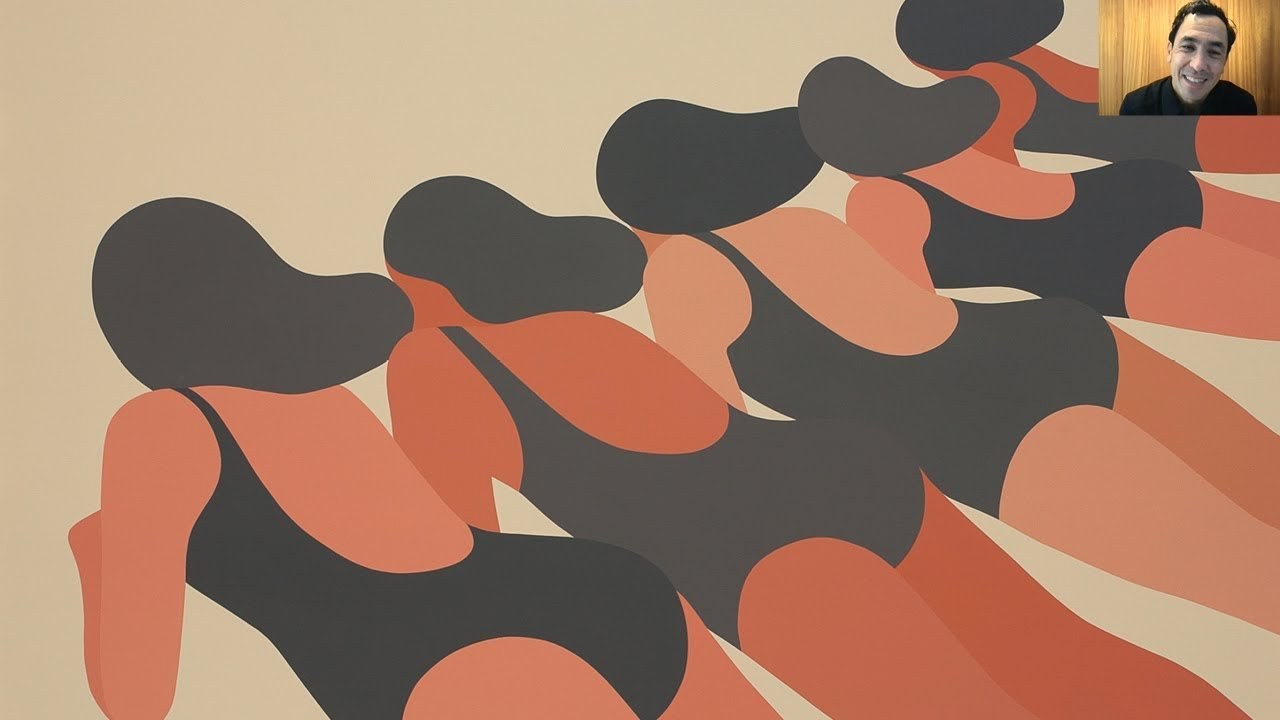
“The work you put out into the world reflects not just your skills but your struggles.”
Transcript: May contain minor errors or formatting inconsistencies.
Well it's time now for our fourth and final speaker today jeff mcvetridge is an artist and designer with a vast array of projects under his belt from books to editorial commissions to international solo exhibitions and collaborations with some of the world's biggest brands we were particularly taken by the way by a recent project which saw jeff create a series of blinking faces for apple watch today he's dialing in from his home in los angeles to talk us through a few highlights from his latest show these days are nameless at v1 gallery in copenhagen jeff please turn on your audio and video so we can say hi hi how are you yeah very well thanks how are you I'm good you have to get into my daughter's workstation right now at home okay gotcha usurped her homeschool workstation okay because you had like an internet outage about half an hour ago or an hour ago yeah planned I reach up my studio for no internet which is seems very 20 20 in its time five minutes before our tech test exactly it was a little bit hairy but I'm very very pleased we've got you here listen I'm gonna hand over to you and you can start sharing your screen and presenting to yeah our audience everyone else again so we've had some amazing questions today.
So yeah if you do have any questions for jeff please do put them in the chat and we'll get around to them afterwards over to you jeff yeah I'm gonna I'm gonna talk a little bit about my some work from a single painting actually that isn't actually in my show these days were nameless but really led to the work and was sort of like one of the first sort of pieces of the puzzle that came together to create this sort of body of work.
And I thought it was interesting to show to look deeply into one single very simple image and kind of show like talk about my experience of creating the work which is something that I I try to you know I try to make the process visible in the work.
But it's not I'm not it's not always clear but really these these work.
So this is these are images from like installation shots from the show at v1 gallery in copenhagen and these this is the only way I've seen these images because I actually didn't go to the show I'm based in los angeles and that wasn't able to travel or didn't feel comfortable really traveling at the time in the middle of the pandemic but so the process so these works like if you don't know my paintings but there are these very graphic acrylic paintings on canvas and I use a process that is very much like a design process that is meant to sort of create a vocabulary of thinking expressed in images so it's sort of it's using a design process to like reach into the world of of sort of poetic thoughts and expressing them with images so this is an example so I'm gonna I'm gonna speak to the creation of a single painting but I would approach almost any project in the same way whether it was like a painting show making a single image doing a project for a client an identity project a mural project marketing project all the sort of work that I do in my studio all sort of get sent through the same sort of vice and it all begins or revolves around drawing so I think that one of the things I thought was interesting to talk about the creative process was for me drawing creates this like record it's like sort of like drawing a map of the thinking that goes into creating a work. And I think it's very much like new spoke of is that process is so important to creative people.
And I think that I've spent many years like sort of like blind in the process like I knew what worked but I think as like as the years go by and I create work I start to see the difference have more control or more of like a self-understanding of when you're sort of like going into the creative process of having the moments be more clear and you have more and I think that one of the interested in sharing this is like that clarity I feel is so valuable that you're not just sort of going into a project not you know like hoping for a revelation you're sort of like there's this sort of like control like this sort of depth to the thinking that you that is like attainable and repeatable with a sort of a process that have refined over time so when I start working everything begins in these large books so this book is like 12 inches by 14 inches and it's you know all these things are very specific to me like I was able to go back and just find the book and find the exact moment I was looking for because they're time based like a single book will have every project I'm working on the time. And I can go oh when I started doing drawings for the painting show.
So I in the top left corner you see the words everyday magic so this was a group show at blum and poe that was curated by bill powers from half gallery it was called everyday magic the same time I was working on the show for v1 that revolved around the issue of understand the the this you know I start with like a theme the theme was roughly understanding which is a theme I've been using for about three years.
So there's this theme of understanding this theme of human understanding that's like super broad and then there's everyday magic so I start sketching and sort of like working through just sort of thinking and I start from the left and I start going and in the bottom right what I wanted to find in this book was this single image that sort of came out of nowhere of a man like laying on the lawn outside at this time when you see a lot of people in los angeles like sitting outside and with his shadow and the color and then I continued to draw and these were like other thoughts and these people sort of blobbing and creating expanding mixing together.
And so it's like creating this like physical this like physical sort of using like graphic form to say that there's like to create a graphic representation of understanding that was actually like sharing a body like sharing thinking coming halfway between two thoughts two people there's creates like a third being if in the center of the frame here.
And then I drew the im the image of the man lying down again this time facing himself another version of himself and wrapped in a shadow and that was sort of leading to that that was sort of the moment where I saw something it sort of like evolved and this is all done basically just through drawing and then I wrote the title to the piece which remained with the title portrait on a three-sided page so then I sort of went back to the original drawing and thought what was it like not understanding what it was in the drawing that I liked but like knowing there was something happening and I saw that it was this very abstract version of someone like relaxing contemplating and then with this shadow there's basically an abstracted version of the abstraction that he is sort of staring into that.
There is this like sort of void that is like himself and that sort of gets into another thing that I'm interested in which is the dialectic like two things in opposition that create a third thing or create an understanding of the whole and it's sort of a like a sort of like a like a durable theme that I see like I didn't I only came to that like came to understand the dialect through seeing it in my work.
And then it sort of like revealed itself I didn't start with I don't start with the dialectic and then sort of create work from it it's like these the most of the the thinking in my work was actually revealed through drawing so then.
I went back to the other drawing and I did a color study of the same thing trying to understand like what like so for me it's like all of this work like drawing is about like like self-understanding like I'm going in and trying to discover what is this drawing revealing to me about my own thinking so this this work it's like these are very barely changing but through the process of these subtle changes I'm basically having experiences so in the basically the whatever.
This is like the fifth time I've drawn this I realized that when I draw the first figure and then I draw the second figure when I'm drawing the second figure I'm drawing something that I've drawn before. But in reverse so I've like become the mirror and what it did was I had this experience of like I am drawing from a different part of my brain because I'm drawing something backwards I'm looking at a portrait and drawing a portrait based on that portrait.
So it becomes like exactly what I'm looking for in a in the creative process which is to like to move outside of the brief move out of any sort of intention and enter this sort of unknown so I've had this like physical experience where the only way to have drawn from that part of my brain was to draw this mirror image so then I refined it. And it became.
This is the actual painting so I refined it and did it a number of times and worked on the color and sort of ended up with this final image which is this very simple image and but for me like was really rewarding because in this image is this first drawing that came out of personal experience so it's seeing people in los angeles in the parks laying around trying to find safe public space but basically getting to the point where things they were doing in their homes or their apartments they're now doing publicly they're like laying around and on their phones or whatever on the lawn in parks and then this reflection so another thing so like like there was the shadow but now there's like this reflection so like the dialect of this person and the opposite of themselves and then me drawing in reverse which I'd kind of never done before.
So it's almost it was almost like drawing with my left hand and then the shadow begins to serve this purpose which is to show that there's these two sides there's these two things happening in sort of like a magical way everyday magic but they are the shadow announces that these things are happening in the real world they're happening in a place that has light if there is a sun there is shadow and there is there is matter there is substance and they exist in the same place which I think is sort of a central thing about magic like you announce that it's magic it's happening in the real world you know it's this sort of illusion and the shadow serves that purpose so for you know for me.
That's what this image I never tell anybody what's happening like this what painting went into a show and like sort of like nobody asks but for me.
This is like the process is like the what I take away from any project any work in a show it's like I can take what I sort of got from making this painting and ideally it's sort of like it like illuminates something for myself like a deeper understanding of my own process or it sort of like makes it worthwhile by making having making work happy a sort of experience yeah thanks so much jeff that was yeah it's so interesting to see the kind of process behind one painting like that and yeah really really close detail is great I can also attest to the fact that I've been to your studio in la and I can attest the fact that yeah there are hundreds of these sketchbooks with you know about seven or eight drawings on each each page it's so it's quite amazing a few questions for you I mean I I think you know that that image that you kind of talked us through there.
I think it's it it kind of speaks to a theme I guess that comes up a lot in your work which is there's kind of two versions of the same person in two states or kind of maybe at two different times but sharing the same canvas there's a painting I remember seeing of yours that's you know two women on a bike but they're kind of looking at each other or rather on two separate bikes I guess why why do you think you come back to that yeah I get that that kind of theme over and over again of you know two people in the same canvas yeah I mean I don't I mean I think I'm I'm interested in I mean the person on the bike it's yeah it was used in some of the promotion for this talk and it's like a woman on a bike and she's glancing backwards because herself has just passed by she's thought wait I recognize that person oh it's me but when she looks back it's actually she's very abstract she's just you know just like these figures I draw she's barely shapes but the person passing by is even more abstract and I think that.
That's like I'm using like for me it's like I I don't really know how to separate but like you know the creative process it's like so much of the work is about the creative process but it's also about experiences in life so like I feel like that's like a familiar feeling you know like wait do I recognize that person or oh that's my own reflection in the window of the train you know these sort of like familiar experiences and like can you say that with graphics like is that graphic design like is that like is sort of like what is like like in my art making it sort of like playing with like these like experiences or manipulations of the world or what we use images for our images in the world and for me I'm really interested in graphic images but it's sort of like the how we see images and experience of images and how is that like just also the experience of being human absolutely yeah one of the the things I guess that we got from that talk was just showing how long it takes to get to the idea or even get to the kind of the perfect version of that idea how long does it then take to kind of make the final piece I guess what's the kind of the time split there you're refining and refining and refining on paper and then how long is it to kind of get it on onto canvas is it kind of five percent of the time do you think yeah I mean the the actual I mean all the work I do is like done on paper it's sort of exploration.
And then it's sort of like it's almost like it's like it's very akin to like going to press so it's like then when I go to paint there's like it's a very separate process that you know it can vary like a painting can take days or they can take weeks depending but like yeah the one thing I didn't I meant to to mention was like in the process that there's a moment when I switch over like you sort of are in this like very like open-minded create creative process like in the books then I go to pieces of separate pieces of paper and that becomes like sort of refining things.
And then you go to canvas and that's refining even more at a point you sort of switch to like this mechanical creativity where you're just like it's just mechanical and that there's like so it's like you you have these different for me they're you can say they're like enjoyable like moments in the process but they're also like functional that like there's a point where you can be like okay I'm not like reaching out anymore I'm like refining and then what happened so that's when I was doing the drawing and I drew the reverse of the drawing and it's like that was just a purely mechanical thing.
But that was essential to like so it's like my belief in images is you can get to you can speak to like complex poetic like truths or ideas and you can speak to them with like mechanical things like just physically like how do I get this paint on this canvas as well as like sort of like like sort of like super divergent creative thinking but yeah the the painting in in the studio it feels like you know I put on like a mechanic suit and gloves and just like go at it sort of mindlessly you know right right and one final question has just come in from mali how do you feel so comfortable articulating your work is it from practice just practice talking about your work is it from reading is it talking to yourself are you writing a lot about your process really good question like how do you how do you go about yeah starting to articulate your work I I mean I think it started from being I think it began from being uncomfortable about it.
And so I think it's like I've always been a little bit drawn to like maybe the challenge of things like for me public speaking like speak like doing a lecture was like oh this is like the hardest thing I've ever done so when I get asked to do it I'll do it. But then. I think that that sort of you know.
I think at some point you sort of like go like okay there's some challenges and you don't need to take on too many challenges um but like I think like more succinctly I saw I I was encouraged that when I spoke about work to people like I realized that they that even though someone would say like I really like that they didn't know what was in it.
So I you know I sort of like realized like oh this is in my best interest you know people get so much more out of the work when I would explain it.
And this is often a relationship where I'm working for a client or even just sending something to a gallery or sending something to anybody and in email or much better like speaking about the work it was like oh I this is you know if I'm gonna work so hard on these images like why not like spend the same amount of work like working out ways to articulate what is going on in the work and just actually being clear like these things are in the work. So it's just like okay I should say mention this I did this.
And then mentioned that you know. So it's not like I'm not like making stuff up like oh this will this will sell you know this will sell this this work or this will make this work seem really smart it's like just very fundamental like oh I liked this this this I did this circle was hand-drawn instead of perfectly round for this reason you know.
But it's sort of like yeah it's sort of like like like I my work is based on like sort of the gaps in language that our language is we don't have the vocabulary to explain some very essential things of being humans so like I use images for that but at the same time language is super useful that sort of you you can with images there's sort of these like moments where you're like actually can I just say this instead of you know just just explain it right listen jeff thank you so much we're gonna have to leave it there but thank you for joining us it's been a pleasure talking to you and a pleasure hearing about that that one painting and kind of the whole process behind it thanks for having me not at all no thank you and everyone else I'm afraid that brings us to the end of tonight's nicer tuesdays online and to the end of another year of nicer tuesdays I really hope you've enjoyed it in both physical way back in in march and virtual form another massive thank you to our event partner pinterest and of course to our wonderful quartet of speakers clarisse tudor mayan toledano nougate and jeff mcvetridge there finally thank you all for signing up and joining us this evening and throughout the year stay well stay safe have a good break if you can and hopefully see you again in january you
Latest Talks
-
Will Anderson and Ainslie Henderson
Bringing stop motion sorcery to BBC’s Small Prophets
Watch -
Amber Weaver
How does contemporary type design translate into the wider world?
Watch -
Murugiah
Why you should reject the formula and make art about things you love
Watch -
Marina Willer
Design thrives when you find poetry in the simple things
Watch -
Lizzy Stewart
The hundreds of drawings and writing-on-a-whim that goes into comic novels
Watch -
intra
The rewarding process of recognising the art in obscure everyday life
Watch