
Ewen Spencer
Photographing UK garage, grime and northern soul across two decades of British youth
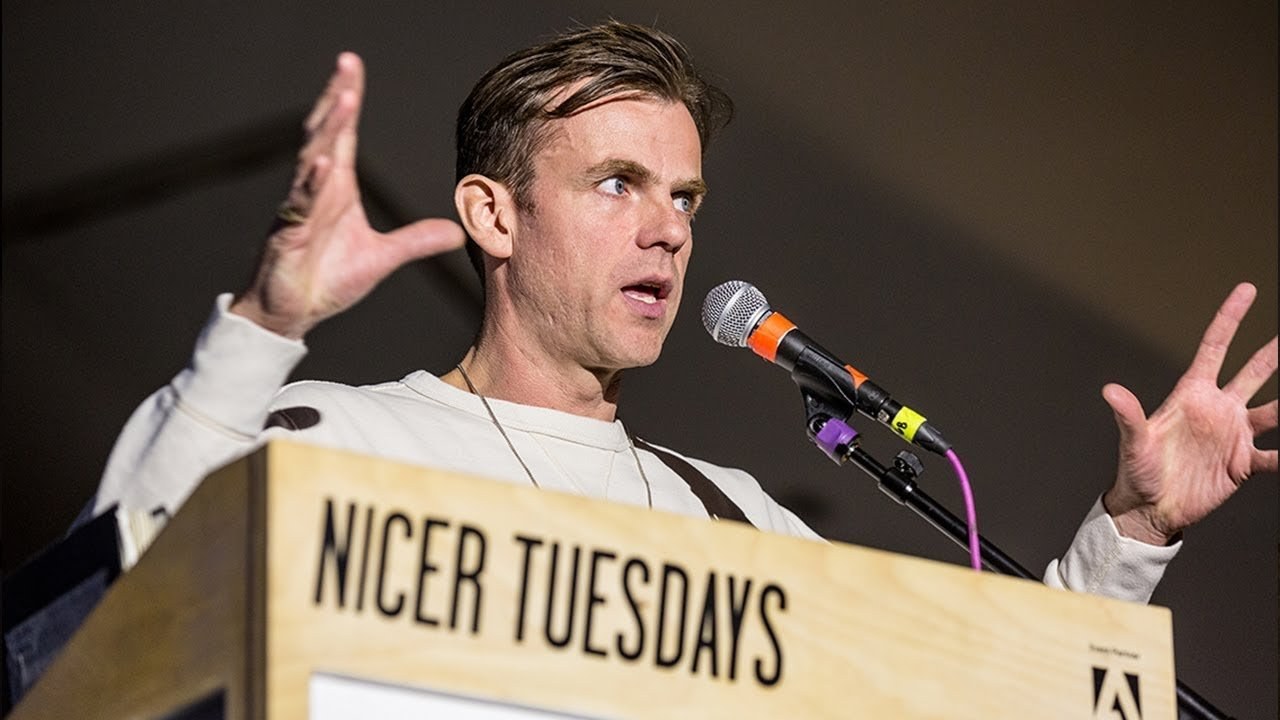
“I just kept making pictures because I don't make pictures really for anybody else — the truth of the matter is I make these pictures essentially for myself.”
[Applause]
hello I'm you and Spencer how'd you do design student at the University of Brighton designed this for me 10 years ago. And I'm still rinsing it design here so thank you Michel I'm going to take you on a journey back to the 90s and beyond ever so slightly but I'm going to start by showing you some current work.
This is a new project I'm working on at the moment for a magazine called hompless and this is the where I'm placing a lot of my pictures of the moment and developing work. And ideas I'll start where. I am right now and work our way back through to some older pictures and we'll sort of I guess explore how pictures are made almost 20 years ago and have sort of come back into my kind of orbit.
This is actually pictures of my son and he's 19 that's him jumping off a rock and this is in them anyone from newcastle upon tyne in the audience alright man thanks good lad glad you could make it so so this is my this is your grandson and he's he's actually become a male model now it was more to do with his mother.
This is a kind of is it is a fashion story.
And it's a three-part story I've been making for hompless magazine called caught by the river and it's a kind of exploration if you like into my sort of journey through like style and music and obviously I come from the castle upon Tyne but the story has now has ended up coming down into London via the hoppings which is a big fun affair in the Northeast in fact the biggest fun fair in Europe descends upon Newcastle in June every year it's a biographical story I grew up near the town where the hopping happens and occurs and I could hear it every evening this is a this is the this kind of combination of that story now and move down. And so and yeah.
So this next piece is them a series of pictures about if you liked about the late 90s and as anyone heard of wavy Gong's here it's quite popular I believe and and in a way it's also about that idea and the kind of in terms of style but in terms of wider culture also kind of a hunger for sort of nineties how would you say that a flat roof pub sort of culture or all of a sudden a few years ago we started kind of wearing what I didn't but people started wearing Reeboks again and you know.
I think people started drinking Carling longer again that's gonna come back soon.
But the idea was to put we photographed these guys that had large collections of them Moschino Versace it's kind of a amazing incredible designer fashion for men and women but in this particular case for men there was probably intended at the time in the 90s for let's say affluent globe-trotting possibly homosexual men who could you could afford this kind of clothing.
And wear it around the clubs of Europe but of course it was adopted this kind of clothing by essentially working-class men who were going raving in the mid-90s and I kind of I captured that time. And I photographed it in the 90s and it had towards the end of the 90s and into the early 2000s so when I started to do was I started to project these pictures into the contemporary pictures of my son and and other male models and and capture this idea without summoning up I think too much sort of nostalgia it was an idea of pushing things forward a little bit this again is for home plus.
So this this was a story I called o my mosh thanks em I'll hurry through this a little bit.
But there's some other pictures here you can see what ivory introduced by old pictures from raves with continent pre pictures of like sort of street style and and modern manifestations of British kind of street youth culture this was shot for the Brighton photo biennial project called keiko the statues the Bryant photo biennial is one of the largest them photo festivals in Europe and to commissioned a new work.
And it was great fun we installed it in custom-made advertising hoarding within the gallery and we fly posted these posters on a huge format in the gallery it was great fun so I graduated from the University of Brighton. And I made these pictures but these pictures they were about the Northern Soul scene and I'm gonna take it on a little journey now as promised ♪
these pictures are about the Northern Soul scene which is something that I was part of in Selma part of so it was it for me was a very sort of personal journey which where I've kind of found my feet as a photographer.
So this is about 96 97 and I was making pictures of people are knew or didn't know in these kind of kind of working men's clubs and peculiar venues around the UK where we played rare soul music all night and would stay up late and dance all night and those people from very different walks of life in there it's one of the most diverse sort of coming together as sort of people that I think I've ever experienced I'm still a huge fan of of rare soul music.
But I don't get out as much as I did back then to make these pictures so the soul project led me quite neatly coming out of university into a world that was sort of built on a photography student at that time to go make pictures of war if you like or go make pictures up some sort of lifestyle thing for the Sunday Times so the independent and that's how I wasn't really interested in that I was interested in what I've always photographed I think which is kind of youth culture style I mean you'd be surprised but like music you know this kind of these manifestations of British you know which I think it's very British and I ended up coming out of university and working for this magazine called sleaze nation this was at a time in the late 90s when magazines held a lot of power and influence and they sent me out with a bag of film most weekends they said here's about a film will process it on Monday just go out to all these parties they give me a list of parties to go on to go on photographing so I kind of go out and creep up on unsuspecting people and capture them well the way whether I having a bit of a neck on as we say I think in fact I think they call it - on.
Now in Newcastle if you watch the TV you'll know about.
But I kind of traveled around all over the place but mainly within London within the m25 that sometimes venture out a little bit further and photograph a different sort of when anything went really sleeves nation magazine it was good fun it was like doing an MA for next to two years and just finding myself in these funny little sort of nightclubs and basements and confined until I until I could until I've made a picture really and until I've made a picture I couldn't really leave for another go to the next one and grab another picture and sleaze nation magazine would run them it's a series in the back of the magazine and it was a great sort of a learning curve so the face magazine was the next port of call for me was very quickly picked up by them they asked me to go to a club called twice as nice which are already been going so actually a little bit and that was in South London and these pictures are from twice it's nice in the main but this is so these commissions for instance for the face magazine would lead to bigger sort of projects if you like so I got back into the habit of then spending a lot of time going back to these clubs so the face might send me for one or two evenings and I'd realize that crack there's something happening here you know there's no one there's no one sitting down for starters everyone is dressed up the hair is immaculate the nails are done and the girls were great too and thank you and the air hey you're still awake and for me it felt as bonafide as something as important as like Teddy Boys or or mods or or kind of the rave scene it felt kind of significant for me it felt like something was happening you know people he could feel the energy in the excitement that was going on.
And it took me to places like I Anapa where I photographed that kind of scene as it as it as it expanded and became more popular and eventually Ministry of Sound good old Ministry of Sound released 20 best UK garage bangers and that was it it was over as soon as that happens as soon as it's clocked by Ministry of Sound you can guarantee the fun sort of well begins in a different way but sort of certainly stops in a another way so god bless measures sound so we can I think we got what we got was sort of So Solid Crew in this kind of thing I don't if you know about that.
But it was over and as a result I ended up the face magazine then started sending me to to stir put me in a time machine and sent me back to my teenage years. And that's not they asked me to go and photograph it's six form parties and discos around the UK and this this one was made in a place called Rosendale in Lancashire and this work and the previous work UK garriage work. And it's kind of stayed with me I could kind of I don't know what life.
But there's kind of stayed like a yeah like a good friend it sort of stayed with me. And it's been kind of closed to me. And I've kind of really enjoyed I enjoyed making it at the time.
But I think the kind of love of making it is kind of worked really.
So the work this work became something else it became young love but at the time it was picked up by from the from the magazine it was picked up by a curator and it was exhibited the Barbican as part of a group exhibition she's batten back in the day and it was nominated by I sort of mentor and great friend of mine this is Elaine Constantine who made a great film called Northern Soul this is the opposable northern soul for an exhibition at or on contrary to our which was which was curated that year in 2004 by this is Martin Karl this is a really unflattering picture of Martin there's a wonderful experience to go to men contractor ah I was a little bit like a duck out of water and I was nominated for an award to produce a new body of work.
And I suggested this idea about these kids are met in East London and there were these kids making this kind of new unlistenable to me music and at the time they called it all kinds of different things and they call it sub low or just bass eventually people started calling at baseline and that kind of real itself up again later on but eventually this work became known as grime it's this scene and in 2004 2003 I started photographing these kids in East London in South London it pirate radio stations in their mom's basement they started raves and in gigs this was the project I've suggested at all for the hoping to get a grant and it didn't didn't come to fruition that I didn't I got I lost basically.
So I didn't I didn't feel better and I ended up making this work into a book with the help of with the sportswear brand at the time. And this was my first book in 2005 this is open mic which I'm very proud of its tiny little book I I priced it 999 because I like saying 999 in in my northeastern dialect it was also about the price of a CD at the time. So it's quite sore he could get it in a yolk sack and things like that the Garrett's work a few years later also became a book. And this is this.
This is the work here has became ingeniously titled ukg and these are this was something it was a peculiar moment because this kind of really hate this book is sold out in a few months we made a thousand copies are led through a publisher which was a really wonderful experience and but this work was at this time in 2013 was coming on for what about 15 years so 14 years old and just kind of seemed to hit a kind of a the floor running that was quite bizarre experience because all of a sudden garage became kind of popular again in Dalston.
And then the epicenter of the earth by the way.
This is this is the the teenagers project and a similar thing happened with this work somebody came to me a publisher and said you know I love those pictures of those kids kissing in nightclubs we don't see that anymore and that's probably you know for a good reason but you're not allowed into those places anymore with a camera they wanted to have a look at the contact sheets and which is you know how they were originally shot and the others through the pictures and produce this Eddy that I was you know a bunch of are you know I'd live with these pictures for almost 20 years.
Now I mean it's amazing isn't there - 20 years the a.m. They made a new edit that I hadn't seen before pictures I hadn't really noticed and we created this book young love which came out this year.
And it's nice to see it it's nice to see it in print it's nice to see it sort of come to fruition if you like after all that time. And in a way and the papers have one saying really is about a lot people will come to me and say oh you know how do you come about making a book how do you make these pictures what what you know you know the thing is is that I've never really saw it took me foot off the gas if you like I've always what I kept and there's a moral to the story.
This is is so I haven't really sort of took my foot off the gas I just kept making pictures because I don't make pictures really and essentially for anybody else the truth of the matter is is I make these pictures this one included I'm it I'm making these pictures essentially for myself they aren't they are okay all right okay essentially make these pictures for myself and in a way you know one of the reasons pictures like this or this succeed if you like without being too obnoxious is because we've all been there we've all being one of these people probably in this picture at some time or other.
And I know I certainly have and that's probably why I made the picture so I'm like thank you very much for seen I've gone way over time but thank you very much [Applause]
Latest Talks
-
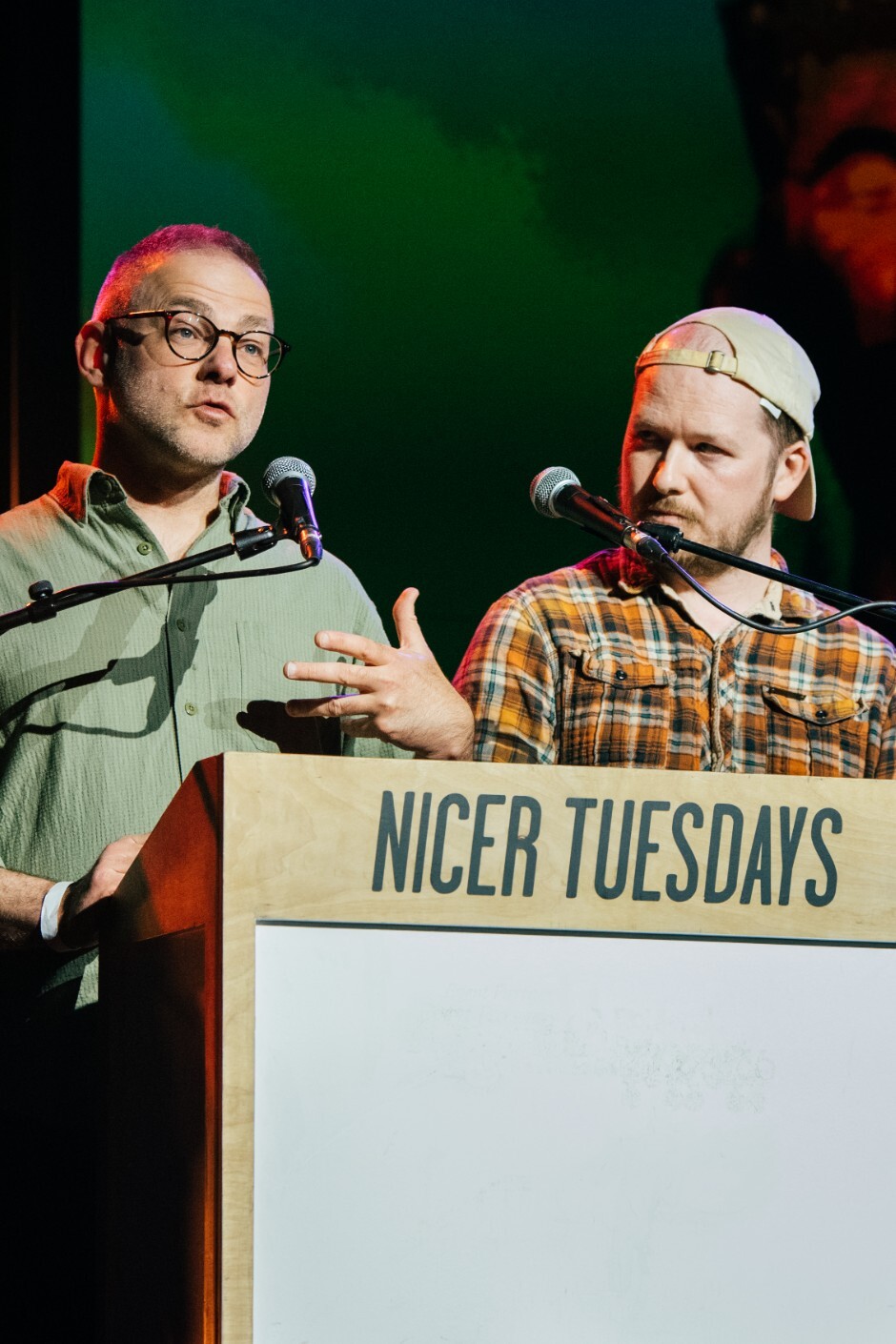
Will Anderson and Ainslie Henderson
Bringing stop motion sorcery to BBC’s Small Prophets
Watch -

Amber Weaver
How does contemporary type design translate into the wider world?
Watch -
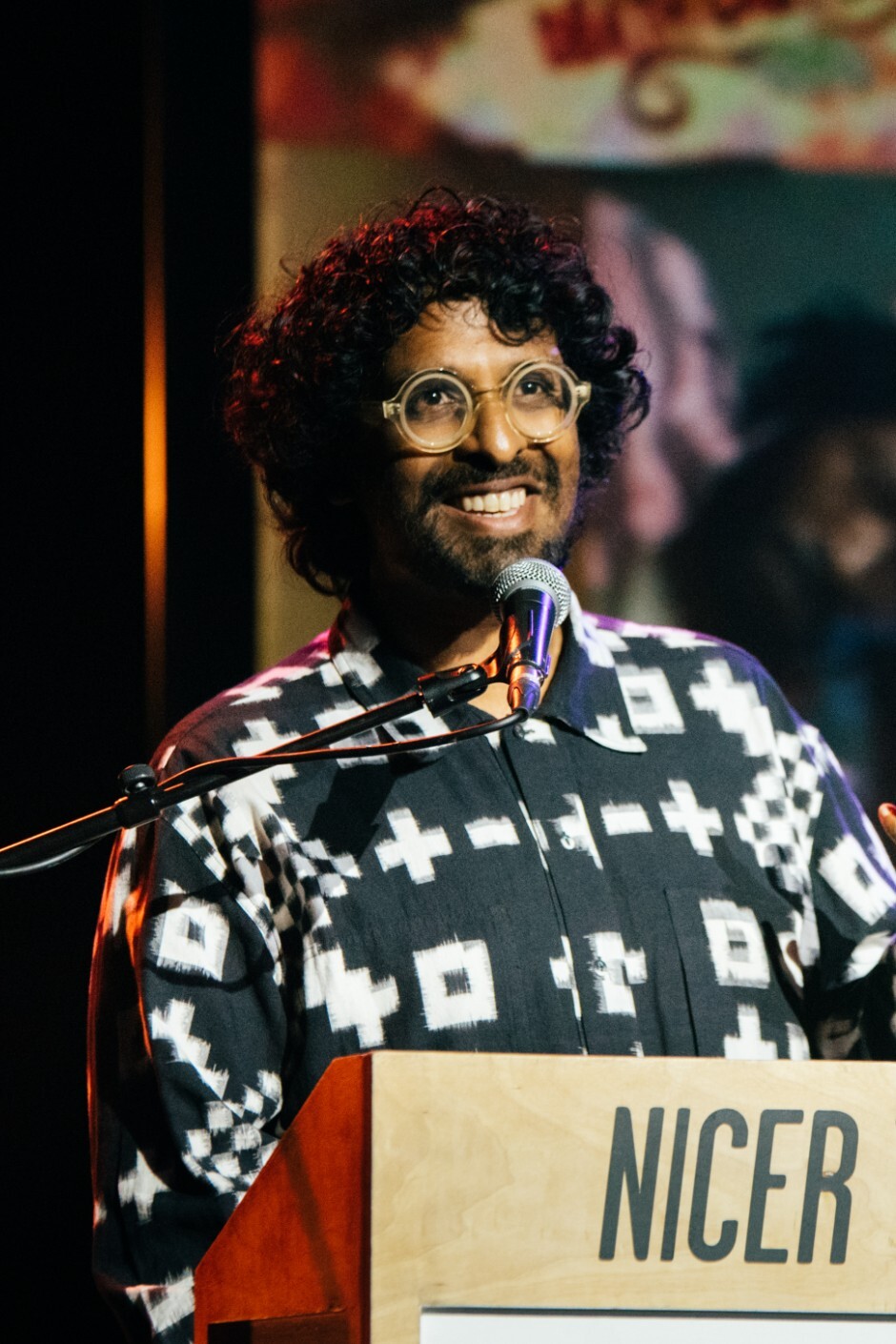
Murugiah
Why you should reject the formula and make art about things you love
Watch -

Marina Willer
Design thrives when you find poetry in the simple things
Watch -
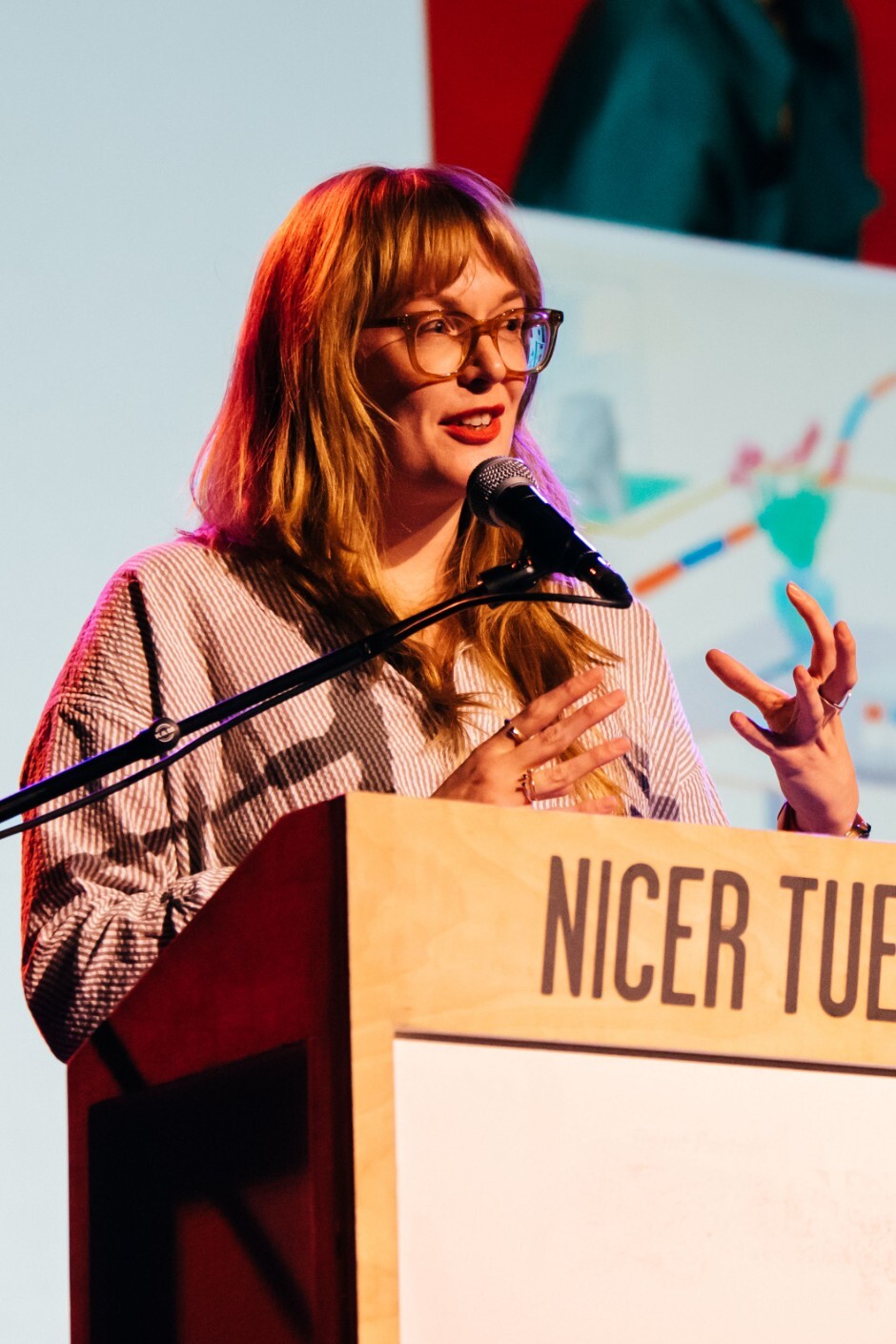
Lizzy Stewart
The hundreds of drawings and writing-on-a-whim that goes into comic novels
Watch -

intra
The rewarding process of recognising the art in obscure everyday life
Watch