
Deepa Keshvala
Turning a father’s absence into a short film about grief and closure
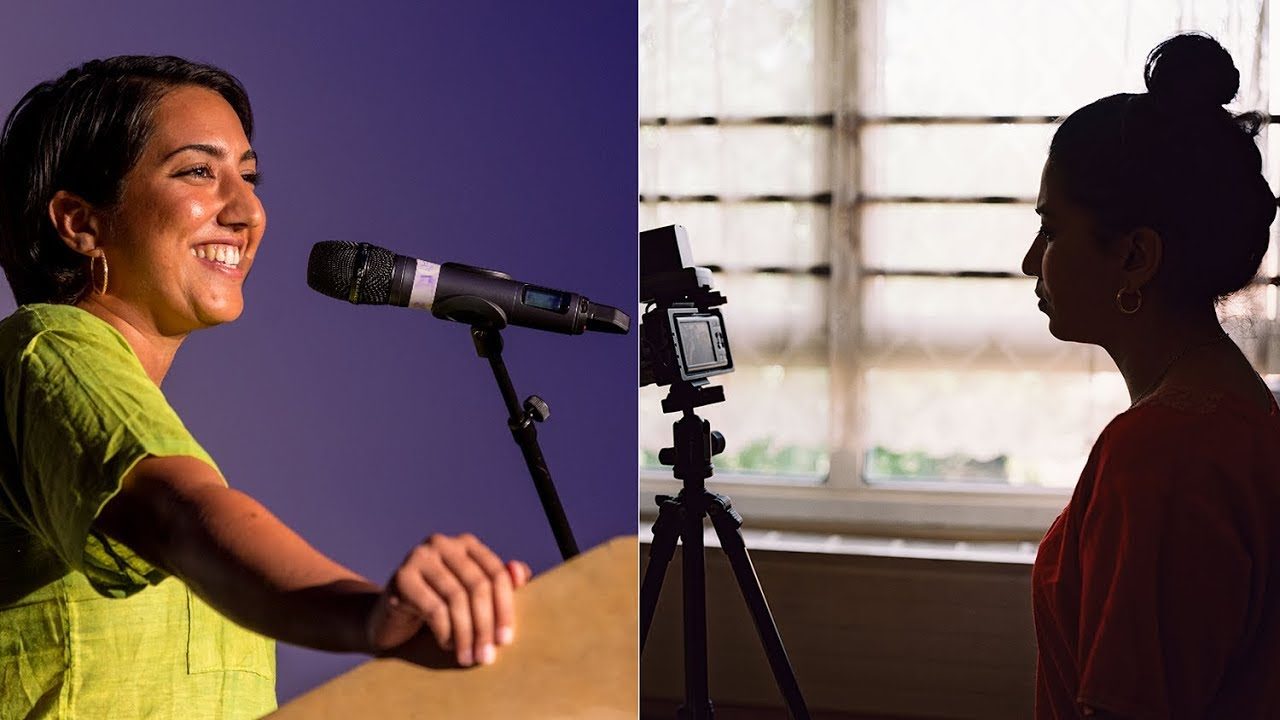
“I went in in sort of journalist mode and I wanted to get answers for myself under the guise of making a documentary as a filmmaker and I think we both knew what was going on but neither of us talked about it.”
[Applause]
[Applause]
hi hi everyone I am Deepa Kesh Varla I'm a filmmaker and I work primarily as a DOP but I have written and directed and I hope that I will continue to write and direct my own passion projects what I would love to talk to you guys about today is storytelling and because I think that filmmaking is just it just is storytelling is all about storytelling so I'm gonna talk I'm still gonna take you guys through my my journey where I fell in where and when I fell in love with storytelling and how that's evolved in her car rather the project helps me to you guys about in a bit so my love his storytelling begins in India about ten years ago.
I went for the first time in a long time to visit my family in rural India and I started taking pictures there on a 35 mil analogue camera and I just totally fell in love with it I just fell in love with windy I fell in love with my family and I just got into a how I got into a habit of photographing everything and everyone so that's my nephew on the right some girls from my grandma's village their guys at work.
So this is where I sort of really realized that I was fast I've always been fascinated by the human condition but here I realized that you know.
This is my calling and I really loved that photography allowed me to get close to people in this way that I hadn't been before you sort of when you take a picture of someone you're you've got you share this amazing moment between the two of you and you see you feel like you've sort of seen inside their soul for like a couple of seconds and then you've got this picture that lasts forever. And that's what I love about.
That's why I love about filmmaking too so as a DOP I think that the work all of the kofi that I'd done in India sort of went on to inform and inspire all my workers there my work as a DOP which is it all comp real here I do lot of music videos and commercials but my work as the photographer's has been sort of my reference point massively for color composition energy grade as you can see here I'm I love getting all up in people's faces I love color I love surreal worlds this fievel of over there some of you guys would have seen naturalism so that's where my love for storytelling begins and that's how it sort of translated into my work as a DP and I guess it all it's always come back to sort of satisfying my this sort of anthropologist it means why do people do what they do you know how do people over there live or wider my why my family like this and all of these questions that come up about people and a big question.
So they might miss the projects I'm going to talk to you guys about it starts at childhood my dad left when I was quite young he was sort of he was like my partner in crime I really loved him.
And then one day he disappeared is my parents got divorced and it was his question I thought why would why would someone do that why would why would like you know a parent just like disappear like that. And it looms over me in it and all through my adolescence I was like people I just became really fascinated with people why they make these weird decisions so I vowed to myself that I would I would answer those questions and when I was in my last year of university I went to LCC and I did amazing design course I used a brief that we got we had we got given a word destroy we got given a word and it was destroy and they said you document destruction in any medium of your choice so I thought oh this is perfect I can use this as an excuse to find out when my dad disappeared and I knew that he was an alcoholic and I knew that he'd sort of destroyed everything around him he'd he'd had three failed marriages and he as far as I had heard he was living as a recluse in in Leicester and he was drinking so I said I'm gonna make a film about a man who's destroyed himself and I can use as an opportunity to reconnect with my dad so here's an excerpt of that documentary it's just the opening but you can sort of get an idea of you know how weird that weekend might have been as well my my my but nobody's looking before right I saw hopefully someone I feel not right I understand Houseman war Leicester le4 60s before Delta s for Sierra right yes so that's my dad and that was sort of my first encounter with him having not seen him for about 13 years I saw turned up his house one day and I was like I was like hi I'm your daughter and I want to make you feel happy and he was like yeah cool coming because I don't know how many Indians there are in the audience but Indians don't talk I think this is an ethnic thing you don't really talk that you just let the elephant stay in the room you don't talk about it you just got oh yeah that's fine like you know it's cool yeah. I haven't don't even talk about the fact that I'm seen you for 13 years so so I said of his house that he was like you.
And I was like yeah I'm and he's like cool coming in and it was so weird and I said to him I'm gonna stay for three days and he's like yeah cool and so this documentary in Oh as you can imagine over the course of the weekend I didn't ask most single question about why he left I didn't ask him about we didn't actually talk about the fact that we were father and daughter I just said him I want to make a film about you and he said alright fine so then. I got my camera out after about an hour of being at his house and I started asking questions about himself and and I sort of what I did was was kind of sly I went in in sort of journalist mode and I wanted to get answers for myself under the guise of making a documentary as a filmmaker and I think we both knew what was going on but neither of us talked about it so he answered all the questions and I filmed him and and what I hoped would happen was that he would be like okay I up I get it like you turned up I like I'm supposed to apologize I'm sorry and I love you I miss you and that didn't happen because Indians don't do that. So instead we had this really weird 48 hours where we both pretended that this was totally normal and and then I sort of went through this mad range of emotions where. I went from being sort of fascinated by him.
And then I asked some questions and I didn't get the answers I wondered then. I was pissed off at him.
And then eventually I sort of like I just checked how he towards the end of the the second day he started making me laugh and I started to see his sweet side and his funny side and I remembered what I loved about him when I was when I was a kid and I couldn't hack it cuz he'd be in 48 hours he just put me through the whole range and not once that he said like you know a you okay you know sorry I should have done that.
So I left and then after I left we weren't really in contact he tried to stay in touch with me.
But I wasn't really having it and and then he passed away Dave sadly very tragically drank himself to death and so I went to his flat to pick up his belongings and what I found it is flat were very few material possessions but these what he left behind would go on to form the world of Kara the short film that I made because I realized after he passed away that I hadn't gained any closure on this situation between us and you know what had happened and this weekend good and it sort of haunted me after we passed away. And I thought there's so many things we didn't say there's so many things I could have said I was I was 21 I could have just been like look let's just talk about what's happened so I said I'm gonna make a film about a girl that goes to make a documentary about her dad's and I'm gonna keep make a book about them so no I said I'm gonna make a film about a girl that might go to make a documentary by dad and she hasn't seen him.
And in my in the process hopefully it'll be cathartic hopefully if he's flying around anyway he'll watch it and he'll know that you know. I was sad and I was upset and I was frustrated so I did it sort of an exercise in in learning more about filmmaking and yeah catharsis I guess so what I found it is flat is what I'm gonna take you guys through very few things the soul soul of leadership a book by Deepak Chopra our holy book the bhagavad-gita a book called bliss divine which is a book on the meaning of life the purpose of life it's basically a book about a series of short essays on spirituality which is what he was these three books is what he was reading a little cassette player a bunch of cassettes and a half but finished bottle of whiskey which is I guess the bottle that finished him off. And this was all that he left behind really.
So I took these things. And I took the weekend the my memory of the weekend that we'd spent together. And I put them together. And I made a story I write the script and the script was very much written and constructed from truth and truth and emotion are the two things that really across everything that I do those are my main riff these are my reference points is what is the the truth or what is the most honest way of making this was the most honest way of telling the story.
So I wrote this script and the script is there's a little section here that I've I've sort of marked how he pays for Pete's heart delivery and puts a pizza box in the middle of a coffee table he's visibly drunk and shakes his his exercise of meat feast and what goes on it what happens is that his daughter then starts filming him eating pizza while he's drunk which in our culture in our in our culture is a very disrespectful thing to do you don't film people take pictures of people while they're eating and he said to me while I was doing that he said you know you're not supposed to you're not supposed to take pictures or from you know.
That's disrespectful in India and I and I said oh really I didn't know that. And I did know that.
But I was purposely sort of taking the piss out of him or pushing the situation because I sort of had this like well I don't owe you anything I didn't don't need to you know I don't owe you any respect so use the the section of this and the documentary goes like this.
So that's an excerpt from the documentary and you can see that where I've sort of been really unapologetic about how I've sort of almost taken advantage of the fact that my dad is blind drunk and he's sort of like chowing down on this meat fees and if you and you didn't know up until I made the film but behind the camera was a young woman that was really frustrated and really upset and sort of had this guard up and she was using the camera as a sort of barrier and shield between her and her dad so when I made the when I made the shore I wrote the scene into the script and this is the scene from the short where you see what's going on behind the camera you know if you did that in India you get sold up it's very rude yeah I didn't know that you do know what's this film about.
Anyway uni they gave us a word and told us to make a film about it interesting and this is where it became apparent that the film would be a mirror to the documentary so the film that the documentary is a film about an alcoholic man and the film is about the young woman who's you know sort of secondary to that that situation and that was what was really what became really beautiful about it was that these two things together completed the circle so that's the pizza scenes the next up we we've got the Geeta which is our holy book after my dad passed away I went back to his flat and I found a little excerpt from the Gita that he'd cut out which must have resonated with him and just read out the first section of it he whose mind is not shaken by adversity who does not hanker after pleasures and his free from attachment fear and anger is cause a sage of steady wisdom which I thought was ironic because an out for an alcoholic to have that as his mantras you know it's pretty funny so but I realized that he was on some sort of spiritual journey and he hadn't quite got there. And it really moved me. And this sort of became this quote that I found became the soul of the film.
And it really helps me form his character and it really helped me in so finding the empathy and the compassion for him and realizing that. Actually he just wasn't a dick so this quote I sort of had with me throughout the film. And I and I put it back into the film I wrote a scene where she wakes up in his house and she finds a little cutout from they keep there next to the bedside table and she has a moment where she realizes that her dad's not dick he's just going through some mad in his head and this is a scene here.
So that's that the second thing that I find is so the next is it's quite a design point of the film this book that my dad I think that was his sort of manual for life and what I loved about it I just loved the cover I think it's amazing the colors are amazing the green red and the yellow but the irony was that my dad's favorite drink was the host on pills that was and it's exactly the same color way as the book.
So I was at how this has got to be that's gotta be the reference for production design definitely so these just honest or purely aesthetic vanity level this became a reference point for art department and I am we vinyl the kitchen the same green as the the green on the book cover and there the can she wore a red nightie you see it here she wore red nightie that's the source same shades and it was just kind of like a little window you know yeah can you show me how to use this font place so yeah that's the sort of art art department side of things the cassettes so the cassettes were really interesting when I got home I played the cassettes in the in the radio the the radio that he left behind and there was some really beautiful beautiful stuff on there he'd left he was listening to Indian classical music he was listening to satire he was listening to a lot of spiritual musings a lot of gurus.
And this would go on to be the score for the film.
So I'll play you a little section here you can hear this is so what you'll hear is in in our sort of region of good right. There are these guys that do die row which is a mix of satire sort of political satire and then they break into song and it's really amazing they sort of often just talking about politics and culture and religion ♪
so that's what was that's the kind of stuff that was on the cassettes and I really loved it I actually hadn't really had much of it before before I picked up the bits from my dad's flat and and I found it really moving a lot of this stuff when the cassettes gave me goosebumps and so when we when we were trying to work out how to you know make a school for the film I was like it's gotta be what what was on the cassettes so for the end of the film it's a sec it's a it's an excerpt or a section from one of the cassettes and it sort of the the film ends with so that's how the that's how we sort of put together this the sound or the score of the film and again I think that it all sort of comes back to truth I think that the way I find emotion easiest or sort of most honest to portrays by going back to truth like what would what what would the soundtrack to that story be and it would be you know guy who India talking about how crazy Indian families are so I really enjoyed that I really enjoyed using what I'd found is flat and sort of using it as a way to get to know him again and sort of I don't know it was it was it was like putting even though he wasn't alive it was that it was the closest I could get to putting him back into his own story without him physically being there and hopefully doing him justice as well.
So the final the last people talk to you guys about is the design element I really wanted there to be a lovely poster and I wanted to do wanted to do some titles for the film as well I didn't want just to do the standard you know like Helvetica over a picture from the film kind of thing and the story is quite weird my dad was like quite a psychedelic guy and so these are this is this is a box of references that I dropped off to Jules at Fraser Muggeridge studio and using this as a mix of you know that all of the sort contradictions in my dad's life the the booze the the religious stuff the spiritual staff screenshots from the documentary Jules and the guys that phrase the margarita made this amazing poster where you've got sort of like a little the little emblem from the Holston pills can the colorway that I loved so much the green in the yellow and yeah really simple but I think he sort of it really look there's something about the colour in Indian I guess just an Indian culture an Indian religious imagery across the board it's so rich in color and these like mad acidic colors and it's quite a bleak film it's quite a miserable film.
So I I really wanted the the artwork and the design element of it to sort of you know bring a bit of light to it.
And then they and then they sort of went a step further when we made this this title that drops in quite early in the film as you know as I'm sure you guys would have seen when you watch films oh so the title of the film comes up. And it's a collage of everything I dropped off.
And then it did the festivals and and the last thing was the is the bottle and the bottle is sort of a metaphor for I guess storytelling like it all the bottle the bottle is where it started and the bottle is where it ended and it's not in the film.
But it it made me think about. There was amazing quote thyroids actually interview by this writer called Paul Schrader who did who wrote kept taxi driver and he said this really amazing thing about how storytelling isn't about this it's not about this sacred thing called cinema this is you know I make films but I also take pictures and it's not about cinema being this like this amazing thing this this this crazy process involves those people and loads of money it's just about storytelling and sometimes the way to tell that story will be a film sometimes it will be a documentary sometimes it will just be a picture but really I think that I hope that if you can sort of connect with truth and emotion.
And if you have empathy then you can tell your story or you can tell stories in any medium you won. And that's what I've really enjoyed about sort my work and my career so far is that I take pictures and I work as a DOP and I work I other people's stories and with this it was it was really nice it on my own story but really at the end of the day it's just about people and stories so yeah I hope you enjoyed [Applause]
Latest Talks
-
Will Anderson and Ainslie Henderson
Bringing stop motion sorcery to BBC’s Small Prophets
Watch -
Amber Weaver
How does contemporary type design translate into the wider world?
Watch -
Murugiah
Why you should reject the formula and make art about things you love
Watch -
Marina Willer
Design thrives when you find poetry in the simple things
Watch -
Lizzy Stewart
The hundreds of drawings and writing-on-a-whim that goes into comic novels
Watch -
intra
The rewarding process of recognising the art in obscure everyday life
Watch