
Nu Goteh is the co-founder and creative director of Deem, a magazine dedicated to highlighting and dismantling systems of oppression through design and content. He emphasizes how design can enact social change and champions grassroots organizations in his work.
Deem Journal
Rethinking design as social practice and democratising who gets to be a designer
“Everyone has the ability to shape the environment around them.”
Transcript: May contain minor errors or formatting inconsistencies.
Our third speaker today so when the biannual print journal and online platform deem journal launched its inaugural issue earlier this year the creative world took note for its provocative stories centered on how design can truly serve communities and add value it's fundamentally focused on design as social practice we're delighted to be joined today by deemed journal's co-founder and creative director nougate who's going to be walking us through the first issue and talking about some of the ideas behind its pages new please turn on your audio and video so we can say hello hello how's it going I'm very well thanks how are you I'm well I am well fantastic are you calling from la as well I think we've got I am yes I am in l.a fantastic okay our last two speakers both from both from la today listen I'm going to let you share your screen and and kind of start your talk and everyone some fantastic questions there for mayan if you have any questions for new while he's speaking please pop them in the chat and yeah we'll get around to them afterwards thanks so much over to you so hello everyone I'm going to talk to you about deem journal first we'll start off a little bit about me so my name is nugerte some people call me mr vandross a couple of fun facts I love music I dj I produce I also love vintage home decor and I am also a educator so I teach a class at parsons industrial design mfa program my background so my background's a bit untraditional in terms of the world of design I started off in the world of branding and marketing and then moved into a space of research and strategy and then which I found so much opportunity to start to rethink what is the world of research and strategy from a human human-centered point of view and then which led me and my partner to create our own studio room for magic which our goal is to help communities better establish their value propositions when in exchange for different entities so the entities can be brands non-profit and cultural institutions so that shows up a couple of ways like true true botanicals wanting to really understand how to speak to new audiences beyond their typical consumer all the way to adidas trying to establish a school that was for the future creative class and headspace trying to reimagine what is expertise and how to make mindfulness a much more inclusive value proposition for everyone and lastly but not releasing what we're here to talk about is deemed journal which is a collaboration between room for magic and open box and so with dean we launched this year print issue one is out we have our site and we focus on design and social practice and what that really means is when we're looking at the world of design we saw that design would focus on a couple of specific topics whether it's sustainability whether it's urban planning transportation things of that nature but then we saw that. There was a whole other gap that design also had an opportunity to start to speak with and engage with and so we actually looked at social practice and art practice that is engaged with community dialogue and that's meant to highlight different types of systems systems of oppression and dismantling those systems of oppression. And so for us we found that there's an interesting intersection between using design as a solution-based thinking methodology and also looking at social engagement from an artistic lens that will when we bring them both together we actually have the opportunity to start to establish much more of the opportunity of design and really what our goal is to democratize design what we found is that when most people talk about design they're usually talking about outputs and those outputs are usually tied to fidelity and fidelity what we've seen is really limited based off of what resources you have what time money education that you. Actually have and so what we decided is like what starts to happen when you detach the concept of design from fidelity from an output and you.
Actually look at design from a standpoint of process because we found that within process you can find inspiration there's learning and people can actually adopt and start to mirror and adapt their own processes which with output that's tied to fidelity which is tied to resources in which resources are limited you don't also have those same opportunities very evolved very bold goal that we set off on. But interesting enough is as we started to socialize and shares with people we started to see a lot of other people share similar sentiments and so in our process what I'm going to talk about is our creative process of creating the visual underpinning of of this brand and so one of the things that was really interesting is I had the opportunity to work with a phenomenal art director creative director named justin gorman and what we were playing with was this idea of structure and energy structure from the standpoint of the topics that we cover have to do with different systems of oppression or affirmation. And we want to do them justice and not distract so our goal was to create a system of a brand that. Actually uplifted and held the content up to a higher esteem as opposed to distract from it. And so the two ways we approached it was being able to establish some sort of structure and so we started pulling together mood boards of different publications that we admired that had a pretty rigid structure structure that would allow us to actually take in content and be able to present the content in a digestible and clean way.
But then also looking at energy like how can we start to use pops of color how can we start to use typeface how can we start to use different modes of design in order to create this sense of engagement because part of our goal is not to create a design publication that was solely just for practitioners we want to actually start to bring in so many other people into the world of design and that's one of our goals and part of the way how we actually do that is by creating a design system that not only was structure structural in his rigor but also enticing and romanticizes the viewer to actually come in and hold and actually read through the content and so one of the first places we started was looking at the logo and we had the opportunity to work with with a designer named tim cramer and really what we started to look at here was how can we create something that was a bit more human a bit more soft a bit more inviting a bit more inclusive but then still have some some type of unique flair which you see the literature in the two e's is really something that we felt gave us that edge but still was something that was approachable and then as we started to move on we started to think okay well what is the best type pairing that can start to communicate what we want still with still with the idea of energy versus structure we lean it into rubr and chelsea ham which are both great typefaces with so many options but that give us the little sensibilities and flares that we were really interested in but where things really start to come to life is in our photo direction.
And so our approach to photography is more of a documentary style that we never really ask our subjects that we're shooting to pose or take a portrait it's usually in dialogue and it's usually in a show or tell fashion.
So the the photo shoots can be awkward at times because it's either me or alice who's the editor-in-chief and we're at the shoot and the photographer. And we're asking questions and we're having dialogue with the person that we're shooting and then we try to step back.
And then they try to step forward and we have to say no no no like stay stay back.
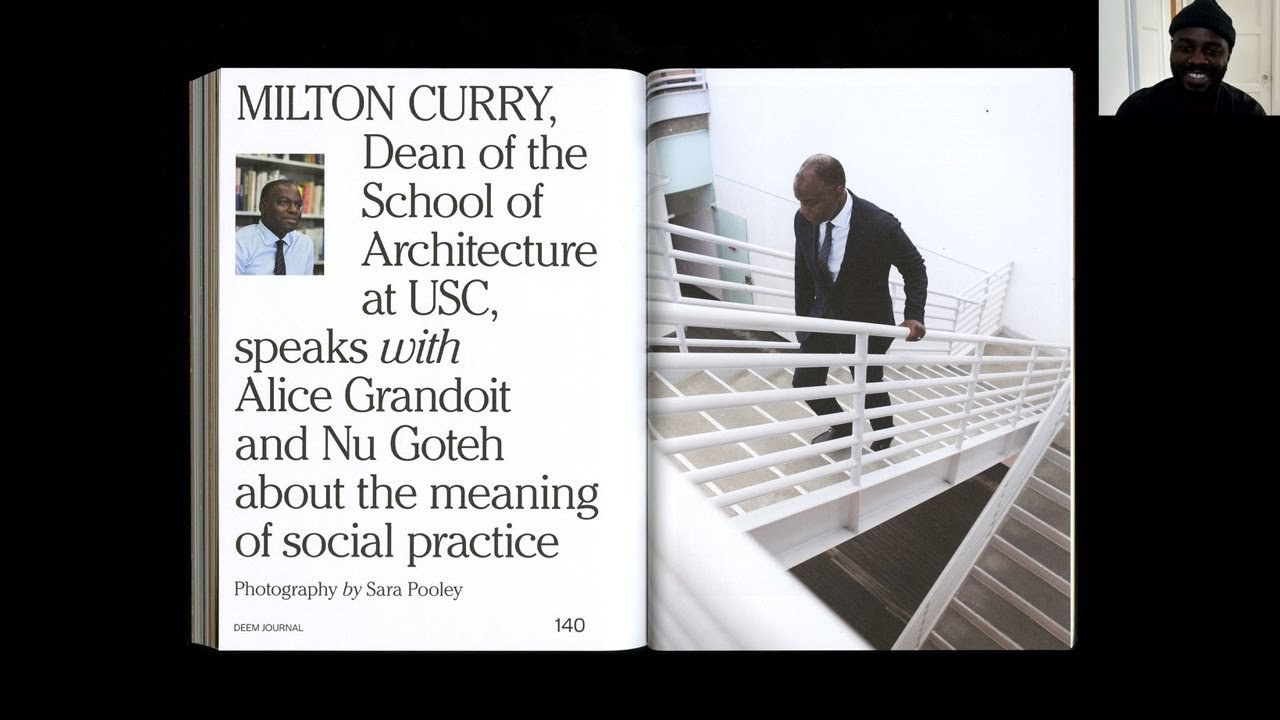
So that we can shoot you we're out of frame but what that starts to look like is awesome shots like adrian marie brown in her backyard showing off her tattoos this is just her saying like oh I got these awesome tattoos that like and I was like and then she decided to show them to us and the photographer was snapping at that time we have lindy from mold magazine in her home feeling comfortable feeling natural vibrant and that's really the goal that we usually try to strive for we have dean milton curry who's the dean of architecture at usc doing the birdman hand rub really excited in his office to really start talking about his work and how his work comes to life we have sepake on site at sweetwater farms during the chicago biannual and as you can see once again this vibrancy this life this energy that we strive for that isn't just limited to pose because not the people that were subjecting the student aren't models and we want actual natural people with their natural emotion.
And then you have habasan a book curator fully engulfed in whatever piece of paper it is I don't think he even realized that. There was still a shoot going on at the time but those are the type of photographies and those are the type of images that we want to capture and actually help to bring the content to life. And so you can see it across our site deemjournal.com which we have a bunch of great pieces but now you can start to see the design system come together in a very structured but also still playful way which we don't denote which typeface goes where we don't try to stick to a super rigid grid but still do it in a way that will allow for the ease of reading and to support the actual content itself and then earlier this year we came up with our first print issue which was titled designing for dignity we had the pleasure of having adrian marie brown on the cover I'll speak a little bit more about her in a second but so the theme designing for dignity and really for us when we think about design for dignity and where we usually start is always a question right what is dignity how do we qualify dignity who gets a qualified dignity and then how is that what systems are either perpetuating that or are taking away from that. And so the way how we actually went into it was like a three-prong approach first we used adrian marie brown's emerging strategy as the underpinning and that's actually at the beginning of the journal in which really understanding how her strategy for for emergence in social change is really the through line through our three topics so one of them is co-living exploring how people are living together how people are facilitating living together hyper local food systems in terms of sustainability and sustainable sources of food that people in communities can own themselves and then looking at social architecture what starts to happen when you look at the built environment outside of just the built environment but look at it in relation to people and how people.
Actually utilize the space and one of the really I think the coolest thing about how we approach the publication is we approach it in terms of creating a design publication that isn't highlighting just designers and what we believe is that everyone is a designer because everyone has the opportunity to shape and change the world around them. And so when we originally approached adrian marie brown to be on the cover she was kind of perplexed of like why would we choose her for our design publication. And it was important for us to be able to choose a black woman design doer and how we framed it up to her is that her work even though it hasn't been presented in that lens is a design framework that can be utilized and that we all can can actually learn from and one of the best moments is in interviewing her in her backyard we came at at this point where she says when we asked her she's a designer and then she realized oh wait a minute the work that I do is design the work that I facilitate is design and so this quote design design is how I make something both beautiful and functional I think of myself as a secret designer I'm always designing spaces in my head I'm designing a bath house with a dispensary attached to it I know every aspect of how it looks and feels and so that was very important for us to get across because our goal is to empower other people to understand their agency within the world of design and using design as a platform for social change and changing their community around them and that is oh amazing thanks so much new that was incredible yeah it's very very interesting to see the kind of process of designing that yeah well the platform and the magazine as well. And I guess I'm you mentioned there right kind of towards the end that you came up with the theme and the story ideas kind of flow from that what was the process behind coming up with that theme designing for dignity well I mean as you can see the our even our approach is very bold and we were and this. Actually happened two almost like a year and a half two years ago.
So this was pr pre-covered pre pre-black lives matter but we were really thinking like what is the actual purpose of design right where does design what is like the actual core purpose of it and really what we started to look at was design of a practice of adding value so how can you start to add value into people's lives and not just people at the top and not just people who have designed degrees but actual people at every intersection of life.
And so really that comes down to dignity so we start asking ourselves what is dignity and it was just a conversation of how do you live a dignified life and who gets to actually control what the lens of dignity is okay interesting I guess there's also something about you know a pretty broad definition of design is that fair to say I mean we're you're not talking kind of specifically about designing you know products or designing you know yeah magazines in your case I think it's kind of a broader feeling or kind of definition of what design can be yeah and I think for for us we try to stay away from just outputs in which whether it's a magazine a a beautiful building or a sidewalk like we find that because of those outputs and because of the practices that come along with those outputs it's a bit limiting in who gets to be a designer so one thing that I always say I'm a refugee from liberia my favorite designer are my parents who came to the united states with no resources and created systems for them to be able to live a dignified life.
So we decided to move away from just looking at purely graphic design or architecture or fashion design but actually look at the process of adding value which is at the core of design which is I guess where adrian murray brown kind of makes sense and if you think about design in that really broad way yeah really fascinating I guess just finally I mean I love that kind of continuum from structure to energy when you kind of look forwards I guess to the next thing if it's the next issue or what you're doing online are you going to kind of play around with where you sit on that continuum from structure to energy or do you think you found the kind of the sweet spot no I don't think we will ever find the sweet spot because I am I'm lucky enough to work with a very talented visual design team and photo director who are always trying to push and get more energy and then.
I have to be like no no no no more structure more energy but we always tend to find this balance and that's something that we'll continue to play with and continue to work with there may be certain things that we put out that may lean purely into energy and will be very whimsical very jarring very interesting if the content lends to that.
But I think what's most important is for us to be able to support the content first and not put the actual brand first absolutely and finally I asked them claris this earlier as well.
But I guess yeah for you what are you looking forward to doing next year assuming you know that we can all have a vaccine fingers crossed but yeah one of the things that this year you maybe haven't been able to do as much of that you really want to get back to doing I am looking forward to being able to actually meet meeting people because they're because as we put out the the publication it came out last year I mean it came out this this year.
But we haven't had a chance to actually meet the people who are buying it or engaging with us and actually start to develop and build our community in real life we did a really good job with it digitally and I'm looking forward to extending that to actually meeting people in in real life amazing yeah well I'm sure you've made a few fans today for sure thanks so much for that new we're going to have to leave it there.
But yeah really appreciate you joining us thanks for your time thank you great well you
Latest Talks
-
Will Anderson and Ainslie Henderson
Bringing stop motion sorcery to BBC’s Small Prophets
Watch -
Amber Weaver
How does contemporary type design translate into the wider world?
Watch -
Murugiah
Why you should reject the formula and make art about things you love
Watch -
Marina Willer
Design thrives when you find poetry in the simple things
Watch -
Lizzy Stewart
The hundreds of drawings and writing-on-a-whim that goes into comic novels
Watch -
intra
The rewarding process of recognising the art in obscure everyday life
Watch