
David Sheldon Hicks and Peter Eszenyi are part of Territory Studio, which specializes in creating UI interfaces for major Hollywood films. They are known for their authentic and visually stunning designs that enhance the storytelling in movies like 'Avengers: Age of Ultron'.
Territory Studio
Get UI design wrong and the internet will never forgive you
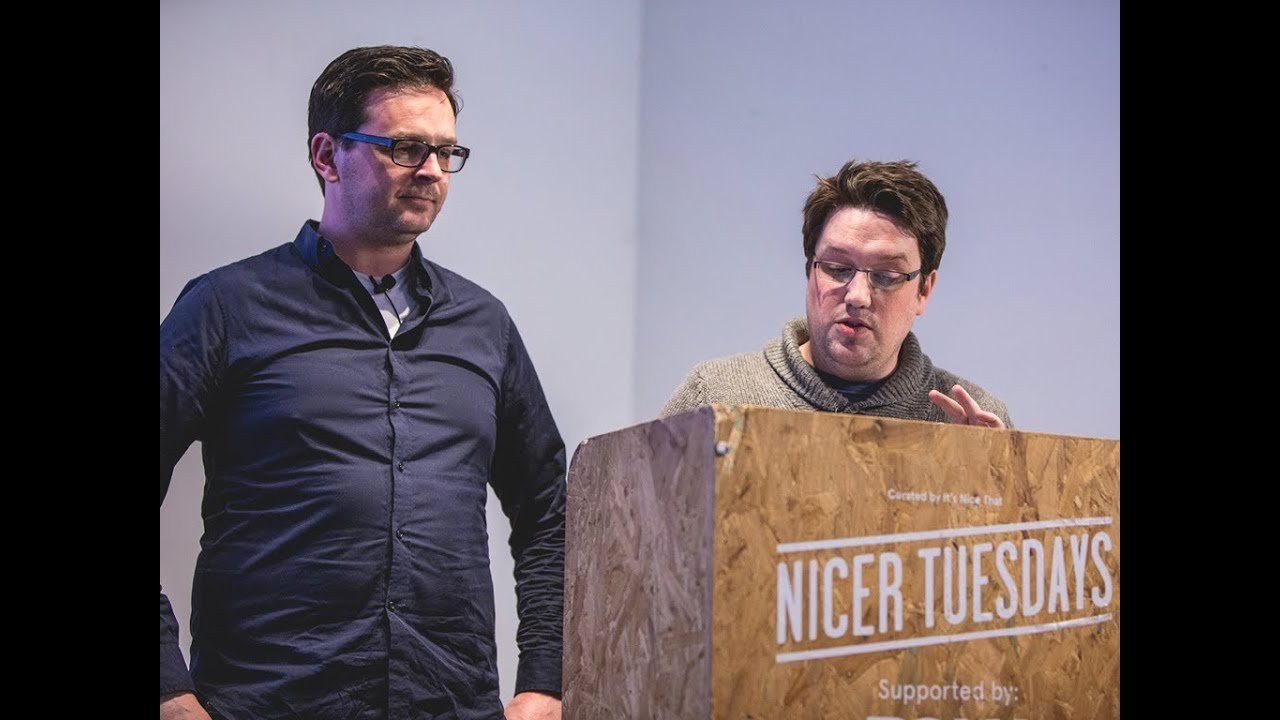
“Get it right and nobody should really notice, but get it wrong and the full furious force of online message boards will rain down upon you.”
Transcript: May contain minor errors or formatting inconsistencies.
[Applause]
hello hello hello so take closer support so we're creative Studio based over in Faron we set up 5 years ago myself and two others Lee and Nick and we we crossover print digital Motion Graphics one of our specialisms I guess is fantasy user interfaces for films so we're going to talk through a couple of projects that we've worked on and how they're relevant to technology I guess so there's some other territory team members over here that are all responsible for the projects that we're talking about put your hands up come on so Peter Peter spans both of these projects but these guys were also very much involved and and it's very much a team effort so like I said we span film computer games Brands with projects like Zero Dark 30 Prometheus Guardians of the Galaxy it tends to be using user interfaces to tell a part of the story maybe a part of the story that the actors couldn't or that a large visual effect shot couldn't perhaps someone needs to say okay we're going from here to here and and really the easiest way to say it is with a a map graphic on a screen so we we deal with those kind of tricky little narrative problems that come up and and can be told with Motion Graphics in some way so just quickly to explain how user interfaces have been used in films and why it's important to storytelling a key reference really from from my childhood was was Star Wars and and and the key I guess the important notion to take from the Star Wars graphics for me was that it told a story in a split second a lot of our work is judged in a in a 3se second burst hopefully sometimes it's a background element but if we get a hero point where we're telling a story then it it it's you know 3 seconds maybe 4 seconds maybe you'll get a cut away to another shot but it's it's it needs to tell that story Point very clearly and immediately for the entire audience so that's that's one important notion that we take away from those films and then going top right to the islands that was one of the first films I remember where computer Graphics or computer screens and interfaces we used as a a story point on a on a physical touch screen so the actors were looking down at it they were sharing the content and that that that point was being used to tell a story in some way.
And then the references that we get all the time Minority Report bottom left and Iron Man bottom right Minority Report was based on some on a research project at MIT.
But it it was important to to the film industry I guess because it started to use interfaces in a way where the actor's reaction became Sam Ed against the interface so suddenly the the content on the screens became relevant to the actor's performance it wasn't an over the shoulder shot where you were looking at a screen and then cussing back to the actor reacting to it in some way and that that Elegance or that Purity and telling a story very quickly in in shot is important and so we we found a trend moving more towards glass screens and and projecting onto glass screens where you can kind of see your graphics and see your design work against the all important Act and their and their emotional kind of reactions and then taking that a step further it was a really clever a really clever device on IR man kind of pulling the interface into a very personal space on a close shot I can't really think of where that had been done before. And it and it set a particular technical level for us as a as a as a skill set really and and Javis is an idea of of offering up intelligent content before Stark maybe thought he needed it.
That's that's a clever notion. And it's kind of being worked more and more into films and and it's coming through in kind of the way that we interact with devices now where you know they're starting to Trace through data and understand user behaviors and then providing information and and content based on on those interactions so one of the films we're going to talk about today we worked with Alex Garland and the art Department on this film X MAA which is about I don't think well is is don't spoil it don't spoil it yeah I'm not going to ruin it essentially a a programmer that works for a software company wins a competition gets flown out to a remote Scandinavian location and meets the owner of this company who engineered the operating system from the bottom up and he is looking to build a believable AI artificial intelligence that can fool him and and be convincing as as as an intelligent life form so so we were very aware that Alex the director was doing a lot of research and and our brief on these films can be quite lightweight at times but we can always go back to the script and fortunately Alex have done a lot of research on kind of I guess the way in which people would really code things and the way that people would really interact with technology if they were kind of coming from a research-based project and providing uh a I don't know a a a re realistic technology so we're we're dealing with new near future rather than I don't know Star Trek or something which is so far off that you can kind of make up a lot of it this needed to feel based in an amount of reality and we needed to tie closely to that. But also project enough in the future that it became interesting and believable that he would actually be building an AI so we tied into the script and we eak out all the little moments that we thought could be relevant to the characters that you using the technology and if there was anything in there that told us something about the corporation itself and and the kind of the logic around the technology and Alex did mention you know operating systems and and software companies people like Google who are moving towards a very simple elegant modernist aesthetic that is about intelligently presenting information as and when you need it.
But we needed to be aware that the the characters were very code based they knew how to get to the roots of the system very quickly so we had to we had to kind of chart along this graph of okay where's this kind of modernness Simplicity going but also you know if we were really getting down to the raw code how do you format that type in a in a in a a beautiful way but an authentic way to to how programs work.
So we've got another team at territory that deal with digital apps and touch screens and all that sort of thing.
And we constantly consulted with them in terms of formatting the type correctly and Alex really wanted the you know the programers they could pause a frame and kind of check it out and make sure that it was along the right sort of lines I me we didn't suggest how you would program AI but we were suggesting if you just wanted to quickly access a video file instead of double clicking through a load of folders how could you quickly write a bit of code to get to that root folder or something and a lot of the work that we do at territory is Onset delivery so there's two ways of delivering graphics for films we can turn up to the set with a whole lot of computers a lot of cables computer screens and Plum it in and then the other way of of delivering it which I'll talk about a bit later is is visual effects delivery which is you get given the shot at the end of the film. And it might have green screen in the screen and then you insert the graphic afterwards and you have to base that graphic on the actor's performance so the advantage of of of delivering on set is that we can we get Sidelines for the actors the actors know what they're looking at and they can react to it they can perform against it it gives us the director the option of shooting in different ways the the Director of Photography can start to think about lighting and think okay well I don't need to put these extra lights into light the actor I can actually just light with the screens and get some movement from the screens that can create kinetic movement give interest and so we really enjoy onset delivery also means that we get to kind of go and deliver Graphics onset in front of director and actors and kind of talk it through with them which is which is often a pleasure and it helps us understand what's needed from a film in terms of working with a director closely and and getting the graphics just right.
So we'll often we'll often create little interactive programs so you can match the keyboard and it doesn't matter what they press the you know the right tip will come up on screen so if I don't know James Bond is hacking into MI5 he'll always type the right password because we've programmed it that way it's addictive trust me I like you can probably try it at the end of the thing if you want yeah look like a really cool geek so we we tried to we tried to keep it simple and modernist and and just be about the little details and craft it and looking at some of the sets and the designs it was all shot at Pinewood and then they did exterior photography I think out in Norway is that right y and so we kind of queued into that a little bit and kind of enjoyed the kind of Simplicity and elegance of that and and and and then just as I say gave it that layer of code just to just to kind of sell in that kind of technical detail you can probably talk at this point yeah.
So the the we were working we were working with the art department and they really enjoyed I think working the working with us and they were aware that we were kind of a multifunctional studio and we could do other things and they they had this this aspect of the film where they needed to convey the idea that if there really was this billionaire and he wanted to build an AI and he wanted to machine this skeleton he probably wasn't going to know how to do it all himself but he also didn't really want the world knowing what he was doing so he he would need these series of blueprints that he could send out portions to contractors say maybe military companies and all that sort of thing get the various different parts made and machines and then brought back to his lab and he would assemble it all.
So that that was his kind of kind of based Logic for this. And so we needed to help the art Department sell that idea and create These Blueprints and I think we're all familiar with Ikea construction manuals and and the Beautiful hannes manuals as well there's kind of a there's a beauty in the detail it's very functional serves a purpose and there's a there's a visual language to that that you can tie into quite quickly and it feels it just feels right for you know we all understand when we see that we all understand it's a blueprint and it's people figuring out the construction process so Peter made this go on Peter off you go yes hi I'm Peter I was I was supposed to be the backup dancer and the and the sort of like the backing wals for this presentation 10 minutes all right.
So this is what we came up with we got this very nice but not too detailed model from was it dag or some other VFX Studio and you know what was surprisingly hard to do is if you pick it apart and try to do a h manual like thing you immediately recognize that you know an engine when you do that kind of thing consists of like 10,000 little parts and that makes it so nice that makes it so dense and when you take this apart it it's being like you know 500 pieces so it looks very very Spar so we started to sort of go through the archives and come up with other stuff we just added bits and Bobs there that you know doesn't mean anything but doesn't make it like you know it's it's not functional but looks cool and you know part of the thing part of the thing is although it's based in technology and and you know it should be should be like fairly futuristic this is a film you know it's going to go on Twitter now don't you all right.
So yeah this is this is how it ended up these These are the prints that ended up being in the film. And we really enjoy that because most of the work that we do is basically on screen stuff and it's digital and it looks really nice but you know print is something else as we heard earlier about that permanence yeah. So really loved it all little details graphic design on top of the parts building that believability and authenticity and the kind of the idea that we're cataloging all the parts so that they could reassemble and evolve the design process you almost can build this robot if you have these plans which I have but I don't plan to take over the world for now but and then miles very different project very it was a it it started off as a small project the director Oliver had s our work and Guardians of the Galaxy and and approached us once he'd already shot the film and he's young director loads of energy and he was looking for a way to set a concept into the bigger Studios and to you know essentially become a fully flesh Hollywood director so he produced a little two three minute feature with really high production values beautifully shot and he he sent us the film and the classic there was just blank screens everywhere and he said right okay fill that please and so we need we need start to research and understand the idea of the film. And it was all about this military drone that had kind of been sent out into the real world.
And some teenage Teenage couple had discovered it and just seen it as a I don't know it dropped out of space or something and and that they kind of almost treated it as a pet but there's this kind of you know idea that there's a military operative sitting behind all of this viewing the world and pulling in this data and and using it for other means so we looked at the way that robots could perceive the world as well. There was a there was a need to for the operative to to have a view on how the robot was seeing the world. But also control the actions of the the robot so we has this requirement to think about how would a robot see the world it would be 3D data it would be infrared it could be temperature it could be motion vectors there's all this kind of data that could be overlaid and understood in some way and there's a lot of Technology that's coming through you've got lar scanning there's laser scanning you know there's drones that are being used just for filming and Military operations kind of you know dealing with bombs so it's it's all becoming kind of relevant and so we we worked with the director on and Andrew Gant who's a VFX dop in creating well we didn't create this system it's it's a hack of the Xbox Connect lined up with a digital SLI like that one and so you get for every single frame of a film you also get a 3D file so you've essentially got a moving 3D sculpture when you when you get your film back back. And it's the marriage of those two elements together that gave us a new element of information that we can manipulate the idea on this one was basically we tried to sell the idea how a robot or this dog sees the world or this drone or whatever it was and it's not necessarily human Vision but you know as as I said this is film so something needed to come through to be able to understand what's going on.
So we had all sort of topological lines motion vectors polygons particles everything that David mentioned earlier so we just pulled it together it came up with a sort of like a perceived Vision how this robotic animal could see the world and yeah that was what ended up being in the film just one more word about the technology it's a really nice sort of like Grassroots kind of like heck thing because you know no one intended to use the connect for that kind of thing.
But it it was it's it's working really nice it's the PO men's sort of like ligher scanning as we called it you get depth data you get 3D objects immediately if you shoot something which you can use in these kind of things. And so and we also had to build a a holographic interface that felt relevant and the problem with this as we've said before with the VFX work is you get shots back where actors are moving their hands around like this and you somehow got to build a relevant interface that still feels authentic and real and true to the interaction but you're designing around these movements cuz he's put his hand there and there and there and those points are not interconnected in any way in the design so that. That's some you know that.
That's a real challenge the ideal for us would always be that that we almost kind of direct the movements but it's hard for the actors because they're just it's hands waving in in air really. And so we we we we build up an amount of technicality and and detail and and depth to it. So that it gives us options within the design work and and this was a this was a real bonus for us just thinking about the end of the film and how we could end it in a way that just kind of surmised the the technical vision and the the robot Vision that was kind of the The Core theme of the film. And so Oliver was really excited about our work and just wanted to do a very elegant series of moves across detailed parts of our work and create an entitle sequence out of that.
So we kind of we touched on a lot of different parts of the narrative working on this film which was great fun 1 2 one 2 3 ♪
4 I only want you I only want you I only want you I only want you I only want you I only want you oh I'm sorry I I didn't know how this machine [Applause]
worked only want you I only want you I only want you I only want you I only want you I only want you I only want you I only want you I want you I want you I want you ♪
Latest Talks
-
Will Anderson and Ainslie Henderson
Bringing stop motion sorcery to BBC’s Small Prophets
Watch -
Amber Weaver
How does contemporary type design translate into the wider world?
Watch -
Murugiah
Why you should reject the formula and make art about things you love
Watch -
Marina Willer
Design thrives when you find poetry in the simple things
Watch -
Lizzy Stewart
The hundreds of drawings and writing-on-a-whim that goes into comic novels
Watch -
intra
The rewarding process of recognising the art in obscure everyday life
Watch