
Craig Oldham is a renowned British graphic designer and author known for his distinct work that spans film, television, art, and retail. His most recent book, inspired by John Carpenter's cult classic They Live, serves as both a case study and a celebration of the film's cultural significance.
Craig Oldham
When design has skin in the game and coal on the cover
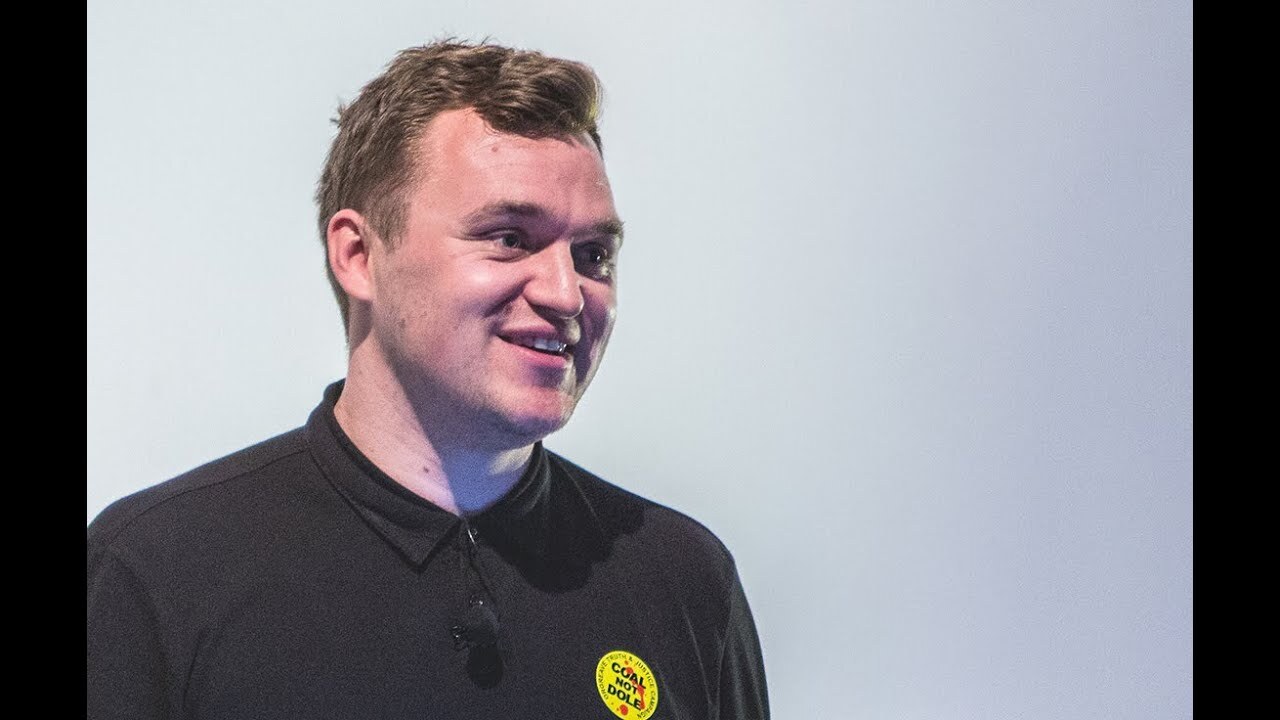
“Kitchen table creativity is a massive thing to me. It's the idea in its purest form. You can't fucking deny that.”
Transcript: May contain minor errors or formatting inconsistencies.
[Applause] just Are we on? We're on. Put this down here. Um, thank you for that. Yeah. Feedback Um, I am squealing feedback. Got to love a [ __ ] bit of feedback. I've been ordered not to leave from this little box here, which I don't like cuz it feels kind of church-like and I'm very anti- relligion and anti Tory, which you're about to all [ __ ] appreciate right now. Um, also I like our little disco light down here. Kindly supported by this [ __ ] MacBook Pro. Uh, so if any of you want to rave, help yourself. I will join in shortly. Um, yeah, I was going to say that you're in for a rare treat here. Uh, but it's not a [ __ ] treat really.
Uh, because it I I don't often we don't ever talk about work. I that I've done really talk about other people's work and slag it off uh and talk about other people's work and wish I was them and kind of masquerade and you know just generally get envious and I'm sure you've all been there and you think bastard that's really good. Uh, but I never really ever I always try and avoid talking about my Craigs work own work, but these [ __ ] uh asked me to or I swear a lot that Yeah. Sorry. I generally open with warnings of people with soft ears better [ __ ] off. So, you all hear that? Uh, yeah. So, I
but I am so it's not it's not a treat. It's just [ __ ] rare. Uh I am going to talk about one piece of work tonight, which is a book I've done. I've done quite a few books in my uh brief but colorful career. Uh some are absolute dog [ __ ] Some are kind of all right. Some of them sell quite a lot, but you know, they could have been better in my eyes. Uh self-published and I've also worked for publishers who were [ __ ] nightmare. Uh sorry if there's any publishers in the house. Didn't mean that. come and see me afterwards. Got some great ideas.
Um yeah. Uh so so in loving memory work is a pretty personal project of mine. Uh that I have self-published. Uh and it is as we heard there that it's on the minor strike. I'm going take my sunglasses off actually cuz I look like a [ __ ] met the Oscars or something. Um which is In Loving Memory this book. That didn't work, did it? And there you go. [ __ ] me. That's way preview. That's got to come. That's like piss yellow, isn't it? You ever woke up after a good session and peed and that's been that good. Yeah. So, sorry, sorry, sorry. Yeah. Yeah, that was bad. I heard someone, you know, say our almighty's name and Yeah. Yeah. I second that. But anyway, this is the book I'm going to
talk about. It's self-published and it's about the minor strike 8485. I was uh born in 1985. I was born 10 days after the strike ended. Uh and the minor strike was a pretty seinal event in our history socially, politically, and what this book is hopefully a testament of culturally. Um it there wasn't really a corner of The Thatcher Strike the [ __ ] earth that it didn't really affect. Um but it was a pretty personal thing to me uh which I'm going to talk about really. Hence the you know you've seen you've seen this haven't you've all seen this um you know the the m the minor strike happened in 84 when the British mining
industry was one of the biggest industries in this country producing coal you know economically sound despite what the [ __ ] tries will tell you. um and employed hundreds of thousands of people across the most diverse range of demographics. You know, not just working-class people. Yeah. Working-class people, but there was complimentary industries in engineering, in design, in graphic design. You know, the National Core was a massive employer and a massive feeder. And the there were complimentary industries that it all fed into. the railway networks, the whole works. And Thatcher and her Tory
government in the 80s decided to go for it. Not because it was they were against coal. Maybe they were. She wanted to build a bomb at the time cuz she fancied a bit of [ __ ] Reagan's ass. Um and he Nuclear and he was pro [ __ ] nuclear, wasn't he? Old [ __ ] cowboy. Um, but sorry any any bias? Any No, it's fine, isn't it? It's fine. You're only [ __ ] listening. Um, and it was it was a big [ __ ] deal basically in this country. And it kicked off in 1984 because they decided to accelerate pit closures. And in literally in two weeks, they wanted to ax I think it was 250,000 people's jobs across five pits all over the country. One of them was in Yorkshire, which is where I'm from if you haven't detected
the [ __ ] Everdale accent. Um, and it's pretty personal to me My Dad because that's my dad getting arrested. Uh, my dad was a minor, my granddad was a minor, my great-granddad was a minor. Uh, they all worked down Barsley Pits and minor. Sorry. Sorry. What? Who the [ __ ] talking? Where are you? Sorry. I just said you're designer. We'll get on to that.
[Applause] You're here for a book design talk. You're not [ __ ] you know, invited a [ __ ] pit pony in. Um, that's my dad. My dad was arrested. He My dad walked out in support of his union on strike. He struck struck. That's the right word for 12 months. The entire duration of the strike. And I just want to put that in perspective. You can My dad was responsible for my mom obviously uh and my older sister 5 years older than me. my older brother, eight years older than me, and I was in my mom's tummy, you know, he was off work for a year. He had to make him, you know, he had to do something summit, didn't he? So, I'm a
uh [ __ ] a breeze there, isn't it? I farted. Um, you know that this is [ __ ] dreadful. But, um, yeah, basically he had a wife and two kids to support. And he was my age then when he was arrested and he had to go a year without a wage. Now could you imagine doing that? Just saying no no no money, no benefits cuz they cut that from him cuz he struck. He he walked out of work in support of his union. The only support he got was from, you know, handouts from neighbors, handouts from, you know, comrades or people from other unions who might want to support you. You you think that's the perspective. you go 12 months
without any money. But he still was there on every picket, the club together. And this was at Auggry, one of the the biggest and most infamous parts of the entire strike where in Rotherham just down the road from where I was born in Barnsley. Uh there was essentially a kettling of police. The miners were outnumbered three to one and they just kicked the [ __ ] [ __ ] out of them for just being there to try and stop lorry drivers going in friendly. They'd stand in front and they'd say, "This is why we're here. Don't go in. We're trying to fight for his jobs." A lot of the time the lorry drivers peacefully reversed and left. The police didn't even let him
get near. They just beat the [ __ ] out of him. And my dad was there and this picture was taken obviously as he was arrested. He was at the front of the picket line. His friend fell to his knees because he was hit by a trenchon. My dad knelt down and this is his story obviously knelt down, picked him up by the arms and a policeman pulled him through the ranks and he was going to he was up in court for 3 years to life for that for fighting for his [ __ ] job. So it is a pretty [ __ ] personal All Grief project to me. Uh but also A or you know the miners this this Agrieve was 6 months into the strike pretty much. Uh it was a hot summer you know the overwhelming thing my dad remembers was these shoes were
his were his dads my granddads and he didn't want to lose them. He was getting absolutely beating the [ __ ] [ __ ] out but didn't want to lose his shoes cuz he feared me [ __ ] granddad a lot more than he did the bobbies. Um but the the there was one good thing that came out of orgrieve and that was Leslie Bolton this image which is of a female activist Leslie Bolton who was just part of women's picture. She's just a photographer. You can see her camera in her hands there. Uh she was just there documenting the day and as the police in riot gear which was a new thing in the 80s that the the tries pioneered to you know act out on the miners. Uh this this
policeman ran up and said, "I'll have you, you [ __ ] too, and decided he was going to absolutely hit her over the head." Luckily, which you can see just here, just make out there, if you have a look, a photographer was with her, and he she pulled her out of the way. So, the trion actually missed. But this this photograph was captured by a guy called John Harris who was a documentary photographer and he's still doing things like this now. And this was like for the miners, this was like their shavara. was their repeatable image. They finally after year, you know, Murdoch was on FC's side. So, every [ __ ] newspaper was anti-miners minor. My dad was an
enemy of his [ __ ] country overnight. He was he was a thug apparently. He, you know, he would he was engaged in gun crime, knife crime. They were all just complete lies. But this gave the miners something to sort of fight with really in a graphic sense. And that is where the sort of the rub of the book comes from that this this picture finally gave them that proof they wanted and the miners just went with it. You know, they loved it because it was the truth. This this was what was happening. Not just there at every [ __ ] picket that they The Truth were at. And they made posters, they made badges, they made t-shirts, they bastardized it in in a really kind of
post punk kind of fashion. They got hold of that image and they did everything they could to spread that word to to to be creative with it to do whatever they could to spread the word. And this is where sort of my interest comes into it. You know my obviously my family involvement in it makes it quite political and makes it quite involved. But from a designer's point of view, you know, this stuff is culturally important. It's been willfully ignored as a in in the political, you know, graphic cannon. You can you can see all those books like graphic agitation and they're all [ __ ] Vietnam War and all this. This is a
massive part of the British social political landscape and it's been willfully [ __ ] ignored and I thought it was about time that that was readressed and reappraised. And you know the this kind of punk aesthetic really came through in the 80s in ' 84 85 that you know they they they took those tools and they use them. And I'm really proud to come from that kind of stock you know that kind of that family that upbringing that community. Uh most of all because it was unbelievably good for women. You Womens Strike know women against pit closures was a massive movement at the time. They came out of the you know you you can all you can imagine the stereotypes a Yorkshire [ __ ] pit pony town like mine Barnsley
guy goes to work down pit comes home 16 hours later wants his [ __ ] tea on table looks after kids with [ __ ] you know that's kind of real life it was a it was a patriarchal thing and suddenly the men were out of work and the women instead of what that thought was right the women will get them back to work because they've got no money they didn't they were like No, you're [ __ ] right.
And they were even more campaigning than the [ __ ] men. You know, my mom now, you know, my well, it's my dad really, but my dad always says, you know, I'd still be out on [ __ ] strike now if your [ __ ] mom had a way. And they're [ __ ] divorced. But that is a massive testament. And to all the all the female designers out there and all the you know to sound sexist because she had a penis but you know the the women in the audience this liberty was started there you know they they raged against that patriarchal society. It's a it was a horrible thing. It's just how things were. But this is where it [ __ ] started. They they were creative. They got they were activists. They were
[ __ ] active. The the title of the book in loving memory of work comes from a rosette that a black flower when a woman wrote on it in loving memory of work and she threw it on [ __ ] 10 Downing Street. That's where the book title comes from. That's how active they were. They went to London. They sent, you know, they were active. It wasn't just soup kitchens. They were raising money. They were on picket lines. They were getting beat up to protect the husbands, to protect the sons, you know, the brothers who were down the pit. And the work is is is is true. You know that poster there, you know, never underestimate the power of women is [ __ ] right on. Damn [ __ ]
right. And I you know and and you know you can slag me off for being a [ __ ] Yorkie or whatever and I might be a thick bastard but you know you know this is from a little village in Arm Doncaster. There's [ __ ] there's no [ __ ] galleries there. You know there's no [ __ ] they probably got the world's shittiest library. Right. But they still managed to make a banner that encapsulated all those things. Not only that, they historically reference the sub the suffragettes with the purple with the green. That's not someone who's [ __ ] thick. That's someone who knows what they're doing and that they're building on the work of other people. And that that's a big part of what this book is about. the
creativity of people that we just, you know, that this middle [ __ ] class industry that is design and I, you know, they they try and yeah, we forget about that. [ __ ] them. [ __ ] the market people. They're not they're not that at all. Everyone can have a [ __ ] great idea. And that's a [ __ ] testament to that. And not just a great man can have a great idea, but a [ __ ] great woman as well. And like I said, Murdoch a [ __ ] Arthur Scargill You know, this was what they had to [ __ ] fight against. Argill. There he is. I, you know, I forgive him his [ __ ] Charlton haircut, Bobby. All the old comb over, you know, if that if that was this year, he'd shave his head when
he has to comb over the [ __ ] millennium. But, you know, this is what the son tried to do to him. Arthur, and this this comes from numerous photographers. This is not just one point of view. this I' I've spoke to 50 photographers who documented the strike on both sides for the sun for news of the world for the times for various you know left political newspapers and Arthur used to lead the march obviously he was the he was the leader of the num the national union mine workers and his his way to get everyone going was he used to go like that with his arm and every time he did that there was the [ __ ] spiders ran out from under the carpet shot every
[ __ ] picture they could and that's what the sun tried to use with now luckily the printers union ran with The Printers Union that. They're not they're not bothered about [ __ ] putting Sam's tits on the front, of course. No, that's [ __ ] fine, isn't it? Oh, bit of Hitler though. Nah, he's a Well, he is a [ __ ] Sorry, that's bad language, but I I [ __ ] him. Look at him.
He looks like a [ __ ] elbow. Um, and that is what went. But that's that's the stage. That's the actual photograph, the shot of it. as you do with your [ __ ] iPhone now, like you burst. And that's what happened. And that's what they were up against. The media completely spun everything. The BBC and the Augry thing earlier, you know, they cut the footage to show that the miners were throwing bricks first and then the police went in and beat the [ __ ] [ __ ] out of them. It was the other way around. The police ran in, they bullied them, shoved them to a bridge where the miners then retaliated
because they were [ __ ] people bleeding, you know, and locked up just for trying to defend the jobs. But it's not [ __ ] harbinger of doom here, you know. The thing I'm most proud about this book and this project and my community, my family, my my sort of piss week involvement in it is that despite this tremendous hardship, 12 months without a wage, 12 [ __ ] months, 12 months having to go up against this kind of [ __ ] 12 months against your neighbor who maybe just works down the road at a bank thinking you're a [ __ ] hooligan, you know, 12 months of that that onslaught that victimization and they still they [ __ ] still could
laugh about it. They still had humor. They still had wit and they and they and they creatively engage with that struggle. You know, they had something to say and they [ __ ] said it with what they had the means to their hands. You know, this is one of my favorite examples. It's a Sally Army door. And that originally said Jesus came into the The Salad Army world to save sinners. And some minor is way past a march for I'm [ __ ] having that. And it's nothing. It's absolutely nothing. You know, we can we've all had a bit of [ __ ] get the punk gun out, you know. But that's just what you would say or what I would say or what I would think. And I thought that myself, you
know, that's just some [ __ ] pit pony on his way past with a banner. And it's not. It's wrong to think that. They were creative people. They had a lot of things. You know, kitchen table creativity is is massively. It's a massive thing to me, you know? It's the idea in its purest form. You can't [ __ ] deny that. God, I want to say this thing. How do I say it? I'll just get the [ __ ] spray paint out. I'll get the paint out. I've got some [ __ ] paint in the shed. Get their bed sheet.
And this is what they did. They just did. You know, some of them are just kind of dafted and kind of really irreverent and like, "Fuck you." you know, and some of them are really kind of provocative and quite intelligent and really kind of, you know, well, they wrench my art. Anyway, anyway, there she Ill Love You is. You know, this was done by, uh, a graphic designer at the time, uh, a guy called Paul Morton. He was he was based in Barnes. He was a designer. He had, you know, his family wasn't down the pit. Had nothing to do with the pit, but he took it upon himself to be involved. And this was a poster and a
postcard that he created for the miners. I I only wish it was like the um C red women's workshop where they wrote to that and said, "Oh, we [ __ ] love you, you know, array for women, first female prime minister and all that and then they got a the official downing street photograph and absolutely [ __ ] ran her down." I don't know if it was quite that, but you know, this was 1984 before all the all the [ __ ] but it it's one of my favorite pieces in the book because it is just it is a you know, it turns that whole Tory [ __ ] what's his face [ __ ] Churchill bollocks. She wasn't [ __ ] Churchill at all. You know, Churchill was wasn't
[ __ ] Churchill. A lot of people think that Churchill was [ __ ] great. He wasn't. He was a [ __ ] [ __ ] He was quotable. That don't make you [ __ ] good prime minister, does it? You know, after his [ __ ] speeches that we hear now, he recorded it from his [ __ ] bed. The fat bastard. [ __ ] true. Anyway, but you know this all this stuff came together and it was important for me to represent that in a book uh because my family was involved. You know, I personally feel that it was my duty to sort of bring this back into an arena where I sort of had my limited kind of means. You know, this is all I
understand the design of it, the the sort of the creativity, but I, you know, I've created that. It's there. You can, you can have a look at the book outside. And, you know, I would ask you to have a look at the book outside. I'm not saying [ __ ] buy. It'd be nice if you did, but I'll get to that again in a minute. But, you know, if if if if there's if there's any if you look at that book and don't think there's an idea in there that you just think, "Fuck me, that's great." You know, that's worthy. It might look [ __ ] I'm not going to deny you that. It might, you know, it might look like they've just done it on the [ __ ] kitchen table, but I ask you so [ __ ] what, you [ __ ] bgeois bastards.
where you were where you [ __ ] hiding behind your [ __ ] computers, you know, it's all hand done. I'm not saying, you know, I'm I'm I'm not saying I I I appreciate hand handone work. Not not at all. But I appreciate people who have got something to [ __ ] say. And I think a lot of design and a lot of this industry doesn't have something to say. And a lot of the stuff they do doesn't mean [ __ ] anything to them. And I think that's a real [ __ ] shame and a real waste of a lot of the talent in this room because you have I'm not going to say, "Oh, you have the power to do [ __ ] good." Yeah, you do,
but you have the power to do [ __ ] bad as well. And that's a lot of time of what we [ __ ] choose to do because we get a 9 to5 and we get a wage. My dad could have done that. He could have gone down the pit and earned his 9 to5 while all his mates were out striking, but he didn't. He chose what he [ __ ] believed in to do that for 12 months. No [ __ ] nothing. Absolutely nothing. My My mom was pregnant with me at the time. She used to have to roll cold dust to throw in the fight to even [ __ ] make the house warm. We went to the social this is we went I did I was in my mom's tummy.
Um and the social services said to my mom when she was saying I have you cuz they cut benefits. She said I haven't got enough money to feed my two children. And the answer that she got was, "Why don't you fry your potato skins? Cuz they're pretty nice." Which I think's [ __ ] ridiculous. But this is the book and it is just Well, of course it's [ __ ] Time biased. It is. It is what it is. It's a product of my time, but it's about [ __ ] time. Someone that stood up for them, I think, from a graphic center. And the stuff and the work they did deserves respect. You know, I was really privileged to be able to work with a lot of people on the sort of top that you what's that your your left. You
know, a lot of people it it means a lot to a lot of people that I respect and I know probably a lot of people in this room respect. You know, an acclaimed film director wrote the wrote the forward for it. Ken Loach, you know, Jerry Medela Turner Prize winning artist who's also made many many works about it. Wanted to get involved. Didn't, you know, I didn't [ __ ] gave him any money. Nothing. Some of them aren't even got a [ __ ] copy of book yet. But, you know, keep that to yourselves. But people, like I said, people have something to say and they care about it and that's the [ __ ] important thing. And so, the book was
produced on that notion that it's a reappraisal of piece of work and a collective body of work. Like I said, a lot of it [ __ ] It looks [ __ ] It but collectively that's what it was about, you know, and we don't have that anymore. A collective body of work that speaks louder than any one individual piece. And that was why I wanted to do the book. And in doing the book, we also, you know, this is where I get me designer at on. As I said, I come to it. You know, you know Sarah's point, where are you? There you are. Sorry. You know, Sarah's point about, you know, trying to select the right type face for the right project. It was important for
me to do that and that you know they had [ __ ] all the miners. They had typewriters basically and photocopers at best from the local library or whatever. So I remember seeing these banners. So we decided to create a type face for the book because it was just so distinct. I've never seen many things like it at all and it just cut through all that kind of noise. And it was done by a trade union liaison who was still around today. And this font's available now as well with all proceeds going to the campaign. And we also did this one as Java well. Jabascab, it's not called Jabasc, but this one's based on the back
of a banner, which you can see there rolling out, leading the march, which I think sums it up. You know, that that sentiment really, you know, they they were they were treated really horrendously when they didn't deserve to be. We we owe them a lot. I owe him a lot, you know, and I think a lot of people in this room do whether we sort of it's not directly of course, but it's it's there. And just a little note on the Jaba Scab thing, bit irreverent this, but there was one [ __ ] sticker that we could never [ __ ] find in the book. And me dad [ __ ] insisted that he had this on his helmet, and it was a sticker that said
Jabascab. And he was like, I'm telling you, I [ __ ] had it. No one, even miners, they were like, I've never [ __ ] seen it. So I think my dad's made it up personally. But anyway, this this is called Ferry Mall, which is from that and that's available as well. And and I just want to end on one other thing on the book which is like the tight faces I when you're doing something like this that means so much to you. I I find it really hard to sort of say anything more than everything on that page, everything in that entire body of work has to have a [ __ ] reason for being there. If it's superfluous, if it's just there for decoration, be a [ __ ] hairdresser. That's not right. You know, it has to
have meaning. It has this the the scariest thing when I did this book and when I published it myself, writt it myself. I sound like Prince, don't I? You know, not [ __ ] tell it was Prince. Produced, arranged, recorded, written, etc., etc. by Greg. Um, no. But when you when you're going through that, I can honestly say the the the the biggest fear of mine wasn't, "Fuck me, am I going to lo am I going to is no one going to buy this? [ __ ] me, am I going to lose loads of [ __ ] money? [ __ ] me, I'm going to get laughed from when people when I do talks like this and and people just a piece of dog [ __ ] you know?" It wasn't that at all. It was
just it was would my dad did I represent my dad right? Did I represent my mom right? Did I represent those those people that are still fighting now for the job and still fighting for the the the justice that they deserve for being beaten up, for just trying to work the the sticker sniper. I've been sniped. Sticker there. Um is where all the proceeds of the book go to the grief truth and just justice campaign who are campaigning for justice for those minors that were arrested. There were 95 of them on one day. My dad was one of them. And you know, they just want an independent inquiry to figure out why those in power
could use the [ __ ] police for their own benefit, their own will. And they much like the Hillsbor campaign. I'm making this really political, but that that's where all the proceeds of the book and the tight faces go to. It's not for me. I'm not just, you know, I ain't got a [ __ ] palace up in Manchester. Uh I [ __ ] really haven't. Um, and also to sort of make that point of it it belonged in the community and it needed to be of the people for the people. You know, we we had the idea of using coal within it in somehow. And we found a printer brave enough, which I'm sure Park would have done, I'm sure. Um, I just didn't I didn't know you then. Sorry. um to put a combustible material
through their very hot printers, which was cool. Uh I gladly forged my insurance documents. I [Music] um but it worked and we we managed to use coal to print on the cover. And this is just a little film. Now, do I click for this or do I just press the arrow? So this is a film about that. This Living Cold Deep down the mine it lies in wait for men to come to seal its fate. This living coal don't want to die. And yet we show it cannot lie.
It's resting place. We take from it. We means a work and sweat and grit. We cut its heart and move it out. We clean it up then ship it out to warms. As it goes, we are a to. And yet its fate is oh so near. This living cold just sits and waits for man alone to seal its [Music] fate. We scoop it up to light the fire.
It's art. It glows for our desire. And when it's dead, we clear it [Music] out. Like miners jobs, it's art ripped [Music] out. This living coal filled our needs. Like miners's lives, it's done its [Music] deed. So that's me. Thank you. [Applause]
Latest Talks
-
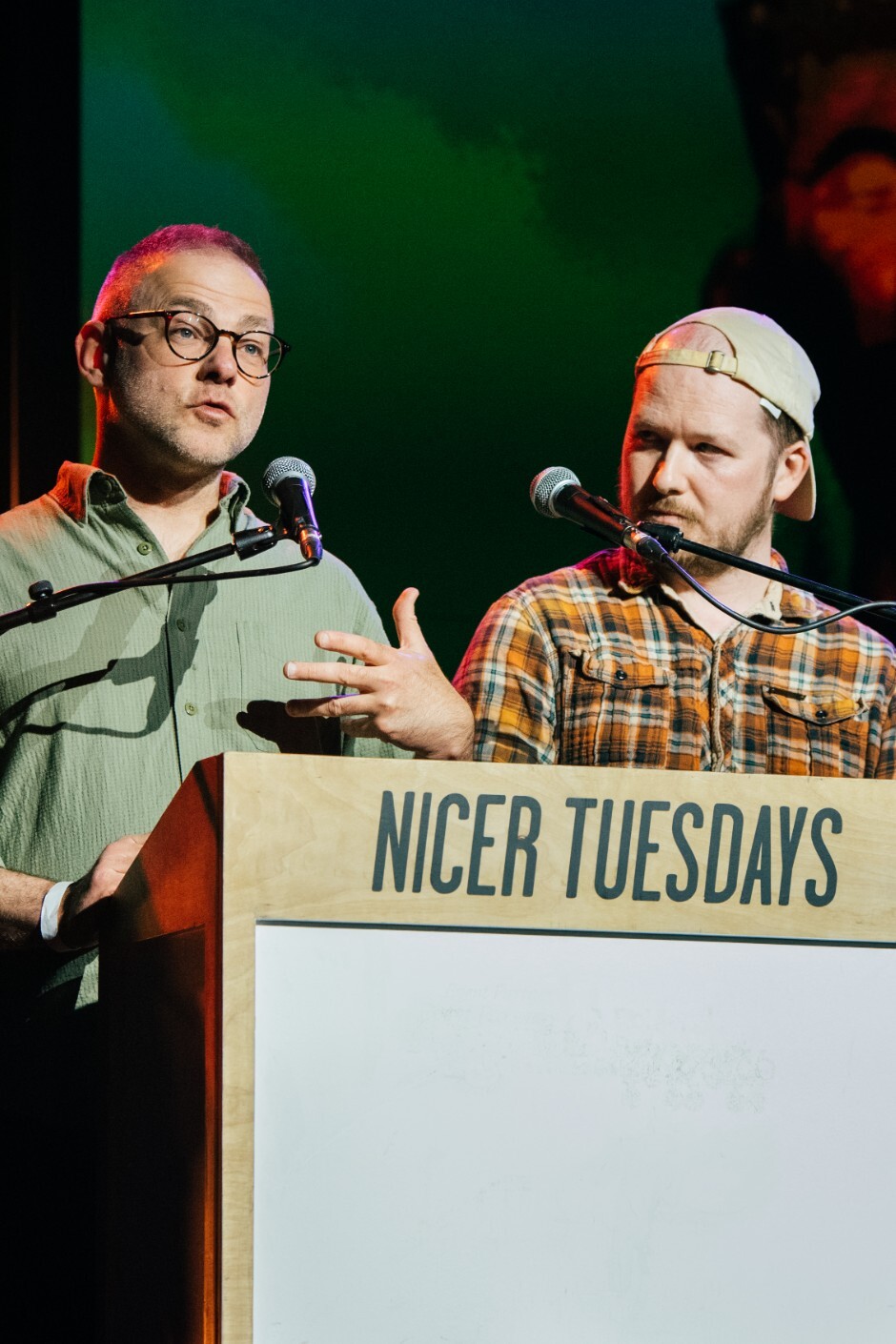
Will Anderson and Ainslie Henderson
Bringing stop motion sorcery to BBC’s Small Prophets
Watch -
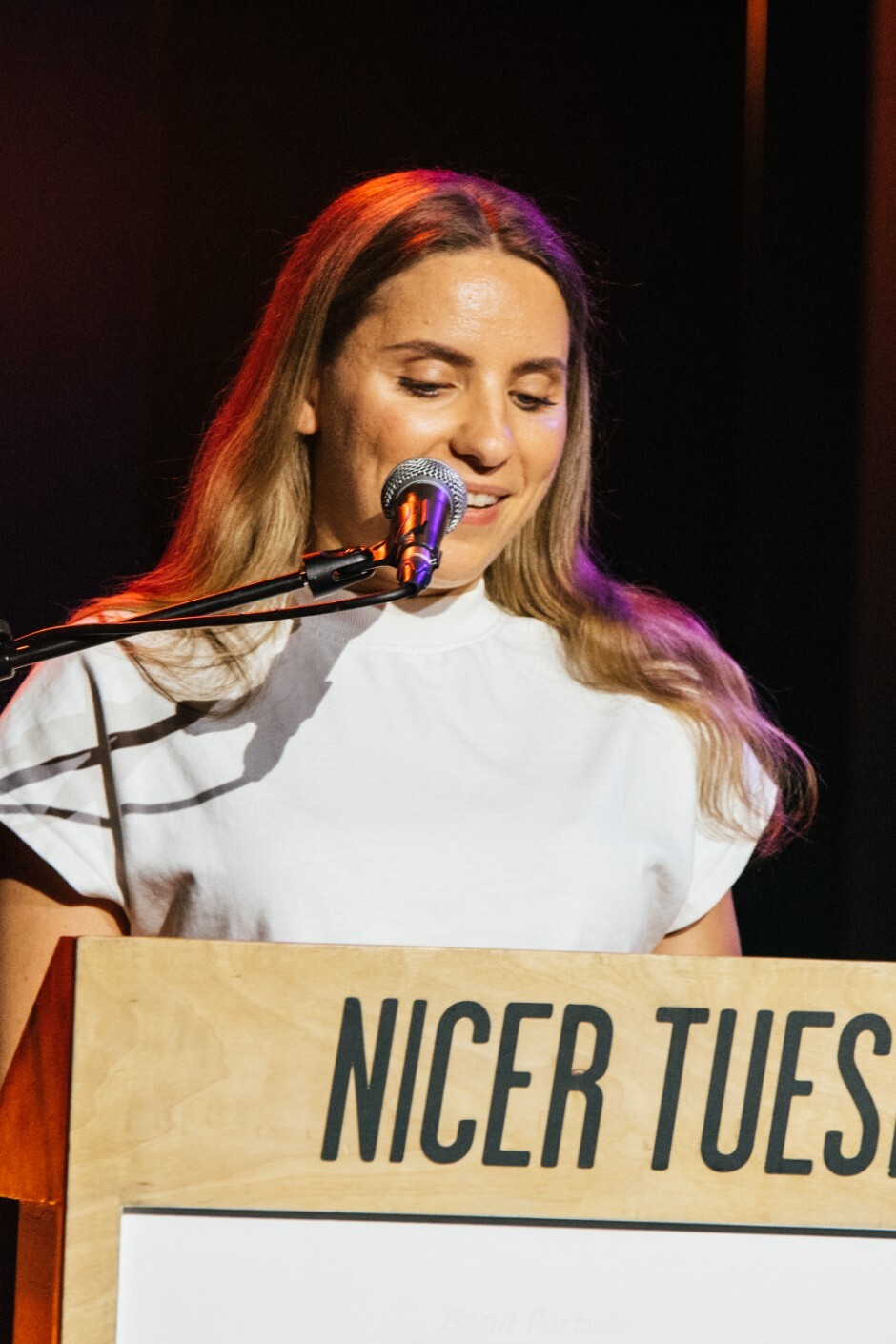
Amber Weaver
How does contemporary type design translate into the wider world?
Watch -
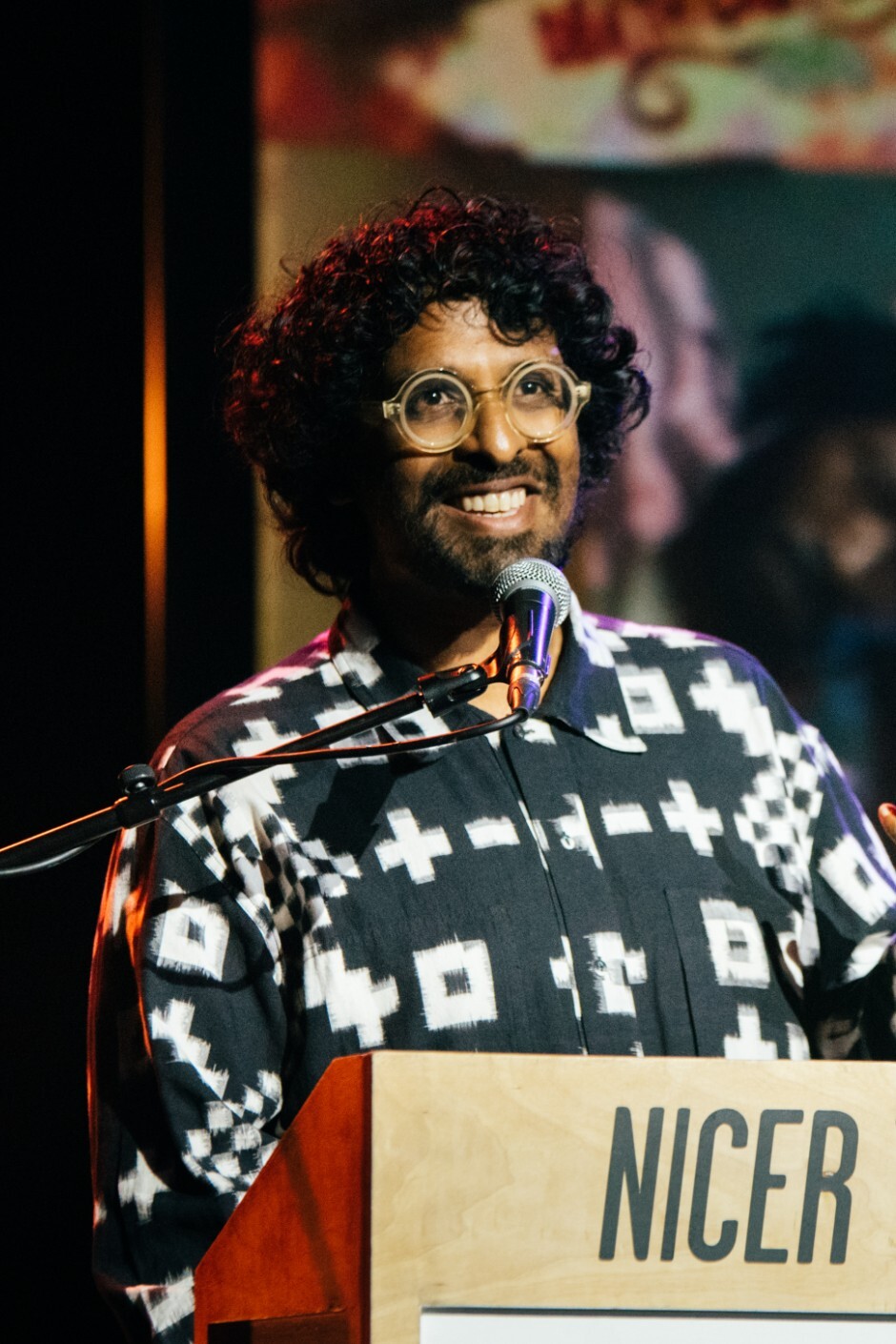
Murugiah
Why you should reject the formula and make art about things you love
Watch -
Marina Willer
Design thrives when you find poetry in the simple things
Watch -
Lizzy Stewart
The hundreds of drawings and writing-on-a-whim that goes into comic novels
Watch -
intra
The rewarding process of recognising the art in obscure everyday life
Watch