
Benedict Redgrove
Inside a Thai factory, filming the quiet choreography of tennis ball production
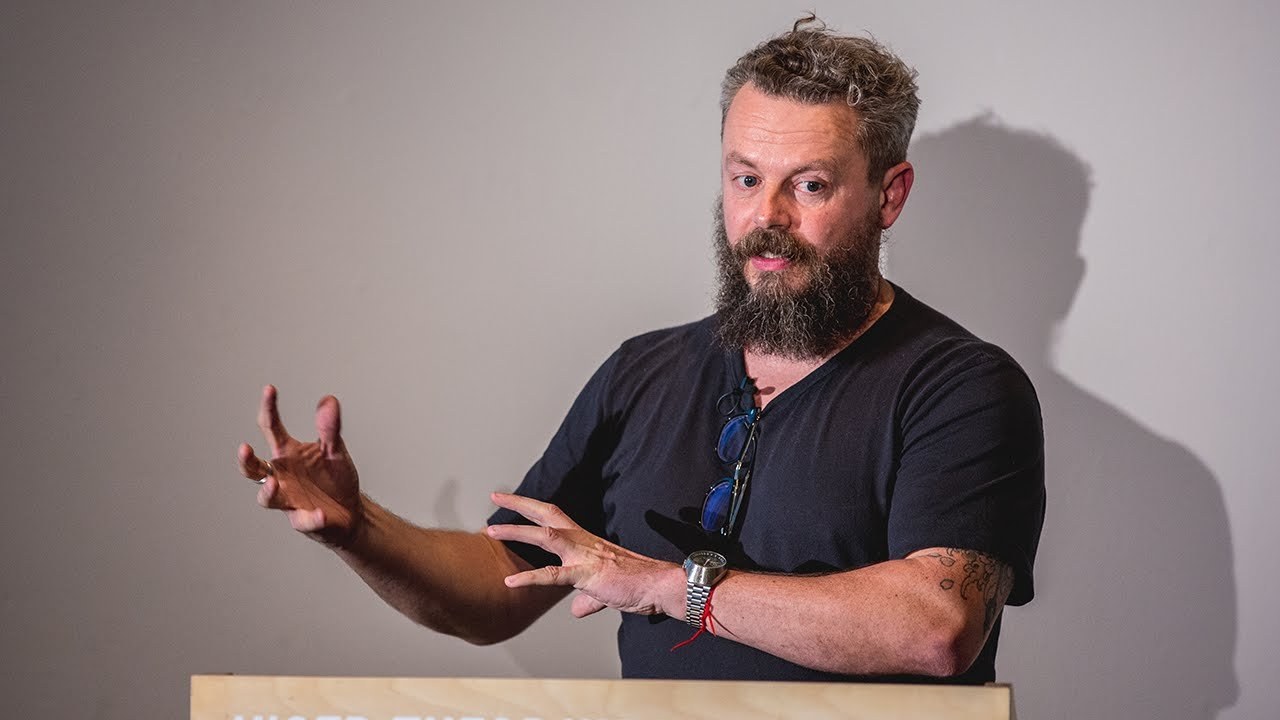
“Something will look beautiful because it serves a purpose – that's what I really really love.”
A bit nervous.
So the first time I've done this.
So if it goes so I'll be wrong I was told to do an interpretive dance it's probably not a good option either I am Benedict records I'm a photographer. And I shoot sort of commercial campaigns and for companies like Aldi and HP BMW IBM anyone with an acronym really so you've got an acronym I am your man and American Airlines although that's not a so it still works okay and I shoe editorial pieces for magazines like wired and wallpaper I'm just shooting I promise it's not I might be shooting a project with them with NASA for the past five years wealth took 5 years to start.
And then we took the first shot last year. And we've got another two and a bit years to run so it's 9 year project run always fast with my projects manager I really be at the cutting edge of everything. And so yes so a short-term project that one this is Wired magazine is showing a little kind of sneak peek of it they're doing they're doing actually a big thing they're doing 16 page special which is coming out on October the 6th o Wired gone by and I'm probably more known for the sort of things or the stuff or the style of shots rather than what it is I shoot so I don't really shoot people so much who I start shooting people.
And I don't really shoot just one thing sort of still life I tend to shoot quite big grand things. And it's nor the sort of composition I think which is kind of quite quite calm quite clean and graphic my background for the first part of my career was was graphic design so I left our college and worked for a couple of graphic design companies outside of London. And I was a typographer see there's a man he's from Ansan and you were from Liverpool as well.
So that's - so yeah.
So I worked there was it's a typographer and graphic designer for a couple years and and I think my thing is I I had real issues at school like real problems learning dyslexia and sort of just couldn't understand why things were way they were so I think there's a whole thing of if there's order then I get it. And that's why my images are kind of quite straight and composed very structured reading and calm I think that's that's another thing I'm quite a Canton person.
So I think a lot of people's work or their their kind of their character comes out in their work so no Cox sort it's in my presentation although there will be some Paul's later on so lots of bouncing balls which is you will enjoy those green anyway.
So it's it's my backgrounds may be a huge fan of utilitarian design and utilitarianism as the sort of ethos really. And I think that whole thing of functionality form following function the whole belief that something will look beautiful because it serves a purpose that's what I really really love so things like jet engines and bits of jet engine you know.
This is got everything in here has got a purpose there's a reason why it's made out of the materials it's made out there's a reason why that sits in that blade at a certain angle and it's all there to do a certain job and that really appeals to me massively ads are real nerdy geek half me that goes yes this stuff so and then luckily a lot of commercial clients either and Boeing and Lockheed and people that go you are come and work for us because you love the same stuff we do and I had a conversation with someone from Boeing the other day so excited that you're coming to take up fits isn't like so so it really just sort of big geek off about bits of titanium that they're growing and cents but yes so really sort of utilitarianism is it's all that that sort of idea that you know something has a purpose it's not it's it's beautiful because it has a purpose and it's designed for certain things so you know this or a thing or a land rover or whatever they're all really good because they're designed they look great and they work and there's nothing superfluous about it whereas something like a philip stock you know juicer which looks great bird need to learn it's utterly rubbish useless looks be a bit useless sort of Kim Kardashian so anyway let's talk about there need to talk about how to make a tennis ball.
So I started making films a couple years ago just sort of it's like a sort of extra of what our theme really says Louis or a photography next stage almost and I really enjoy the process I love how it works and I made this film me and my system went off. And we went and made this film.
So I'll show you the film just in case you haven't seen it other way to be wondering what can talking about.
And then I'll talk some more with my voice with who a ten-year-old thank you it's lovely lovely reaction.
So the film was commissioned by ESPN they they contacted my agent in America and they wanted they wanted a set of images of how to make a tennis ball for the US Open so we would just shoot those stills of each process and then make some gifts or gifs gifs whatever they pronounced so me and Andy flew my assistant and he flew to to Thailand we've been working for about five years together me and Andy he's he looks like me a little bit which is a bit unnerving so we get asked if we were brothers occasionally on this time though we got asked yeah we we I've gone to the loo and I came back and he's sitting there just pissing himself laughing what's that stewardess just asked me what my husband would like to dream ah is a first okay.
So yes so we we went over there. And we were on we were shown around the factory in the morning what's going down at there we were showing around the factory in the morning and got a tour to show each process so that we could we could work out how we're going to do what we want to spend most time on because invariably when you go to these places you're you're you're shown around the whole thing.
And then you were sort of rushed into a different bit. So if you're shooting something that NASA makes like some sort of you know part of a jet you want to shoot process before and after.
So we would give them the chance to say okay we'll focus on their summer focus on that.
But we'll shoot every process so we went through a process by process and as we were doing that I was realizing these gifts this is not really going to show the story so screw the gifts we'll make a film.
So we we basically changed the whole process of what we did we went round with a little Canon 5d and it was the only way we could do it really. And we started shooting so we'd set up a shot take that Andy would check it's sharp and everything and whether we needed to do any focus brackets and and then we'd start filming so he'd give me a card and I would start start filming it.
And we started we would we'd sort of talk to each other at first and then as the time went on. And we got hotter and hotter and hotter and just started to melt and the sound as you can hear from that it was pretty loud in there.
So we just communicated with a look I would look him he'd say yes look back.
And then just get on and you had to kind of find this this kind of place just just to disappear back into sort of being calm again really and you know you see a lot those people. Actually in the factory there they just did that woman who's turning the balls up.
And soporific the other one that's working really fast I think they all found their own places where they could just be nice and calm and do their job so a lot of people say that there's some you know apart from the factory sound oh they liked that. There was just no there's no soundtrack to it there's no music there's no voiceover saying hey eg how do you make a tennis ball we'll look at some get a piece of rubber in your shuttle felt line so we thought this is crap that's not what you want you know you want to keep it simple and it's back to the utilitarian point that simply you can make something the purer it is and that process was very pure probably not in its you know material but it's quite a pure way of showing something.
So I just let the soundtrack do its thing. And we we had no time I mean it was we did the whole thing we shot a story and made the film in four hours so you know it's not it's not a lot of time to really really think about what you're doing I too think about the composition is it. Basically is it working yes okay let's shoot it. And we would do there. And we did twenty or twenty eight different processes twenty-four different processes and we're shooting stills there and when I shoot film section.
And then trying to shoot a film section so you're showing a close-up in each angle well only you know all those processes that go through so it's fast thinking on your feet and and certainly not calm ready to work.
But we tried to sort of try to bring that to us and the comments I get about it I think I say it's just like you know it's quite hypnotic I think a lot of people say that you can watch it and you sort of see this will get lulled into it in fact Pat cash it's just that. This is the same thing to say on Facebook. So I was very excited about that.
But yeah when this this whole process when we were shooting this glue and not because it was glue and I was like oh but but we were shooting this glue and I got just totally lost in this it was such a lovely thing are these long white strands going through so yeah.
I was I was a happy man for about 20 minutes and then we had some Asher on to the next bit. And this girl which I don't know if you saw in the film but she's super quick super speedy with her hands and I asked if you just sit there for a couple of minutes and then when she was sitting there you guys to get back on with our work and they weren't paid by piece so it wasn't it wasn't really good deal yeah it was amazing to watch the different people there.
And then the film really was just you know we did it it was finished we came back at the clients happy with it we'd we'd sort of gone from a sort of eight minute film down to it they wanted to get down to three and a half minutes because they needed it's a 15 with their schedule so we'd kind of like it to be a little bit longer but anyway we filmed it we did it put it together put it up online product to ESPN and that was about you in a bit ago it wasn't something and and then it's nice that picked it up and ran yeah she was lucky and it went from five thousand people to her in 30 or 60 thousand in a couple of hours and then the next day we woke up.
And it was three hundred and twenty thousand people. And so and we just kept flicking on to Vimeo on my phone just man this is crazy it's just going up a nothing up and just think that it was just getting higher and higher as it went on more and more people around the world just watching power of you want his niece to see so I mean he just went up and up and up.
And then within three days it gone from five thousand to 1.4 million. So it's pretty cool and we were it's been invited to a couple of film festivals as well. So it's a nice nice little thing really so so Reno 22 say thank you for watching you thank you for seeing my work and thank you it's nice that as well for inviting me along and they've always been supported for my work. So it's nice now right on you
Latest Talks
-
Will Anderson and Ainslie Henderson
Bringing stop motion sorcery to BBC’s Small Prophets
Watch -
Amber Weaver
How does contemporary type design translate into the wider world?
Watch -
Murugiah
Why you should reject the formula and make art about things you love
Watch -
Marina Willer
Design thrives when you find poetry in the simple things
Watch -
Lizzy Stewart
The hundreds of drawings and writing-on-a-whim that goes into comic novels
Watch -
intra
The rewarding process of recognising the art in obscure everyday life
Watch