
Dirty Furniture
Mapping the home through six pieces of furniture, starting with the couch
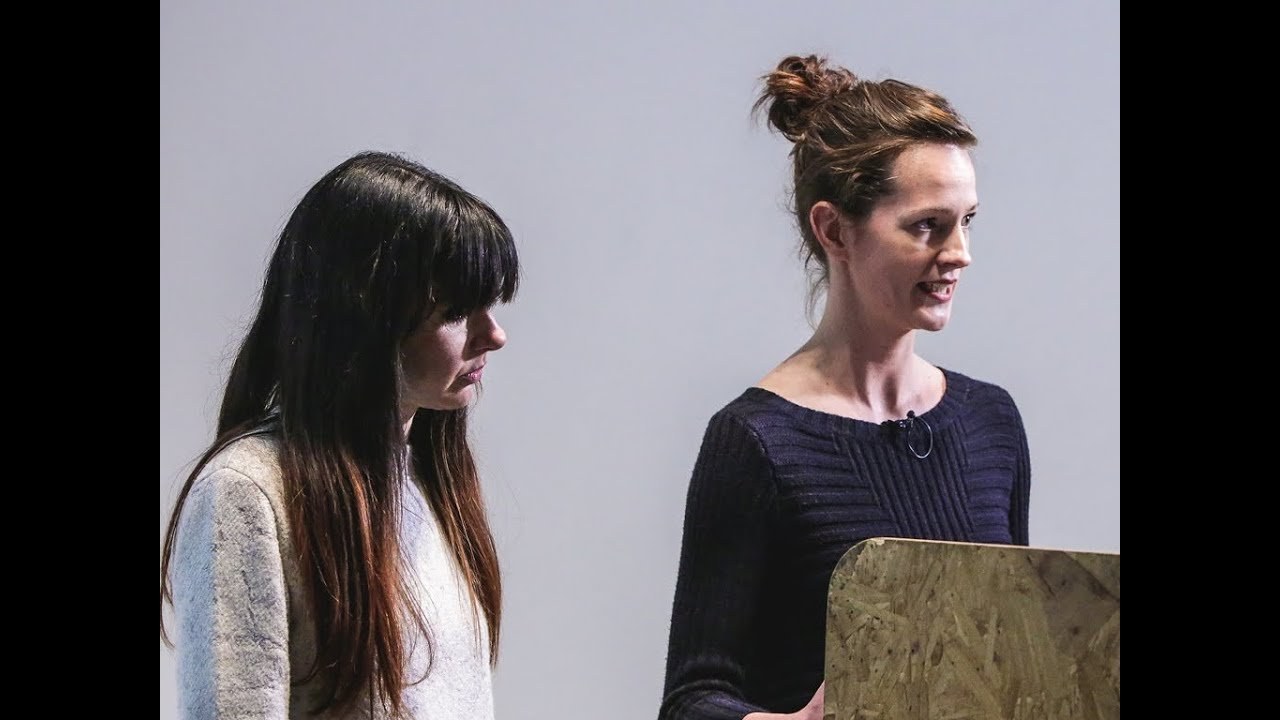
“The thing that gets left out is what happens when design leaves a showroom and enters the realm of people and our mess.”
Hi everyone I'm Anna and this is my co-editor Elizabeth lickel so we're here to tell you about Dy fiture which is a new design magazine that we launched last September we started working on dirty Furniture in 2013 alongside our colleague Pete and the three of us met at the RCA studying design criticism between the three of us we had backgrounds in journalism publishing design history and creative writing so the question really was why make another design magazine it's not like we're short of them dirty Furniture came from a sense that design especially Furniture Design design is only ever covered in it's only ever covered in the design press from one angle to give you an idea of what we mean by this these images were taken at Milan Furniture fair have any of you been just show of hands yeah it's one of the biggest design events of the year and every year attracts hundreds of thousands of people all to sort of travel to Milan see the latest products being launched in around 20 huge sort of Halls that individually take you a day to walk through events like this generate huge amounts of writing and design magazines it all tends to focus on the same sort of thing you know you've got the interview with a designer and the brand you've got maybe a report of a product or you've got a feature exploring a specific theme there's an interest for this that we think it's just one way of writing about design and we wanted to create a plan platform that create a space for many others crucially the thing that gets left out is what happens when design leaves a showroom and enters the realm of people and our mess so we called the magazine dirty furniture for that reason because it's the human traces and the dirt really that we like the magazine itself is conceived as a finite series of six each issue takes a theme of A P of furniture and then uses it as a springboard to talk about issues ranging from politics to psychology history technology science manufacturing and design as you can see we take a very lateral approach to design writing and our goal is to offer New Perspectives on underexplored topics for instance with our first issue which took the couch as its theme we asked Joanne mcneel who is an American Technology writer to look at foam and in the process of trying to find out what exactly foam is because let's face it none of us really know she finds herself among a community of complete phone fanatics on YouTube there are no hard and fast rules but we try to divide our articles into different subgenres so Jan's piece is an example of the kind of materials Focus that we want to have in each issue of the magazine another piece is a political piece by novelist William WS he explores the way that benefit claimants are portrayed by Red Top newspapers as feckless sofa dwellers and here you have an image from this spread it also looked at Tony Blair's so-called SAA government and those informal sort of Close Quarter meetings that essentially helped to take the country into war on a slightly lighter couch related note we have a piece on the saers role in sitcoms by architect Sam Jacob and design editor Yan argaman Ross looks at The Fetish from mess in magazines like a parento and the website the celby besides these are all sort of more established names besides those we also have Pieces by emerging writers such as nasle Ferris she's an emerging feminist writer and she wrote about the sort of a Trope for women lying down in art and visual culture and this was one of our more popular and commented upon pizzas we hope not just because of the amount of nudity that it's portrayed besides to break up the rhythm of the magazine we divided it into sections so we start off with anecdotes with which are sort of short newsy pieces I guess in the place of where you'd usually have news that kind of look at the they they contain Curiosities of the piece of furniture in question and often deviate towards the slightly weird we also have an interview section where we speak to people who work or deal with the object that we're looking at on a daily basis so our heroes are the couch Surfer the upholster and the antique salesman and this is one of the upholster and we also have some visually LED pieces so for example in the last issue we spoke to designers about what they live with so it's not really about what they designed it's about the things that they live with all of these ideas for our content came together quite fast in a way but of course the real challenge for us in our first year was getting the magazine actually off the ground and Lizzie's now going to tell you about how we went about that hi everyone so I guess this brings up the issue of crowdfunding and we were asked to byas kns that to to speak about that tonight so Anna and I spent half a year trying to convince some very straight laced Italian furniture brands that the word dirty and dirty Furniture was not necessarily negative and it's not that our quest for advertising was entirely unsuccessful we did raise some funds this way.
And we still do and we do work with advertisers and there are some brands that have really taken to the magazine but the money we raised for the first issue wasn't enough so we decided to launch dirty Furniture through a crowdfunding campaign of course anyone who has run one will tell you that running a Kickstarter campaign is no small undertaking and having decided to run one we found ourselves faced with a task for which we all freely admitted we were completely unqualified after endearing ourselves to some of our friends who owned and actually knew how to operate a camera and also Final Cut Pro we spent a lot of time getting bag and mug samples and dribbling paint over them under the strict supervision of our great designer who knew better than to trust us to do it on our own prizes and perks now seem to be an essential part of sort of the the Kickstart a crowdfunding campaign and this became a whole process that we had to produce them we also had to spend a lot of time doing sums and making sure we could send stuff to Australia and still have money left over so this was us demonstrating our sort of prowess trying to film a cheese path falling down the back of a couch it shows how out of our depths we were it ended up being an ill- fated sequence it was one of our many failures before we came up with our final video we figured it absolutely tortures us to show it to people.
But we figured it made sense to show you. So I'll just play it now ♪
so that was the video that I guess that's what happens when three journalists and writers try and make a video the three weeks of the campaign itself were also a full-time job they were basically an exercise in maintaining visibility through social media and by the end we found ourselves just sitting there obsessively hitting the refresh bar button on our internet browser but what was great about Kickstarter and what we didn't expect was the amount of publicity and support we got it's funny to think now that Kickstarter wasn't our first option because no PR Company could have generated that for us.
And it's just what we needed for the launch Kickstarter was perfect for getting us started and for giving us the time to establish credibility with readers and earn the trust and the support of advertisers also the fact of the matter is that in the world of government funding there's nothing really available in the field of writing about design so Kickstarter gave us what we needed to publish the first issue and just to finish off we thought that we'd talk about why dirty Furniture looks like it does when we started the magazine we knew we wanted it to contain long form writing about design and we decided that print is still our preferred way of reading long form writing aside from this we also wanted our magazine to intervene in the media scape of the main stream design press and that meant that ideally we wanted it to exist in the same places and spots as glossy design magazines from the outset when we were briefing the designer we wanted the magazine to be a visual as well as a readable document I guess we wanted it to be seductive and collectible but in a different way from more heavily art directed magazines which impart the same vision across every image so we knew we wanted a variety of imagery and part of the reason we chose Sarah deont Studio was that Sarah and Mark who she works with with understood that picture research was an integral part of the design process and and we really spend a lot of time on that the format of dirty Furniture well it's smaller and it is out the front than this you know the standard size magazine and that was to fitting with the idea that we wanted it to be an object you could easily read we sort of imagined it as a Reader's Digest for design that you could take with you and put in your bag and read on the tube so I guess that that leads to where we're up to now well we're about to publish in the sort of next month or so issue two of dirty Furniture and that's on the theme of the table and the follow-up issue to the launch issue is like a really good challenge for us while the concept and structure of the magazine which an has told you about a fairly set it's sort of fun helping it evolve and to really begin to consider and refine the editorial identity of the magazine and we have a lot of discussions about what is and what isn't a dirty Furniture piece after table we've planned issues for toilet closet telephone and then finally to bed our goal with these six pieces of furniture is to map the domestic landscape each object will take us into a different room of the house and when we've done that hopefully we'll have achieved what we set out to do and that's it thank you [Applause]
Latest Talks
-

Will Anderson and Ainslie Henderson
Bringing stop motion sorcery to BBC’s Small Prophets
Watch -

Amber Weaver
How does contemporary type design translate into the wider world?
Watch -

Murugiah
Why you should reject the formula and make art about things you love
Watch -
Marina Willer
Design thrives when you find poetry in the simple things
Watch -
Lizzy Stewart
The hundreds of drawings and writing-on-a-whim that goes into comic novels
Watch -

intra
The rewarding process of recognising the art in obscure everyday life
Watch