
Alexander Coggin
Finding a place in a Midwestern family through the lens of a camera
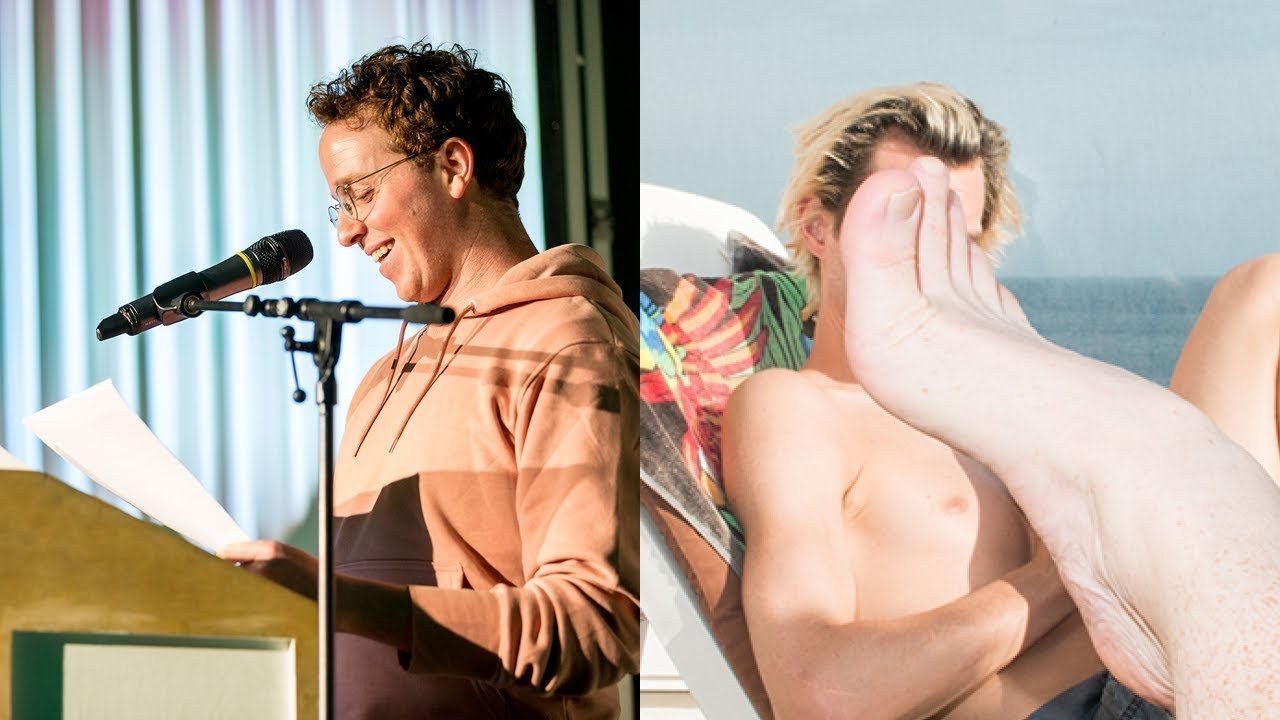
“Being an observer from behind my camera sort of helped me understand those dynamics and my role within the complex familial structure.”
Oh my gosh okay hi everyone I am that name I am Alexander kogan it's so nice to be here thank you to it's nice that for having me very excited etc etc I my name is Alexander kogan I'm a photographer I live here in London in walam I'm from Philadelphia before living in London I lived in Berlin before that Chicago before that Los Angeles and before that Boston.
So I've moved around quite a bit I wasn't trained in photography at all I was actually trained in theater I went to school for theater for acting and theater making here's my old head shot to prove that cool dude after I hey after I got out of theater school I sort of floundered a bit with theater your creativity and your sense of artistry is incredibly contingent upon a director a production other actors so after school especially I felt I was stagnating a bit luckily my boyfriend now husband picked up on that and he bought me my first camera and I became obsessed with fitting the things that I loved about theater character narrative complicating a plot or magical realism and putting them into still imagery taking something very alive and putting it within four borders with authorship it was super important to me here's a bit of work that I've done in the past I've shot for the New York Times F weekend wallpaper wild wired the gormand Zite monacle Wall Street Journal another etc etc I thought this would be funnier and it just now it just seems arrogant we're gonna speed through all that this bits for my agents so shout out to them.
This is for them look at all that work oh could I go faster okay whoa okay. So and again that's not to brag but rather to highlight that as a selftaught photographer I I learned by way of doing and that's especially important to this project that I'm about to talk about which is brothers and others it's developed incredibly in tandem with my work again when my husband bought me my first camera in Chicago we lived around his family his older brother Andy and his wife Courtney his older brother Peter and his wife Emily his eldest brother Brian and her wife his wife Mara his stepsister Kate and her husband Mark and his stepsister Hillary and his mom and stepdad and his dad and stepmom so we were just I again just I shot sort of what was available and what was around me at the time finding my role in his large Midwestern family was a challenge being an observer from behind my camera sort of helped me understand those Dynamics and my role within the complex familial structure and the Arc of this series in particular very closely charts my feelings of being an outsider in this family being welcomed into this family and lastly feeling like an Insider or sort of a core member of this tribe yeah.
So for example just in way of been shooting around me I've shot Michael a lot over the years which is quite lovely but then in the tub for the past six or seven years though with this project brothers and others I've chronicled investigated implicated and documented Michael's family which is now my family mostly in upstate Michigan where they vacation every summer the ongoing work again it's called brothers and others I'd like to walk you through that chronologically borrowing a phrase from theater this is a body of work that exists in a sort of repertoire wherein the edit or what shots I sort of consider to be in the body of work change every year they kind of rotate I feel differently about them. So it's it's quite a fluid body of work so to take you from the beginning to some early work which I'm so hesitant to show you from about 2011 to 2014 we had just moved to Berlin and we would come back to Chicago at Christmas time and Michigan in the summer and it's really when I started focusing my Gaze on Michael's family I think being outside of the country and living my best queer life in Berlin really made all of this hetero Americana pop for me although I was quite focused on capturing specific moments I definitely did not have control of the lighting or the camera in a way that I wanted to because again being self-taught I was still sort of learning how to figure that out. And I was training myself technically at the same time I was sort of also training Michael's family to be comfortable around me which we eventually got there.
But it kind of took them a while to realize that sort of why I was shooting what I was sort of interested in but again I would shoot so many of these images differently now.
So I don't consider these to really be in the full body of work as I as I would like it to be now as you can tell shouldn't look comfortable at all a couple oh when I got this shot in particular it was sort of an aha moment for me it's not a perfect shot by any means but I thought okay this.
This is theater the energy in the frame is not proportionate to the reality of what was going on. And I loved that they just dropped a toe line from a boat in the water and it looks like they just killed a girl Ted Kennedy style I mean it's just it's so it's like it was like the worst thing in the world I was if you look at this shot you'd think something majorly dramatic had happened but it gave me a real cue to the fact that I could start to complicate imagery and to create stories with in four frames which I really really loved a couple things shifted for me and for this series in the summer of 2015 Michael and I got married and my skills as a photographer were absolutely improving this is actually at our wedding this is Michael and his mom and after being around for eight years or so with people I felt a definite shift in around Michael's family and their and their comfort sort of in front of the lens such such a gift but one by one I started to see how people's people's behavior wouldn't change when I started shooting even with a flash which is a huge indicator that I'm it's just a dead giveaway.
And it because of their comfortability gave me a lot more freedom to use my framing to imply narrative which was quite ideal for me I made an effort to sort of have a camera with me at all times and yeah slowly and with attrition one by one people just sort of sto noticing when I shot and really got comfortable and it it gave me a sort of access it gave me a sort of comfortability it also gave me definitely a sense of inclusion. And I think it's when the work starts to really pick up I also started to try to focus on this time around the place and the settings to try to sort of fill out the world especially the summertime world that this family habitat another I just found this one in the Raw F in the raw files going through this. And I I I it must have been 2015 I just don't think I would have put that in the initial edit because it does seem a bit Insidious.
But then when you think about the theater of it he's not a negligent father he's a great father you know there's nothing.
But I just love what's implied in the shot I just it's yeah it's I love it another thing I've learned through this process is not just how to shoot technically but also how mysterious of a tool the camera is for me shout out to my therapist for working through this with me but with with three older brothers-in-law and their wives and they you know they each have two children I just didn't see how my queer being and our queer relationship really fit into this life into these values into the property ownership and the you know the Country Club memberships and the golf courses it's a gendered place for sure it's a potent hetero fiction that early on felt really dissonant with my so that's the golf course folks so I I use my camera as a way to look at their lives and understand and empath empathize and study the Aesthetics and bring them alive and I will say that in that process I fell madly deeply in love with Michael's family in an unbelievable way just spending so much time with them on the other side of the lens has just brought such yeah empathy and warmth for me.
That's the clubhouse what is it called shop gift shop not gift shop Pro Shop they sell Golf Stuff a huge shift in this story. And in this body of work for me has been when the kids came around the summertime in Michigan there are social expectations like dress codes and when you're up at the clubhouse in the cocktail hours and there's the continual performance of of leisure and what I noticed and what I really wanted to capture was there's a dissonance especially with the kids of sort of learning and maintaining these Protocols of behavior one I thought was really fascinating to look at I'm not a parent and I doubt I will ever be but I've seen the shift and kind of space that needs to be found for children and their personalities within such a large family I also come from a large family but I was really captivated in the way a child's role in a family is simultaneously carved out and handed to them at the same time I loved watching parents parent Through My Lens it really allows me to get quite quiet and focus on their experience which I hope really comes through in the images also kids don't care care I'm just their weird Uncle so like I just I really enjoy sort of spending time with them.
And it's only afterwards in the editing that I can see the access and the depth and the trust that I sort of co-create with my nieces and nephews and it's put me personally back into the space of childhood which again has been really great fod for my therapist I'm American so we like therapy as this work has become more of a project and other people have written about it especially the British Journal photography wrote something out it and they really focused on the class and privilege angle of it. And I was super nervous how that framework would be perceived with Michael's family so I've really rang them all up and kind of prepared them because it's never been my intention to mock at all only to observe and empathize and compc and I realized how out of my hands and out of my specific framework the work can seem sort of Insidious notar the stuff with the kids but I would say more of the stuff with the adults and my instinct was that this might put a wall between us somehow between me and my subjects and I was my subjects my family it's complicated but actually the next summer I came back sort of after that article came out quite the opposite happened everybody was so incredibly relaxed being shot and I think that a couple things I think number one they saw me as being a more legitimate photographer because the British Journal photography sounds really official and if you know that.
But yeah they they were just more relaxed which was quite nice also through that framework which I'm actually quite happy for all these conversations came out around gender power and masculine feminine binaries and it's kind of great that all these conversations started to be discussed I've been personally quite surprised by this project once the voyerism of looking at Michael's family became more intimate and the shots revealed more interpretations I feel like with theater that the camera is such an important tool for me it's allowing me into that very private space where personas slip making me look at my own personas and family with my family and loved ones and it was quite unexpected and emotional for me.
So I was I'm really happy with this it is ongoing so watch this space anyway. That's all for me my Instagram my website my agency thank you for having me thanks
Latest Talks
-
Will Anderson and Ainslie Henderson
Bringing stop motion sorcery to BBC’s Small Prophets
Watch -
Amber Weaver
How does contemporary type design translate into the wider world?
Watch -
Murugiah
Why you should reject the formula and make art about things you love
Watch -
Marina Willer
Design thrives when you find poetry in the simple things
Watch -
Lizzy Stewart
The hundreds of drawings and writing-on-a-whim that goes into comic novels
Watch -
intra
The rewarding process of recognising the art in obscure everyday life
Watch