
Alex Chinneck
Sculpture that combines architecture engineering and material impossibility
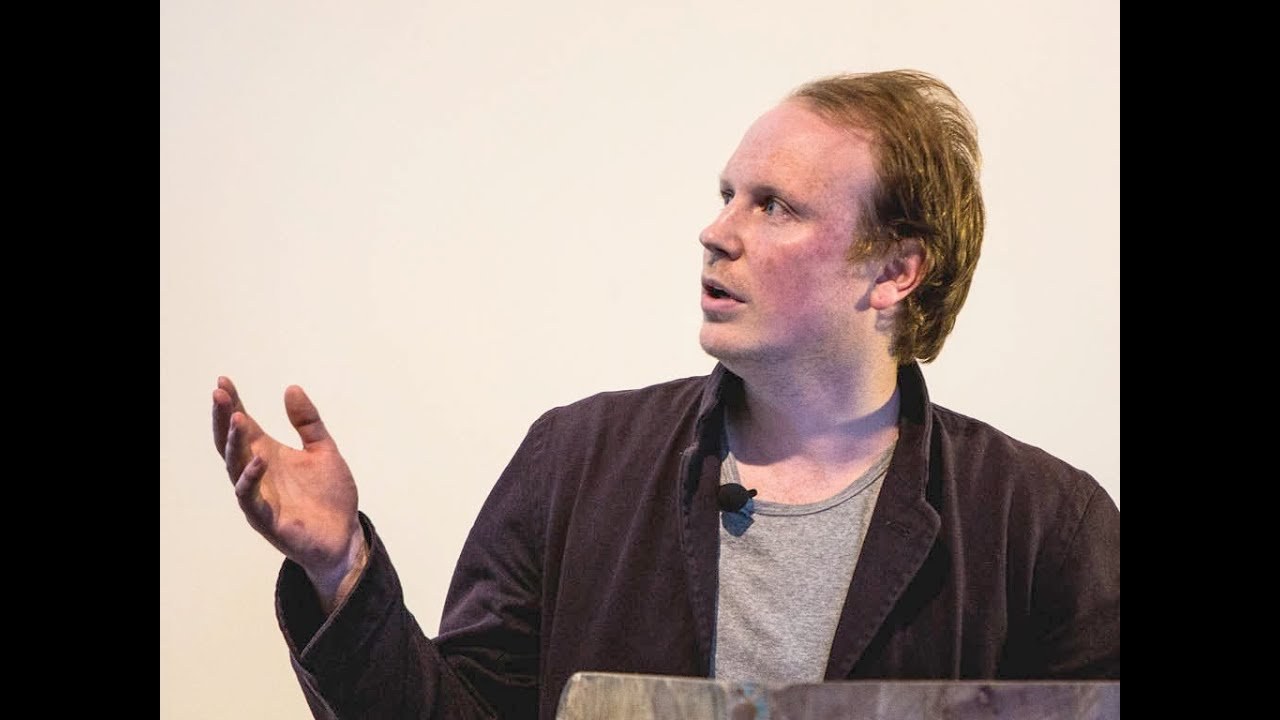
“I think public art has to be for the public and it has a great responsibility to the public and there's very little room in my opinion for intellectual or cultural elitism.”
Ok my name is Alex Jenica my studio we amalgamate different disciplines so I'm interested in sculpture but also other disciplines such as architecture and engineering and construction. And we're particularly interested in the materials and the processes and the sculptural possibilities therefore of modern industry the work we create exists in the public realm temporarily always.
This is a piece we created called telling the truth through false teeth and we took a dilapidated factory in Hackney about two years ago. And we created the illusion that every single window across this facade 312 of them had been identically smashed and cracked we did that using 1248 pieces of glass now this very neatly kind of embodies a lot of the different things that we're interested in the kind of the philosophy that we bring to our project each thing that we create is unquestionably playful but the path that we take to get them is incredibly complex and what a key consideration is verse is this idea of Cultural accessibility and in our opinion and my kind of philosophy that hopefully my project celebrate is I think that public art has to be for the public and it has a great responsibility to the public and there's very little room in my opinion for intellectual or cultural elitism and it has to be inviting in lots of different ways and we do that firstly through this kind of idea of playfulness and often illusion.
But also through kind of sculptural and physical spectacle so we try to create these very physical feats which are very impressive but simultaneously very engaging and kind of at times I suppose humorous another project that we created was in Margate and this is called from the needs of my nose to the belly of my toes and as you can see we created the illusion that the entire facade of a residential property had slipped into the front garden now this particular property has stood dilapidated water damage from fire damage for years. And it was an incredible I saw so it presented itself as an incredible opportunity to come in and try to introduce something positive now when creating art works of this size and very conscious that they could be dominating of their environment so every single decision we make is tuned and inspired by the visual and material language of the district increasingly we consider other things.
But this was kind of early stages of my practice and this is one of the key considerations this was a project that we started a week after we finished the sliding house and this is just south blackfriars bridge it's called under the weather but over the moon and here we created them where we used the existing architectural silhouette and simply created the illusion that the entire facade have been turned upside down. Now.
This is a very very large public sculpture but again because we use the visual and material language of the district and the architecture and the buildings have surrounded it has the ability to disappear and I thought the public sculpture should never scream for attention I think you should find it before it finds you otherwise I think it becomes overly obtrusive and inconsiderate to the space in which it stands and I think good design and when you're dealing with projects on this kind of scale with the administration or technical and logistical obstacles that they present good design is one that considers not only aesthetics but also way it performs on the way it behaves and I think this article textual and visual integration is essential it's worth saying that up to this point all three projects we produced with absolutely no money so while working on other jobs I dedicated all my time to facilitating the relationships and resources to make it possible so one thing that I do is we collaborate constantly with British industry and the companies across it and what we began to recognize was that.
There was an incredible opportunity where sculptural ambition and sculptural objectives could be realized with the experience materials processes and resources of industry in exchange they were hungry for marketing material and the use of their product and material and it's it was a key factor in I guess facilitating the growth of my practice and hopefully in my career where. There are so many artists in the world the only route to progress is where you forge your own path and we did that by facilitating such relationships this is a project that we created from Covent Garden piazzas could take my lightning but don't steal my thunder here as you can see we created the illusion that the entire top of the building was hovering in midair and there was absolutely nothing between the two structures the only connecting point was the market store to the right-hand side now at this point this is when we really began to consider how something not only architectural II integrates into the place in which it stands which this does also but this requirement was done through necessity because we started to introduce the obstacles that projects the scale and complexity realize one of them is temporary planning licenses so we have to navigate those things also it's a listed building behind it of course it's a very celebrated and sacred one so every single decision you make has to be celebratory at the building that it stands in front of so of course we tuned it visually so as harmonious with the structure behind but one of the most sacred and protected views and listed views is through the central avenue of the piazza so we had to design a structure that when looking from the other side of the piazza you could see absolutely nothing and of course it embodies all of the different considerations when my practice does we take this kind of very playful and surreal route to spectacle but the engineering behind this was considerable and complex in the markets tool on the right hand side that acts as a counterweight and there's 16 tons of steel wrestling within that market still to install it it required 10 trucks large arctic trucks going on to comment garden Piazza at one stage there was two cranes on the piazza and we essentially shut the Piazza at one stage the manager of the Disney Store came out and said they were going to sue me and Disney have better lawyers than I do I'm sure now what we also began to consider was how we consume our sculptural decisions and the way we conceive an idea to the people who would be experiencing it and the typical demographic that would experience it but not only the type of person is how they use in how they occupy the space so when considering common garden Piazza we started to think about the idea that people don't it's not a place that people go to every day typically it's somewhere where Londoners might visit once a month people in the UK might visit once a year and people outside the UK might visit once a lifetime.
So we had to conceive something that was about impact and you know it's a bit of a faux pas and it kind of for an artist to say this.
But we had to consider something that worked in an Instagram culture we also have responsibilities that people paying for in the commissioners and their principal objective was to generate media attention and get people visiting and excited about common garden piazza and I think we achieved it was on the national news in 35 different countries and the footfall of calm garden piazza for the month that it was there was increased by twenty percent so in lots of different ways it was considered a success now one thing I touched on previously was this idea of temporary activity for me temporary activity is a license and as a freedom for cultural and sculptural ambition there's absolutely no way I would have been able to and should have been able to of course installed this sculpture if it was permanent I also like this idea of a culturally a changing cultural landscape across the city where people can come and experience something.
And then it changes which did you know the talks tonight have been a celebration of this philosophy I think which encourages a fresh football and revised visit to the area I also like the interim the idea of impermanence because I think when experience is gone it can only be missed and impermanence and legacy go hand-in-hand and I think in a very fast-paced contemporary modern culture in which we exist I think that idea of impermanence quite neatly weaves in and with that philosophy in mind we designed this.
Now this was called a pound of flesh for 50p and this was we realized this in the same two weeks this opened in the same two weeks as the hovering building and in the same two weeks I had a baby so it oh so it was the worst and best two weeks of my life but for this particular project what we did was we worked with a Mac wax manufacturer the lightest largest whites manufacture in Europe and we made 7,500 bricks in wax now these were in both surface and ascetics indistinguishable from real bricks and then we made windows and doors all of them in wax we even made the glass in wax and then over 45 days we melted the house that's the wax bricks that's how real they were that was a sunkist moment now this idea completely celebrates this idea of impermanence where it wasn't just a philosophy it was the physical object and the performance itself and this particularly hones in on this idea of tuning our sculptural decisions and our cultural decision making to how people use the district so we're common garden was about impact on a one-off effect this was just beside london bridge station.
So it was on a real commuter path so it allowed us to create a piece that was about transformation and change because the people would experience it every day a change for 45 days the nice thing about this piece was it was utterly organic so it behaved in a way that we could never have expected everything that we make now is so engineered and so computer designed a piece that we're working on at the moment has had an engineering practice well for of an engineering practice working full time for three months so it was very nice to create something that took on its own form I felt like an artistic in for a wallet so just after this again with this idea of illusion spectacle construction engineering industry we produced this piece on the south bank and here we created illusion that a real car was hanging upside down and what this does many of the things that I've been explaining I suffice and I'd like to finish with the future so we were recently invited to create a piece or conceived an artwork for the London Design Festival and the commissioners are a comfortable night dragon who are developing the Greenwich Peninsula I think it's the largest planning application in the history of London.
Now the site is incredible and so given that it was the largest gas works in Europe on that site and because there's gas towers and of course the Millennium Dome there's a sculptural language of lattice steel and cables so with that full process with visual material language and also the history of the site which is always very important we conceived this.
And it's a full-sized electricity pylon that seemingly stands on its tip it leans 60 degrees is made from 1186 metres of steel the 75 cubic metres of concrete in the ground and there's four piles going 25 meter meters d it's appears like a normal electricity pylon.
But it's far from it. And this opens on sep tember the 18th so I invite you all to come and see it and hopefully we've delivered it thank you
Latest Talks
-
Will Anderson and Ainslie Henderson
Bringing stop motion sorcery to BBC’s Small Prophets
Watch -
Amber Weaver
How does contemporary type design translate into the wider world?
Watch -
Murugiah
Why you should reject the formula and make art about things you love
Watch -
Marina Willer
Design thrives when you find poetry in the simple things
Watch -
Lizzy Stewart
The hundreds of drawings and writing-on-a-whim that goes into comic novels
Watch -
intra
The rewarding process of recognising the art in obscure everyday life
Watch