
Adapt
Using design, humour and pinatas to spark real conversations about climate change
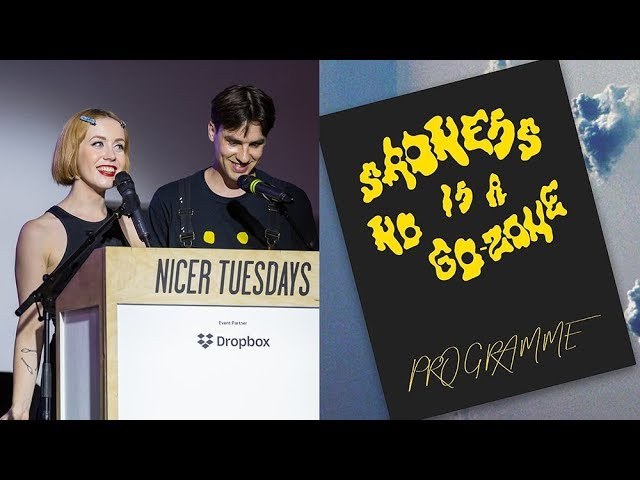
“There wasn't a whole lot of conversation going on about the climate crisis and if there was it was headlines that were essentially blaming individuals, telling them it was their fault, and it was scary and fear-mongering and didn't really encourage anyone to act.”
[Applause]
hey we're adapt we are a climate club I'm Josie Tucker and the creative director Richard Ashton I'm the directing producer and so yeah.
So I guess I might kind of sum that up well but adapt is basically a climate Club theses design art and humor to tackle climate change issues create community engagement and then provide solutions yeah.
So we are freelance designers by trade but we run a doubt is essentially a full-time job as volunteers so the tabs that you see across the top of the screen or an insight into the chaos into our daily computer screens and lives and we started adapt because two years ago. There wasn't a whole lot of conversation going on about the climate crisis and if there was it was headlines that looked like this essentially blaming individuals telling them it was their fault and it was scary and fear-mongering and didn't really encourage anyone to act so we thought that with our skills we could maybe do it a bit better so Instagram is our main tool for communication which is something we never thought we'd really use but we realized the power of it through trying to communicate climate issues in a simplistic way and trying to promote action that people can do easily on the spot and by themselves so basically also giving some kind of meaningful reason for Instagram addiction ourselves so when we launched about a year and a half ago our first campaign was don't be a fool and it was basically like trying to make a finance of a sexy way to actually switch to a new energy which is normally like switch sides which is super boring so you kind of came up with this campaign we have like print and digital assets an interactive website to help you switch and then like beer mats sort of dotted around pubs Londyn so when your date's going to the toilet you can kind of sit down and about renewable energy which is super cool oh yes so basically we delve in real life stuff as well as Instagram and earlier this year we hosted a plan a party with brainchild festival and I waited just a night where everyone could come together dance like have a good time.
And I subtly learned about climate change so there was like large-scale planets planets hanging from the seedings video installations and my chances of switchin different actions people could take and yeah it was really fun night one of the things in particular that we did was a shell pinata so people could beat the hell out of shells and we thought it was gonna go super smoothly but unfortunately I tied up the pinata with bungee rope instead of normal rope which meant that the pinata ricocheted around the room causing a couple of small casualties there on the right-hand side in our studio but it did turn out to be the most memorable and talked-about part of the evening so it worked so another thing we did last month was we did tape lights and we create an evening of climate change speed-dating which is hosted by a favorite drag queen Portia and space if people could come together by a single Tunes or couples that knew each other sit down and like work through three courses that we provide us there's questions role play and then climate change pick-up lines and hoping they learn about learned quite a lot but at the same time like people who didn't know each other definitely definitely hooked up so with effort sort of ours it was really great something went right. So in all these real-life situations that we try and star or just knowing that people are having these conversations at home or with their family and friends we thought about making a tool to make climate conversation a bit easier for more inexperienced we're talking to work colleagues or like older members members of our family about climate change and having all of this knowledge and research up your sleeve and feeling that you're just going to boss a conversation about climate change and then being struck by one sentence which makes you completely lose all of your information and the conversation just totally falls to pieces so we basically rise I printed these guides conversation and distributed them around London in pubs and bars and clubs so that if people were feeling a bit at a loss with conversation they had a guide to go with so we use characters like your uncle Tony or your tinder date laila as a sort of framework for these conversations with what not to say primarily and then what to say afterwards so this is basically our most recent biggest project last month we held an exhibition at the Copeland gallery in Peckham called sadness is a no-go zone and we basically sets out a brief for loads of artists to respond to to create work around climate change and I mean the response was like really great so we ended up with 50 artists so initially was supposed to be a really small projects just getting a bit of community together and sharing some artwork. And it's completely snowballed so we ended up with 50 amazing pieces and we thought we've got to put on a massive exhibition which is way bigger than we ever could have imagined so what we sent out to the artists for different phrases which we've used over the last sort of two years.
And then ask them to responds we had like a great range of individual pieces and they allowed everyone to have a platform to talk about climate change which necessarily they might care about the issue but not always know when to talk about I don't know how to put that design work did their design work their design skills to use so we had phrase phrases like sale are so good obviously about renewable energy shall we clear the air which is obviously sort of working on the conversations around climate change and then most shrubs which is about rewilding so this was the entrance the exhibition where we just enlarged as hanwen typography that we used for the branding which was kind of based on pollution and air particles and then on the left hand side we had an amazing artist called Hannah Dickens who hand-painted this huge sign as an introduction to the space sort of asking people to clear the air as they walked in so the phrases that we gave to people were divided into different rooms so the first room you walk into is about wildin the reason we chose us to be the first from because planting trees is of planting trees and looking after the trees they exist it's obviously one of the best solutions to tackling climate change and what we really wanted was we didn't want the exhibition to be just a poster exhibition of great graphic design we wanted to include other pieces so we had trees donated from trees with cities sort of dotted around the space and then we had habitat boxes designed by us artists called Lauren Davis and these books that could be flat packed and then taken away outside of the exhibition to give basic create habitats for a different world life.
And insects to live one of the main factors that we really wanted the exhibition to have was a point of action in every topic so people could act within the space without having to like attach themselves to remember it when they did home or try their best to do it later so we partnered with the coda who if you haven't heard of them they're a search engine that plants trees so unlike Google who use your ad revenue to enlarge their massive company they go in plant trees in areas affected by deforestation.
So basically we've got a fight plant 5,000 trees homes we had a search engine in the space where people could plant search whatever they wanted and contribute to our tree challenge and also if they downloaded this search browser through this particular link they could contribute to the challenge which is still open so if you want to have a go please download it through the link and help us plant 5,000 trees and the next room that you walked into you after Wilding was our travel room because everyone knows that travel has such a huge impact on the environment on the right we had our cool your jets posters which is obviously about limiting the amount of flying that we do but on the left is information boxes so we handmade all of these information boxes to house all this information because we knew that perhaps sometimes climate change and science stats don't go down.
So well at events where people are drinking but these were a way to really draw people information and actually worked really well as a kind of engaging way to educate people as they went through each room this also apologies to the iPhone video but it's mobile that I made which is about climate migration so people are moving around the world already because of climate change where.
There is fires droughts heat waves rising sea level and this mobile which was finished literally like minutes before we opened the exhibition has all of the elements of climate migration hanging in the balance and it was moving slowly around the space at all times another thing that we are about doing what we really wanted to open up the conversation and kind of showcase all of these the different facets of climate conversation and like what some people say that we should do is incredibly controversial with lots of other people so rich design this poster about stop having children which one is probably the most countries are controversial suggestion and luckily we thought everyone was gonna argue us down about this the whole night but it went down really well and actually ended up being one of the most popular pieces so it kind of goes to show you that if you approach a topic with a bit of good humor it kind of opens it up to more people.
So the last room in the exhibition which was the biggest room was the energy room because obviously energy is like so instrumental to attacking climate change from reducing our carbon footprint but also it's a topic that a lot of people don't always know a lot about so bad were the artists responding within this room so one of the most popular phrases was say die so good so these just the pieces they were on showed there and on the opposite wall we had feeling hot hot hot which was a good framework for us to talk about rising temperatures all over the world.
And this piece at the end here was designed by will brynlee and that's the big you can frag cry off banner which was five meters wide which replicated the width of the road in Lancashire and the banner has been given to frack free Lancashire to help them in their protests and road blockage to yeah basically stop could read a fracking up in Lancashire so as Instagram addicts ourselves we wanted to highlight the importance of social media when it comes to people communicating about climate change and we see so many sustainability accounts meme accounts chiming and on climate change and so we made our own platform called extinct Oh Graham and we made these huge 3d mobile phones which lay around the space to try and take the piss out of how people talk about climate change and it's to Grameen online so on the right is a meme account which is sharing some recent paper their travels to the Arctic in 2019 and on the left is like a super woke sustainable influencer person who's saying when you're crushed cause you just say mass extinction as a definite consequence of climate crisis climate change truly is a result of human activity he always knows what to say and these actually made before the exhibition.
But were displayed in the exhibition as well they are my climate emergency posters so the government actually announced climate emergency UK government were the first government in the world to do so but then they kind of went a bit quiet and didn't really say what they were gonna do afterwards so it was a bit of a moot point most people were chiming in and what they thought we should do next and it became a bit messy so we simplified it down to six main points which was planting 700 new trees introducing new types of frequent fliers changing farming tripling renewable energy ending emissions from steel and cement and banning the sale of petrol undies and cars which sounds really boring and it is kind of boring so we decided to turn them into something a bit more exciting and engaging simplify it and these can be used as social shares or they can be printed and used as placards and they're just way of communicating these issues and a more engaging memorable and fun and colorful way.
So if we find it quite hard to sum up what we do because we have to be able to be quite responsive to what's going on. And it's like super complicated we like so we drew this diagram to kind of explain it which essentially we spend our whole days like reading bad climate news and freaking out is a daily occurrence so the only way to deal with it is by laughing at it and making a joke out of it.
And then as designers the only way to somehow try and make a career out of it is by making the joke look nice before we release it into the world and hope it has some kind of an impact on someone else or that it makes some kind of difference yeah thank you you [Applause]
Latest Talks
-
Will Anderson and Ainslie Henderson
Bringing stop motion sorcery to BBC’s Small Prophets
Watch -
Amber Weaver
How does contemporary type design translate into the wider world?
Watch -
Murugiah
Why you should reject the formula and make art about things you love
Watch -
Marina Willer
Design thrives when you find poetry in the simple things
Watch -
Lizzy Stewart
The hundreds of drawings and writing-on-a-whim that goes into comic novels
Watch -
intra
The rewarding process of recognising the art in obscure everyday life
Watch