
Adama Jalloh is a photographer known for her striking black and white images that document the vibrancy and challenges of her local area in Peckham. Her work captures the essence of community and highlights social issues, embodying a unique style that expresses energy and depth despite the lack of color.
Adama Jalloh
Documenting black communities through intimate moments, quiet trust and everyday joy
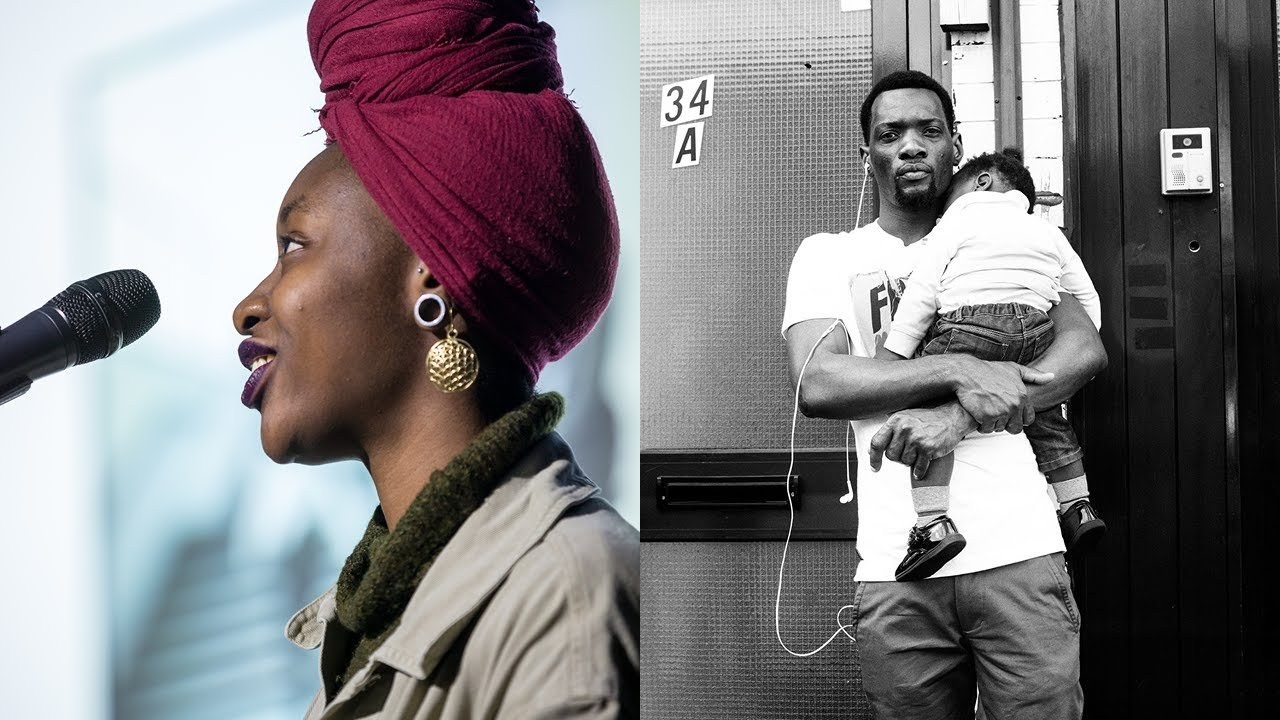
“I realized that inspiration isn’t always found in distant places; sometimes it’s right outside your door.”
Transcript: May contain minor errors or formatting inconsistencies.
[Applause]
hi I'm Adam jellow I'm a freelance photographer I've been freelancing for about three years now. And I studied University Bournemouth about yeah I graduated there five years ago. And I think like with photography in general I've always kind of gravitated towards it it's something I've always kind of yeah it's always something I've always been passionate about. And I think when I was in school I never really was the academic type so like I always lean towards art. And it's always kind of stuck with me up until this point so yeah a lot of my work tends to focus around like race identity and culture and me just kind of like highlighting intimate moments and traditions so I'll be talking a bit about like some of my personal projects that I've done over the years.
And I'll talk a bit about the street photography stuff that I've been doing that's pretty much work in progress so this image is part of a series called Sarah which is an Islamic custom within my tradition with my parents or in Sierra Leone so like both of them were born and raised as like Muslims and my mom has tend to kind of like bounce around religions quite often but the ceremony itself it's pretty much where we pay respects to someone that's died so you get an imam that comes into the space it can be really small. And we're pretty much just kind of praying kind of paying our last respects and there's an exchange of money as well and you're also kind of wearing a show B which is pretty much an attire and African attire that you wear mostly most of most of the time its family members that are wearing them so you can kind of pinpoint who the family members of the person that died so I pretty much grew up in a household where like my mom like I said she was born as Muslim you know she bounced around into like Christianity and Catholicism but since around the time that my grandparents died she definitely try to kind of withhold certain Islamic kind of customs especially around a time when my grandma was about to kind of die since she couldn't really practice certain things or like do Ramadan so my mom would kind of take over and be praying for her or just kind of now fasting as well so during the time I decided to start this project it was moreso when my mom decided to do the ceremony when it was like the fifth and fourth anniversary of like my grandparents death and that was when I really kind of started thinking about why I decided to do this project because I realized in general whenever there's things. That's focused around Syria and it's to do with like poverty or death and trauma and even though this project is based around death there's just there's other underlying factors that I kind of wanted to highlight just in terms of like reasons to why people might decide to kind of exchange over to certain religion or why they've now decided to Tanis still pay respects to certain parts of Islam the way that they dress the way people interact so I just wanted to kind of highlight aspects of what happens within the Sierra Leonean community so yeah here's a few of the images that I took and then another project that I did around 2015 so this is part of a project Corder you fit the description. And it's pretty much a series that's exploring like the disproportionate amount of like young black and Asian men that get stopped and searched by the police and for me like this project was really it was really difficult for like various reasons where I first initially started the project it was pretty much around a time when I would literally be seeing young boys particularly black and Asian men where they would be like being stopped by the police literally it was a daily occurrence and I really wanted to kind of find a way to highlight and talk about it. And I tried reaching out for like quite a few organizations about it.
But they really weren't forthcoming which is understandable because I'm a complete stranger and they don't feel like they could be they feel like they could trust me.
So I had to now kind of figure out a way of going about the project myself so I literally just decided to kind of now be walking around the street and approaching young boys and just getting their opinions about the subject and if they by chance were stopped and searched by the police as well. That's like an extended competence conversation to have as well and most of the boys that I did approach were stopped by the police so it was interesting kind of getting their perspective and their viewpoint on it so like even with this boy his name was names Jaya and pretty much five minutes before I had approached him he was stopped but in search by the police already he had like a lot of like anger and a lot to say as well and they tend to kind of believe like not only because of the color of their skin it's because of the clothes that they wear as well.
And it was interesting kind of hearing their perspective because a lot of the times when I was approaching them around us yeah around the time when I was approaching them some of them were probably around 15 so it's just kind of a little bit scary for you to know and witness someone at the age of 15 having to learn their rights of why they shouldn't be stopped by the police so I haven't really continued on with this project likely I will at a certain day I don't know when but yeah hopefully at some point I will get back to it. And this project is called identity it was pretty much one of the first projects I feel like I was now kind of figuring out what type of like stories I wanted to tell just in terms of what I was choosing to kind of show to others and what what kind of themes I was choosing to now kind of lay into my work because I think when I was with when I was in like the beginning stages of Union like even when I finished I kind of felt like sometimes I was picking projects or deciding to pick certain subjects just because they seemed cool they're interesting at that particular point but then I realized that I didn't really resonate with it.
So well. And it kind of showed through the images that I would take as well.
And I think like a lot of the times when I was looking at certain photographers for inspiration I always kind of felt like as if I needed to travel really far in order to kind of get the most amazing images ever. And I think as I started kind of walking around my area a lot more I did have more appreciation for just even the like simple things so like now I was kind of out of that headspace or feeling the need to travel far and I just everything was at my doorstep so I was literally going to like Hair Salons within my area because I live in Peckham and again it was very difficult to kind of get access mainly again to do of trust and a lot of the times when I was approaching like women who were doing hair or just people who are getting their hair done they're very much like no I just don't want it like you've got certain auntie's where they're telling you like I don't I just pictured it to end up in Zimbabwe I'm like that's not gonna happen it's fine but it's just ya trying to kind of gain gradual trust was quite hard and just reassuring them and just now having to show them past images that I had like taken so that they can know that it's not going anywhere like crazy but that made me kind of think a lot more about just even how black women more so older black women have this lack of trust because they saw that because if someone's going to embarrass them in some sort of way or kind of be of harm so that made me think a lot more about that and here's some of my street photography stuff that I'll be talking about as well where I commencement before it's more so me being a bit more appreciative of just like my surroundings and kind of I realized as I was kind of shooting more street photography stuff it was it was forming into like an archive but at the time I wasn't really super conscious of that because I think I ran a time I was now shooting street photography I definitely was kind of finding inspiration from like new york-based photographers that were like shooting stuff in the 60s and 70s but then I now was trying to kind of figure out a way to kind of tell my own story in my own way I think this is probably like one of the like I feel like most of the time the reason for why I like my images are MBLAQ and white is again based on the fact that I'm just kind of it was more to do the inspiration and also I kind of felt like as if me looking at the images that I was taking sometimes like the vibrancy of it was still there without the color needing to be there so like you can still feel the life of the images without the need of like color so that sometimes color can distract you sometimes so it was nice kind of being able to kind of tell stories in a way where I felt like it was very much more memory based for me because a lot of the times like the images that I am taking it's more so like from like past experience or like it's just things that I'm kind of I've seen before. And I'm now retelling it in my own way.
So I feel like now I've gone to this place where like the more people see my images a lot of the time people can not resonate with it as well and connect because it's just things that they've experienced I've gone foreign and if they haven't necessarily like seen things like this.
This is kind of like now a new way of like a new way of kind of seeing things or having a new perspective work on a certain community so like as I started shooting more street photography I realized that was just forming into a project on its own and then. I decided to call it a love story so just essentially it focuses on my relationship with like aspects of London and just like the beauty of black communities just seen through like yeah everyday moments so like yeah.
So I'll just read a bit about it so love story is about wanting to show a narrative that displays the sense of charisma intimacy and joy see we're aunties and their kids in the Sunday best school children owning the streets at 3:30 on a weekday you've got teenagers running errands for their mums or someone just simply having a moment to themselves so all these moments are things that I just want to glorify because I feel like they're all very different but they didn't they all linked very closely as well and like I mentioned before like the memories that I hold whilst growing up speaks through the images that I take so yeah and then I'm just gonna talk a bit more in depth about certain images or just like pretty much the starting point of like me shooting street photography and the amount of nose that I would get when I would approach people because it's very scary like it's super daunting so like with this image on the left it was essentially supposed to be part of my you fit the description project where I approached someone who was the founder of this organization called gangs unite where he pretty much helps young boys who are pretty much kind of stuck in that realm of being in postcode wars or like getting themselves into trouble and now he's just trying to find a way to make them never get for real life about getting themselves into like a little mishap so when I did approached him he was pretty much honest and did say to me like when I do come likely most or maybe majority of them won't be there because there is that fear of stepping into the wrong side of the street or like a particular postcode and there will be a bit of trouble so when I got there was these two girls there.
So I didn't really know where this was gonna go but I decided to stay and just kind of continue talking to them. And then.
I think that was pretty much the starting point of me now realizing how much I enjoyed the process of really bonding with the people that I photograph so the girl on the left daniela and the girl on the right is Karina and Karina was just like very free and just like talkative and then he had Daniella who was just quiet throughout the whole time until like maybe towards the end of me kind of interacting with them. And it was just interesting kind of just even observing and watching how someone going from them going really quiet and then.
Now then gradually deciding to open up to you because you can tell that they can trust you a lot more so like I feel like now. That's very much how I kind of have my approach with like photography in general sometimes we're street photography it's just gonna be very quick where people are just gonna say yes and then they're just gonna walk off and that was that's it.
But I do enjoy kind of having like long-standing periods with people. And it tends to translate quite a lot of like the commission-based stuff that I do so like with this image on the right I literally just asked him was like can I take a photo and like yeah. So it was just interesting kind of having that contrast because both of these images were taken in Walthamstow and I think this was taking probably like two days before so like I was definitely in that on that high of like asking someone and then saying yes straight away.
And then I get there and you have someone who's being very slow and taking their time with how they maneuver around me. So it was just a lot of readjusting but then realizing I guess within myself what kind of approach I wanted to take with how I shoot people.
And then it's another person that I approached I think maybe two three years ago so like this projects is pretty much ongoing like I guess the beginning stages of me shooting street photography is 2015 but it's just going to continue till whenever.
And I followed him around because like I feel like even if I get even though like I've been shooting street photography quite a while I feel like it's still scary to kind of now wait for that moment whether or not they're gonna say yes or no like whether they do say yes or no I saw an issue but it's just that scary part of actually asking them so like I approached him and he was really lovely and really but again it just made me kind of think about the way people choose to convey themselves in front of the camera because he's not like this like if even though I feel like he puts on like a vibrato like as soon as the camera came up he's now like inching up his chest and his shoulders but I guess that's the kind of character that he wanted to display but yeah it just made me think a lot more about how much photography can be like a collaborative process and it's not just me deciding to kind of tell them what to do I don't really feel like I tend to tell people what to do anyways that's not really in my nature when it comes to shooting so it's always interesting seeing the way people choose to show themselves to me. And now I feel like it's interesting where I bump into him quite regularly it's just the thing where like every three months within a year that will bump into each other because we live in the same area and then he just gives me like her he gives me he gives me like her an update about his life.
So that's quite interesting as well and he's telling me he wants to be a freelance coach which yeah he's a freelance coach and now he's kind of getting into building his business and also I've realized as well with street photography like not only has it been like training my eye it's also been a thing where like it's been like training my ears so it's just more so that thing where like even if I haven't seen something if I hear it.
That's when I'm preparing to kind of take a shot so it's more so similar like this where. I was already focusing on something else and I heard them running so by that point now I'm literally waiting for them to go past me.
And then I'll take the shot so it's just interesting seeing the way my body now reacts to certain things or how la I am to certain things that I like here.
But yeah.
I just I guess like now I'll be a little bit of silent and just go for a run through some of the images that I've taken it's also this as well where I when I took this with both of these images I think what's interesting for me it's more so the thing where because of how much things are changing in terms of gentrification and how things are just becoming a bit more rapid like the the shop that's behind the school kids right. Now it's not there anymore and then you've got this estate that's quite close to me where it's gradually being knocked down so for me I think it's quite important that I'm documenting as I go along because even if like these papers aren't there anymore it's Torv amid a vivid like memory in certain people's minds and it's just it's been captured in a certain moment so yeah [Applause]
Latest Talks
-
Will Anderson and Ainslie Henderson
Bringing stop motion sorcery to BBC’s Small Prophets
Watch -
Amber Weaver
How does contemporary type design translate into the wider world?
Watch -
Murugiah
Why you should reject the formula and make art about things you love
Watch -
Marina Willer
Design thrives when you find poetry in the simple things
Watch -
Lizzy Stewart
The hundreds of drawings and writing-on-a-whim that goes into comic novels
Watch -
intra
The rewarding process of recognising the art in obscure everyday life
Watch